ROB RUN resources and influence territory guide
Learn how ROB RUN resources and influence shape territory, clans, hideouts, and the weekly wipe before Early Access in November 2026.
A block you cannot resupply is a block you only borrowed. ROB RUN resources and influence decide who actually lasts once the firefight ends and someone else wants the same streets. This guide shows how ROB RUN resources and influence connect to territory, clans, hideouts, and the weekly reset, using the public Steam listing ahead of the planned November 2026 Early Access launch.
The game is still marked unavailable, with a playtest signup rather than a live population. That is exactly why a power plan is useful now. Balance, maps, and progression are expected to move during Early Access. The city fantasy underneath them is already public: thousands of human opponents, clans that seize ground, bases that store wealth, and a week-long climb that a server wipe can erase.
Why ROB RUN resources and influence decide territory
The store pitch frames every day as a contest for supplies and status. Strength is one route. Cunning is the other. Territory sits between them. A district is only yours if you can stock it, reach it, and convince other players that taking it will cost more than they gain.
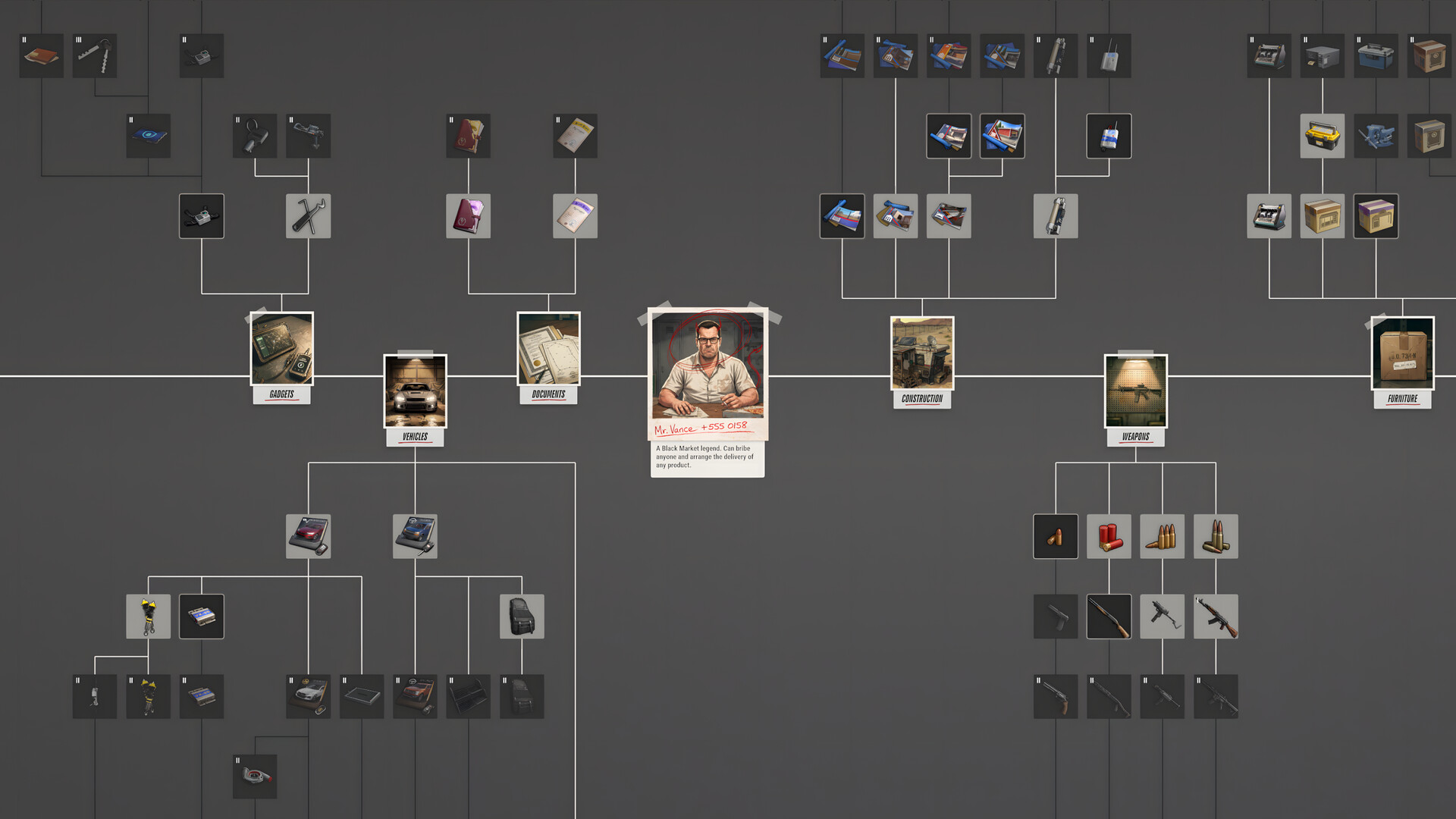
Official screenshot · Source: Steam store
Treat the two levers as separate scoreboards that only pay off together.
| Lever | What the public pitch points to | What it does for territory | What fails if you skip it |
|---|---|---|---|
| Resources | Loot, vehicles, hideout upgrades, workbenches, safes | Lets a crew stage, resupply, and replace losses | A famous name with empty storage cannot hold a push |
| Influence | Roles, raids, truces, reputation, allies who show up | Makes other players fight, stand down, or share ground | A full safe with no allies is a beacon for raiders |
| Territory | Ground a group can take, tax, or stage from | Turns both levers into a repeatable position | Unsupplied ground is a temporary flag |
Nothing on the listing publishes point values, drop rates, or a formal influence meter. Rankings, achievements, and broader progression are described as plans for the full version, not as systems you can theorycraft with hard numbers today. Until those exist, judge power by outcomes: Can you store what you took? Can you call people who will answer? Can you still operate after a loss?
The developers also stress that you can lose everything in a short window, and that the same door swings the other way. A practical habit follows from that. After every gain, name which lever moved. Cash in a risky open fight only when the resource swing is large enough to survive the heat that follows. If a direct clash is too expensive, the design itself says there is another way to get what you want. That is a planning rule, not a moral one: avoid the fight that donates your stockpile to someone else.
Early Access is pitched as a live test of balance, netcode, and content, expected to run about six to twelve months. Price is not planned to change when that period ends. The core online loop is described as playable, with bugs and unfinished edges still expected. Read the official ROB RUN page on Steam before you lock a wish-list decision, because that listing is the source these details come from.
| Topic | What the listing states now | What is described as later work |
|---|---|---|
| Release | Planned for November 2026; not yet available; playtest access by request | Full launch after Early Access |
| Session shape | Online play with the core loop in place | More maps, modes, and levels |
| Power growth | A week can lift a nobody toward the top of a server | Rankings, achievements, and progression systems |
| Stability | Players should expect bugs while polish continues | Better matchmaking, performance, and network stability |
| Price | Not planned to rise or drop at the end of Early Access | Same stated intent after full release |
| Community | Steam hub, Discord, patch notes, possible polls and tests | Ongoing balance changes from feedback |
How a city of real players breaks supply lines
The scale claim is the part most territory guides skip. The pitch puts about 5,000 players around you, and it says every officer and every criminal is a person with an agenda. That is not a scripted patrol loop. A deal that looks quiet can become a chase because someone nearby wanted the same score, or because a player wearing a badge decided your route was worth the stop.
Police pressure is presented as constant and credible. Open fighting is sometimes the wrong purchase. A crew that only knows how to shoot will spend resources replacing people, vehicles, and lost loot. A crew that can stall, reroute, or bargain spends influence instead, and keeps the stash.
| Pressure | Likely in-game source | Resource cost if you brawl | Influence alternative |
|---|---|---|---|
| Street spike | Rival players crashing a job | Ammo, vehicles, time, possible total loss | Leave with a smaller cut and keep the crew intact |
| Police response | Human officers, not background NPCs | High; the listing calls them a real threat | Abort, split routes, or pick a quieter job |
| Betrayal | An ally inside the plan | The whole haul | Smaller circles, clear roles, less shared map knowledge |
| Overreach | Holding more blocks than you can reach | Defense you cannot staff | Drop the extra claim and fortify one |
There are no published community reports of match length, crime payouts, or police response times yet. The game is not live, so any percentage you see elsewhere is guesswork. Plan from the stated constraints instead.
Hardware is one of those constraints. Online play needs a broadband connection. The minimum spec calls for 64-bit Windows 10 or later, a Core i5-6600K or Ryzen 5 1600 class CPU, 12 GB of RAM, and a GTX 1050 Ti, RX 580, or Arc A380, plus 20 GB of storage and DirectX 11. The recommended side steps up to a Core i5-9600K or Ryzen 5 3600, 16 GB of RAM, and an RTX 2070, RX 5700 XT, or Arc B570. In a crowded session, the gap between minimum and recommended is the gap between reading a fight and rubber-banding through it. You cannot manage territory if you cannot see who is entering it.
Easy Anti-Cheat is listed, including a kernel-level anti-cheat note and a third-party EULA. Build your plan around play that survives that setup. Cheat tools are not a strategy, and they are a fast way to lose the account you meant to climb with.
Language support is already broad enough for mixed crews. English and Russian are marked for interface, full audio, and subtitles. French, German, and Spanish (Spain) are marked for interface and subtitles without full audio. If your clan crosses those languages, call targets in short, repeated phrases. A missed subtitle during a chase is a lost vehicle.
Clans that turn loot into territory
Solo play is acknowledged. Thriving is not. The listing’s power fantasy is a crime family you found or join: assigned roles, organized raids, territory grabs, gang wars, and negotiated truces. Allies are called the valuable asset specifically because anyone can turn on you.
That is the influence half of the game. Resources move in trunks and safes. Influence moves when people accept a role and show up a second time.
The names below are a planning template, not confirmed classes. Character options and customization are still on the “planned expansion” list. Use the jobs as a checklist of duties the pitch already implies.
| Suggested duty | Main lever | Territory job | Failure mode |
|---|---|---|---|
| Quartermaster | Resources | Tracks safes, vehicles, and who withdrew what | Mystery withdrawals right before a raid |
| Raid lead | Both | Picks one target and a leave condition | Endless fights that donate the haul |
| Base watch | Resources | Keeps the hideout staffed while others are out | A rich, empty base |
| Diplomat | Influence | Offers truces and sets the price of breaking them | Deals nobody remembers |
| Recruiter | Influence | Replaces losses before the next push | A five-person claim defended by two |
A few operating rules fall straight out of that table.
- Give one person the leave call on a job. Five people who can all say “one more minute” will stay until the police players arrive.
- Publish withdrawals. Shared wealth without a record is how internal theft starts. The setting expects betrayal; your bookkeeping should expect it too.
- Treat a truce as a spend. You are buying time or a border. Break it only when the resource gain is worth the allies you will not get back this week.
- Hold one territory before you advertise a second. Wars on two fronts empty the same safe.
- Recruit for the next wipe, not only for tonight. The pitch says a fresh week can start with new allies and a harder plan. People who felt robbed by their own clan will not be in that plan.
Gang war is the loud option. Negotiation is the quiet one. A crew that can do both will take ground from groups that only know one. If you are the smaller side, your influence play is information: who is overextended, which hideout looks newly upgraded, and which rival just lost a fight to the police. Hit the supply, not the parade.
Hideouts and the cost of looking rich
A hideout is the resource engine and the influence billboard. You are told to build and upgrade a base, store loot and vehicles, and place workbenches and safes. You are also told that a lavish refuge attracts intruders. Those two sentences are the whole base-building dilemma.
Upgrade in an order that matches the threat, not the screenshot.
| Priority | Build focus | Why it comes first | When to delay it |
|---|---|---|---|
| 1 | A safe you can actually lock down | Loose loot is a gift to the next visitor | Never, once you are storing more than you can carry |
| 2 | Vehicle space you control | Cars are both loot and the way back to a fight | If you cannot yet defend the garage door |
| 3 | Workbenches that shorten the next job | Faster prep means less time as a target | If the bench’s output cannot be stored safely |
| 4 | Comfort and visual flex | Signals success and pulls recruits | Until watch rotations exist |
| 5 | Extra wings and display wealth | The listing ties lavish bases to more intruders | Until the clan can lose a raid and still function |
Concrete example: the crew finishes a strong run and wants the base to look like a headquarters. That look tells every nearby player the safe is worth the trip. Spend the next upgrade on access and storage. Put someone on watch before you add the part that can be seen from the street. Recruiting value from a impressive base is real, but only after you can survive the visitors that impression creates.
Workbenches imply a prep loop. No public recipe list exists yet, so do not plan crafting trees. Plan time. Anything that makes you stand still in a wealthy room is time someone else can use. Vehicles deserve the same caution. A parked fleet is a resource pile with wheels. Spread what you can afford to lose, and decide in advance which cars are bait and which car is the exit.
Defense here is a staffing problem more than a decoration problem. A base that requires six people to hold, while your raids require six people to run, is empty whenever you are winning. That is the moment the “more lavish, more intruders” warning becomes a schedule.
A seven-day plan for the wipe cycle
The climb is sold as a week. Someone can go from an ordinary street figure to the head of the server’s largest organization, then start over with experience, allies, and a more ambitious plan. Read that carefully. It describes a reset of position, not a promise that items, ranks, or map control carry over. Formal rankings are still listed among later additions. Until notes say otherwise, assume the ladder is mostly rebuilt every wipe, and that what persists is what you learned and who will group with you again.
The day bands below are a suggested pace for a seven-day cycle. They are not an official calendar.
| Window | Resource posture | Influence posture | Territory goal |
|---|---|---|---|
| Days 1–2 | Small stash, one reliable exit, no trophy upgrades | Recruit a core and set withdrawal rules | Learn routes; do not plant a flag yet |
| Days 3–4 | Stock a defended safe and a response vehicle | Assign duties; test one truce or one rivalry | Contest a single area you can reach quickly |
| Days 5–6 | Stop hoarding what you cannot defend | Call in favors before everyone gets desperate | Hold or harvest that one area |
| Wipe day | Expect raids from people with nothing to save | Keep deals that you want alive next week | Leave with people, not with a doomed monument |
Days 1 and 2 are for information. Who plays police in your hours? Which neighborhoods empty out? Which groups already have a name? Taking territory before you can store the proceeds just transfers your work to a third party.
Days 3 and 4 are the only clean window for expansion. Pick ground that shortens your next job or protects the hideout. Taking a far block because it sounds important is how crews go broke on travel.
Days 5 and 6 get ugly in any wipe game, and this pitch invites that behavior by reminding you that the server will erase the board. Groups that are behind will raid because they have little to lose. Groups that are ahead will get raided because they look worth it. Shrink your footprint. A smaller claim you can staff beats a map pin you visit twice a day.
On the last day, influence is the salvage mechanic. People remember who scammed them at the buzzer. If next week’s plan needs the same quartermaster and the same driver, do not torch that relationship for a stash the wipe will delete.
While the game is in Early Access, add one more loop: read patch notes. The developers say they want players in the Steam community and Discord, reporting bugs, arguing balance, and possibly voting on tests. A tactic that works in month one can be a mistake after a loot or police pass. Re-check this pace whenever storage, vehicles, or raid rewards change.
If you are still on the fence about hardware, use the recommended spec as the territory spec. Minimum may boot the game. It may not leave you enough clarity to decide, in a crowded moment, whether to fight, flee, or bargain.
FAQ
What do ROB RUN resources and influence cover in the current pitch?
Resources are the tangible stocks the listing highlights: loot, vehicles, hideout parts, workbenches, and safes. Influence is the social layer: clan roles, raids, truces, wars, and a reputation that makes allies show up. Territory is the ground those two let you take and keep. Exact currencies and point systems have not been published, and rankings are described as later features.
Can a solo player hold territory?
The pitch says you can survive alone and that thriving takes a group. A solo player can gather resources and avoid bad fights. Holding ground against organized crews and player police is the part that needs numbers. If you prefer solo play, use the early days of a wipe to build a stash, then attach yourself to a clan that already shares duties.
How long does a rise to the top last?
The public framing is about one week, followed by a wipe and a fresh climb. Early Access itself is estimated at six to twelve months, depending on feedback and development speed. The November 2026 date is a planned release for that Early Access period, and the listing still says the game is not available yet.
Will the hideout meta and the price stay stable?
Do not expect the hideout meta to stay still. More items, characters, modes, and balance passes are explicitly planned, and lavish bases are already described as magnet for intruders. The price is the stable part: the developers say they do not plan to change it when Early Access ends. Confirm both on the Steam page before you buy, because store text can update as the playtest opens.
Related Guides
ROB RUN control of territories: Clan Power Guide
ROB RUN control of territories decides clan power, raids, and survival before each weekly server wipe.
ROB RUN GvG for territory: Clan Control Guide
Plan ROB RUN GvG for territory with clan roles, raid timing, hideout defense, and weekly wipe priorities.
ROB RUN server wipes: How Territory Resets Work
See how ROB RUN server wipes reshape territory, clans, and loot in a one-week crime sandbox, and how to plan each reset.
ROB RUN first look: Gameplay, Release and PC Guide
Our ROB RUN first look covers its crime sandbox, clans, server wipes, November 2026 release plans, PC requirements, and playtest access.
ROB RUN closed alpha: playtest, date, and what we know
ROB RUN is still unreleased. See the Steam playtest, November 2026 Early Access plans, PC specs, and what closed alpha clips leave unconfirmed.