ROB RUN GvG for territory: Clan Control Guide
Plan ROB RUN GvG for territory with clan roles, raid timing, hideout defense, and weekly wipe priorities.
A single bad chase can empty your bag, mark your base, and hand a rival crew the block you spent all night funding, which is exactly why ROB RUN GvG for territory matters more than any one payday. In a sandbox built for roughly 5,000 real players, ROB RUN GvG for territory is the difference between surviving as a freelancer and actually shaping who gets rich before the weekly reset. Solo play can still print cash, but it rarely decides the map.
Published previews pitch a player-driven crime city with no NPC cops and no scripted rivals filling the gaps. The moment-to-moment loop is an extraction shooter. The week-long meta is politics. This guide sticks to those published systems, turns them into a crew plan, and flags what is still unstated. Until broader player experience writeups exist after a live season, treat the tables as planning tools, not measured win rates.
What Territory Actually Buys Your Crew
Coverage is clear on one point: holding ground is not a decorative rank. Control is described as opening routes to resources and influence, and as painting a target on whoever holds it. Guilds, clans, and crime families are the groups expected to assign roles, schedule raids, and bargain. A lone operator can live. A lone operator will struggle to set prices, block a rival’s safe route, or keep a hideout relevant past midweek.
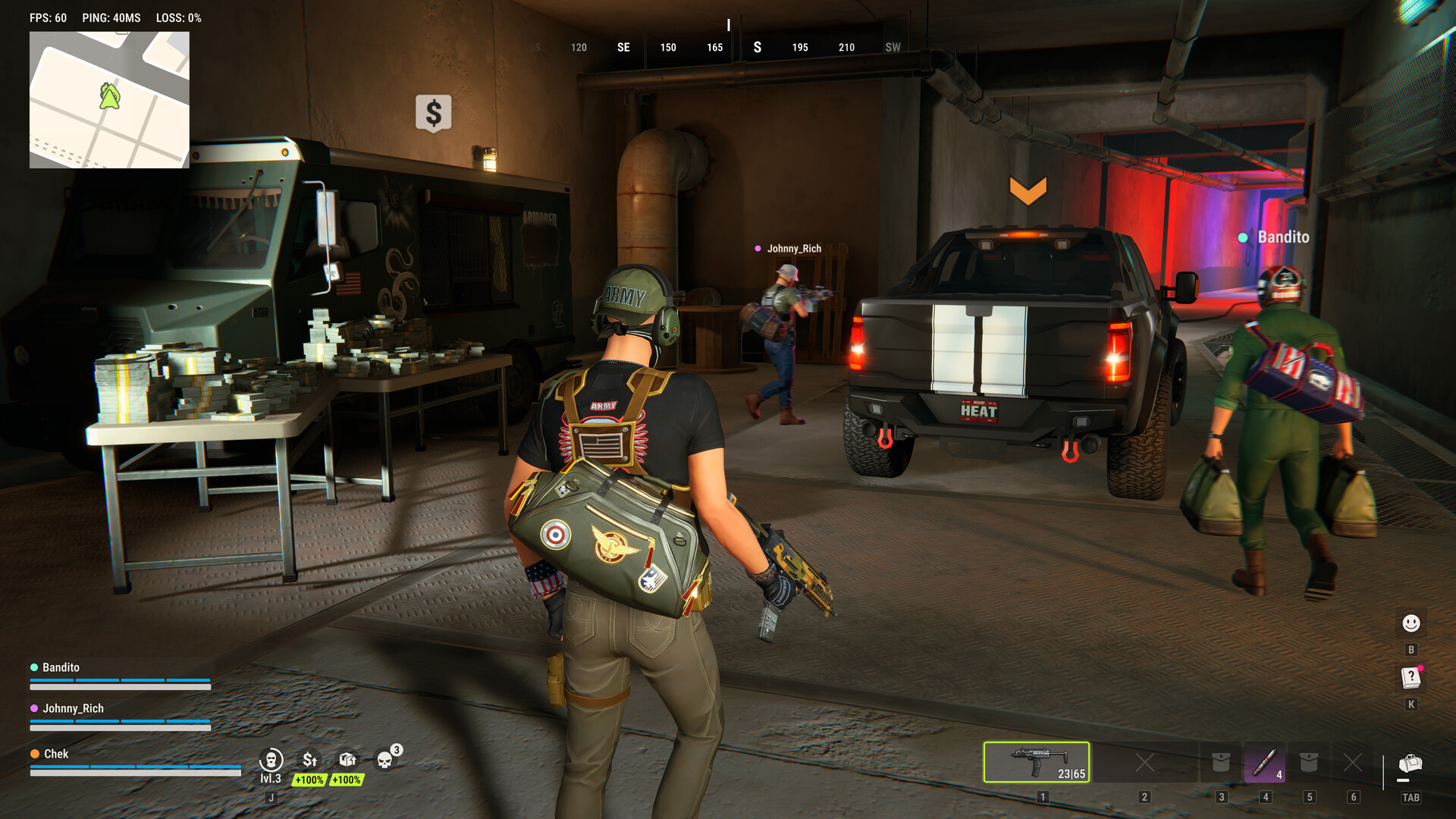
Official screenshot · Source: Steam store
ROB RUN GvG for territory, as the previews frame it, sits on top of a money progression. Cash and sellable valuables are the main prize. Loot can also include gear, vehicle keys, weapon mods, room keys, structure blueprints, and even land deeds. Deeds are a strong hint that property matters. They are not, in the sources used here, a fully explained capture button. Nobody outside the developer has published a flag timer, an income formula, or a hard cap on how many blocks one family can sit on. Plan for influence and logistics, not for a spreadsheet that does not exist yet.
| Approach | Map influence | How you usually lose | Best job this week |
|---|---|---|---|
| Solo | Low | One death or one arrest strands the stash | Scout, short cash runs, fill a crew gap |
| Small crew (about 3–6) | Local block or one base | Second score after you are already hot | Hold a modest hideout and one job type |
| Clan or crime family | Can shape the server | Betrayal, overbuilt base, leader offline | Territory pushes, diplomacy, scheduled raids |
Trust is treated as more valuable than ammunition because anyone can flip. That is not flavor text you can ignore. A truce that keeps two crews off the same bank for one night is worth more than a shootout that deletes both stashes. A broken truce is also content: previews expect failed jobs to spiral into revenge wars, and a lucky ambush to turn a small group into a feared name overnight. Write deals down in your own notes. The game will not remember them for you.
| If your crew has it | Upside described in coverage | Pressure that follows |
|---|---|---|
| Resource access | More room for gear, cash, and influence | Rivals start pricing you as the prize |
| Political weight | Truces and recruitment get easier | A bad deal starts a war |
| A rich, visible base | Crafting, storage, and a rally point | Intruders treat luxury as an invitation |
| A known name late in the week | People join the winning side | Everyone else guns for your last score |
How Fights Over Ground Play Out in Looty Bay
The Steam gameplay overview for ROB RUN puts Looty Bay at the center of heists. You are not locked into a criminal role the second you log in. You become a criminal when you put on a mask. Before that, you can walk the city, look at a target, and map exits without starting the spree. For a territory crew, that mask rule is free reconnaissance. Use it. Masking “just in case” is how a scouting trip becomes a notoriety problem.
Targets scale with prep. Corner stores and jewelry shops sit on the low end. Bank vaults and police armories sit on the high end. The same building can pay pocket change or a crew’s whole upgrade path depending on keys, gear, and homework. Some sites are written as quiet if alarms are handled and staff are intimidated. Quiet is not safe. Another criminal crew can walk into the same door, or a player patrol can roll past for no reason tied to your plan.
Notoriety rises the longer a spree runs. Higher notoriety is tied to better loot and better payout rates, and to risk that climbs with it. That is the core tension inside ROB RUN GvG for territory. A loud, long push funds a claim. It also tells every nearby human, cop or crook, that you are worth hunting. Stagger heat across the roster. Do not send the entire family into max notoriety on the same hour unless you are ready to defend the base afterward.
| Activity in Looty Bay | Cash potential | Heat | What it does for control |
|---|---|---|---|
| Small shop, short visit | Low to moderate | Lower if you leave fast | Almost none by itself |
| Jewelry, cargo, hauled safes | Moderate to high | Chases and contest calls | Funds benches, cars, and bribes |
| Bank vaults and armories | High | Very high | Can bankroll a push or expose it |
| Raid on a rival hideout | High if they hoarded | Open fight | Directly contests their grip |
| Player police response | Loss, surrender, or a paid pass | Ongoing | Can end a push without a clan war |
City events matter as much as scripted “objectives,” because the pitch is that the city keeps moving. One minute ATMs are restocked. The next, word leaks of an arms stash. Those are race conditions. A crew that already owns the nearby streets, the cars, and a scout who was unmasked on that block will get there first. A crew that only logs in for the leak will arrive late and meet both the loot and the people who heard about it too.
Player police are a third faction, not a PvE interrupt. The department is portrayed as badly understaffed and willing to hire almost anyone, with standard kit and a basic car supplied, and better equipment unlocked through Police Badges. Officers are paid from a cut of seized goods, from arrests, and from bribes that let suspects walk. They do not put personal equipment on the line the way criminals do, and their ceiling is lower. For map control, that means a cop can be a disruptor, a business partner, or a rival’s unofficial ally. Budget for them. Do not assume every uniform is hunting your clan specifically, and do not assume a bribe is loyalty.
If police catch you, surrender is an explicit option: they take what is in the bag and leave equipped gear. That rule should change what you carry into a contested block. The week’s buy-in does not belong in a backpack you can lose to a clean arrest. It also should not all sit in one lavish safe. Split the risk.
Roles, Rides, and Raid Timing
Reflexes are not the whole skill check. Previews stress reading the room, coordinating, and choosing the moment. Driving is called out as a real equalizer: clever routing and a decent driver can beat a better gunfight, including against player cops. You start in a cheap rental and work toward stronger vehicles. Vehicles are also how cargo moves. Some players are expected to steal safes and open them at home. Others sell contraband in the city. Both styles need a car that is already running before the alarm, not a car you remember after the shooting starts.
Open fights are described as expensive. Clever groups get what they want when bullets and cuffs are the wrong tool. That is diplomacy, timing, and information. A territory push that starts with a gunfight on the street is usually a push that already failed the planning test.
| Role | During a territory push | Mistake that wipes the night |
|---|---|---|
| Shot caller | Picks the target, the exit, and the abort | Calling a second score while the crew is hot |
| Driver | Cargo, escape, and cutting a chase | Leaving the only exit parked in the open |
| Quartermaster | Benches, safes, and what never leaves base | Hoarding so much the base is the best target |
| Diplomat | Truces, in-fiction police deals, recruiting | Treating a voice chat promise as cover |
| Scout | Unmasked routes before anyone masks | Masking early and spending notoriety on a walk |
Use a short checklist before anyone masks up:
- Name the abort. Cash in the bag, a downed driver, or a second hostile crew are all valid stop signs.
- Confirm the car is staged, fueled by your plan, and not your only storage.
- Split keys, cash, and anything deed-like across people so one arrest is not a reset.
- Decide in advance whether this run is allowed to raise notoriety or must stay short.
- Assign one person to watch the base channel. A raid on an empty hideout is a territory loss even if the heist pays.
- If a truce covers this block, say so out loud. Accidental friendly hits end alliances.
Negotiation does not need a long speech. Offer something concrete and reversible: one shared window on a high-value site, a promise to stay off a base for the night, or a cut of a job neither crew can clear alone. Keep a backup if the other side shows up masked anyway. Betrayal is part of the published meta, not a surprise exploit.
Small crews should not copy full-clan habits. Three people can own a repeatable job, a modest base, and one relationship with a police player or a neighboring family. They cannot garrison every rumor. Pick a lane. If a larger group already sits on the armory, fund yourself on cargo and safes until you can buy a real contest, or sell your information instead of dying for it.
Hideouts as Both Vault and Target
Hideouts are both the refuge and the prize. You can build them up, store loot and vehicles, and place workbenches and safes. Benches craft and repair. Safes hold valuables. Cars are mobile assets, which means a base with no vehicles is a bank that cannot move. The catch is explicit in the previews: the more comfortable the shelter, the brighter the target. Guarding it is an ongoing cost, not a one-time upgrade.
That cost is the quiet half of ROB RUN GvG for territory. A clan that wins three heists and pours everything into a showpiece base has advertised the next raid site. A clan that stays poor and invisible never gets the benches that make the next week’s first days faster. Balance hoarding and mobility. Keep a working stash. Keep enough value on wheels, or on a second smaller site if your group can staff it, that one breach is not the season.
Practical rules that follow from those systems:
- Upgrade function before looks. A bench and a safe change your power. Extra luxury mostly changes who queues outside.
- Do not craft or crack stolen safes on a schedule the whole server can learn. Predictable craft hours are raid hours.
- Park an escape car off the most obvious pad when a push is underway.
- After a high-notoriety run, assume someone followed the chase home. Rotate who logs out inside the base.
- If you cannot staff a defense, move value before you log off. An empty castle is just loot with walls.
Raiding someone else’s home is the direct territory tool the sandbox actually describes: rival hideout hits sit next to bank jobs, chases, and shootouts as the daily grind. Go in for a reason you can name. “They have a full safe and half their roster is on a loud spree downtown” is a reason. “We are bored and max heat” is how you donate your gear to their benches. One mistake is framed as potentially fatal to your progress, because gear, vehicles, and hideouts can all disappear quickly. Weigh the payday against being exposed, then weigh it again against who will still be online in an hour to defend what you bring home.
The One-Week Season and How to Spend It
The season is the hook. In about seven days a player can be pitched as climbing from a low-end hired gun to the head of the server’s largest outfit. Then the server wipes and the board clears. The reset is not a pause. It forces ambition, speeds up conflict, and rewards people who learned who lies, which blocks get contested, and which jobs are traps. Each cycle is a compact season. Knowledge carries. Gear does not.
ROB RUN GvG for territory only pays off if you spend influence before that wipe, not in a stockpile you will not see next week. Late-week construction is a gift to whoever raids you on the last night. Late-week diplomacy can still be worth it, because a truce that protects one final vault job converts straight into power you can actually use. Early-week greed is just as costly. A day-one luxury base with a rental-car roster is a donation.
| Phase | Spend attention here | Leave it alone |
|---|---|---|
| Opening hours | Rental car, first cash, one partner you can actually reach | Fancy rooms, max notoriety, picking fights with full clans |
| Early week | Roles, a modest hideout, repeatable short jobs | Assuming yesterday’s route is unscouted |
| Midweek | A real block, a truce, or folding in smaller groups | Unguarded luxury and a second front |
| Late week | Defense, one decisive raid, converting deals into cash | New building projects and idle safes |
| Wipe | Notes on routes, traitors, and which jobs were bait | Any plan that needs your current gear |
A sample arc for a new family, built only from those pressures:
Start with two or three people who can be online together. Run short, lower-heat jobs until the rental is no longer your only plan and the bag is not your only bank. Add a scout who is willing to stay unmasked. Put up a base that can craft and store, then stop upgrading the moment it looks like the richest building on the block. Use midweek to either cut a truce with the neighbor who can actually hurt you, or hit them once while their own notoriety is high and their defense is downtown. Spend the last day protecting whatever that push earned. When the wipe hits, keep the roster and the notes, not the fantasy that the same base will be waiting.
| Published figure | What the coverage actually says | How a crew should use it |
|---|---|---|
| About 5,000 players | One city, human cops and human criminals | Assume every good target is contested |
| Roughly one week | Climb hard, then the server resets | Convert power before the wipe |
| No NPC stand-ins in the pitch | Chases and raids are improvised | Do not build routes that need a dumb bot |
| Money as the progression spine | Cash and valuables outrank most loot | Territory that does not pay is a hobby |
Community reports from a finished live season are not in the source set behind this article. The two public writeups agree on human opponents, clan power, bases, and a fast reset. They do not publish a patch-noted points table. If a later playtest adds a formal capture meter, adapt the week plan to that meter. Do not throw out the risk rules. Heat, cars, split stashes, and unreliable allies will still decide who is holding the ground when the meter ticks.
The crews that win this format are rarely the ones with the flashiest first heist. They are the ones who treat ROB RUN GvG for territory as a short political season: scout before the mask, cap notoriety on purpose, pay or avoid player police without trusting them, keep the base useful rather than famous, and spend the map before the wipe spends it for you.
FAQ
What does ROB RUN GvG for territory change versus playing solo?
Solo play can still make money and even string together a careful week. It does not give you enough people to hold a base, run a raid, and talk to rivals at the same time. Territory, as previews describe it, is how a clan turns cash into influence. Without a crew, you mostly react to people who have that influence.
Are player cops part of guild fights or a separate game?
They are separate careers in the same city, and they crash guild plans constantly. Officers are real players with their own pay, including seizures, arrests, and bribes, and they are not risking personal kit the way criminals do. A territory push that ignores them will lose bags, time, or both.
How hard does the weekly wipe hit a clan?
Progress on gear, bases, and stored wealth is built to reset on a roughly one-week cycle. The point is a full season, not a permanent empire. What you can keep is practical knowledge: who honored a truce, which jobs were bait, and which roles your roster actually filled.
Can a small group hold any ground at all?
Yes, if “ground” means one modest hideout, one job type, and one diplomatic relationship, not the whole of Looty Bay. Previews say you can climb fast and lose everything in a single mistake. A small crew that stays mobile, splits its stash, and refuses a second front is playing the system as written. A small crew that builds a landmark is volunteering for the next raid.
Related Guides
ROB RUN control of territories: Clan Power Guide
ROB RUN control of territories decides clan power, raids, and survival before each weekly server wipe.
ROB RUN resources and influence territory guide
Learn how ROB RUN resources and influence shape territory, clans, hideouts, and the weekly wipe before Early Access in November 2026.
ROB RUN server wipes: How Territory Resets Work
See how ROB RUN server wipes reshape territory, clans, and loot in a one-week crime sandbox, and how to plan each reset.
ROB RUN first look: Gameplay, Release and PC Guide
Our ROB RUN first look covers its crime sandbox, clans, server wipes, November 2026 release plans, PC requirements, and playtest access.
ROB RUN closed alpha: playtest, date, and what we know
ROB RUN is still unreleased. See the Steam playtest, November 2026 Early Access plans, PC specs, and what closed alpha clips leave unconfirmed.