ROB RUN control of territories: Clan Power Guide
ROB RUN control of territories decides clan power, raids, and survival before each weekly server wipe.
In a city where every officer and every outlaw is another person, empty streets are a lie. ROB RUN control of territories is the quiet system underneath the shootouts: it decides who eats, who gets chased, and who spends the wipe hiding. ROB RUN control of territories matters because a single week is the whole season, and ground you do not hold will be used against you by someone who showed up organized.
Published coverage of the mode describes a sandbox with about 5,000 players and no NPC fillers. Plans fail when another crew simply burns them down. That is why territory is not a sidebar stat. It is the map of your income, your exposure, and your politics.
Why Ground Matters More Than a Big Score
A bank job can fund a night. A held district can fund a crew. The distinction shows up the moment resources get scarce. Coverage of the game frames influence and supplies as limited, so every raid, chase, and stash run is a bid for leverage rather than a solo highlight reel. Treat ROB RUN control of territories as the scoreboard that lasts longer than one firefight.
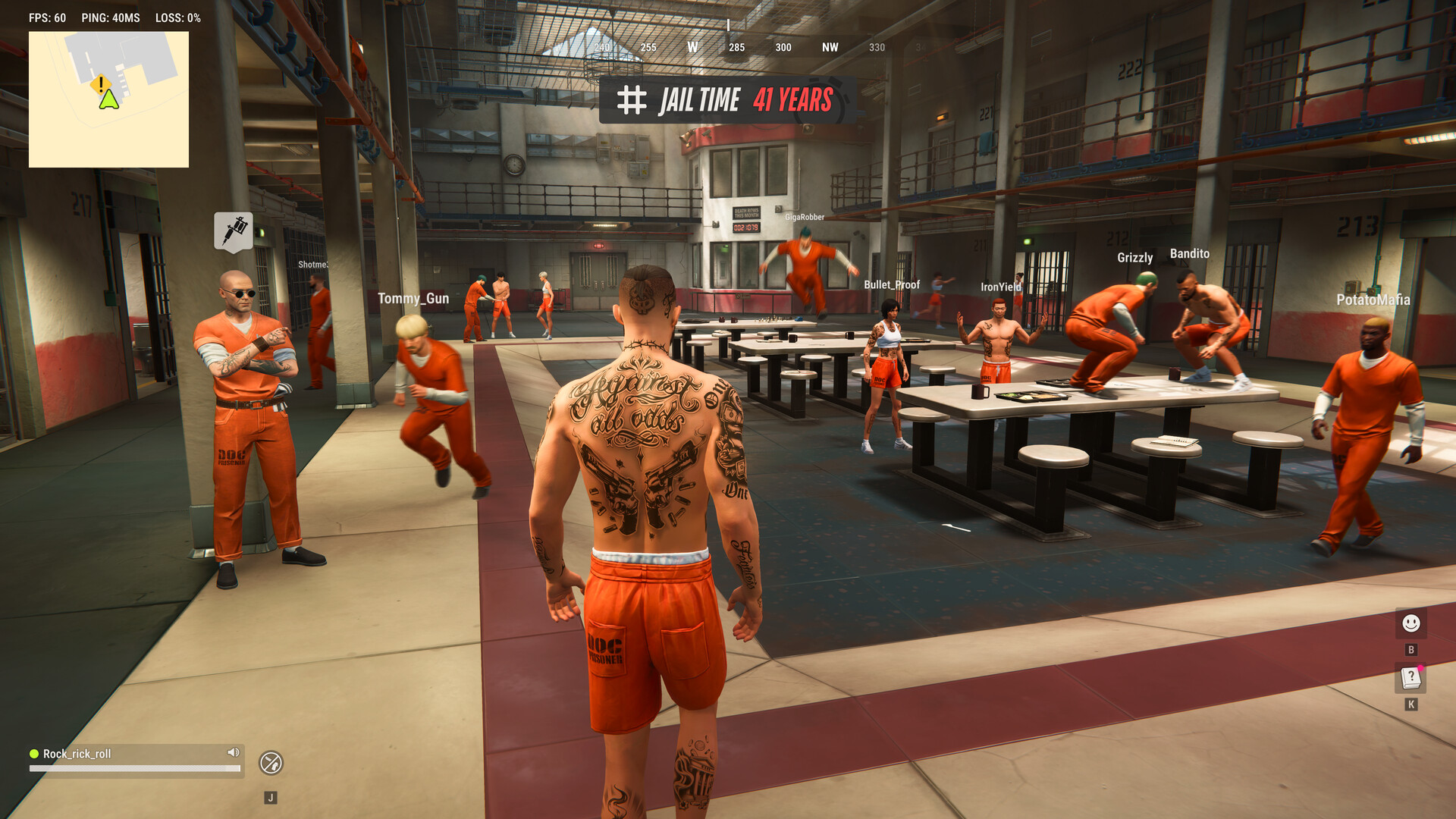
Official screenshot · Source: Steam store
| Benefit | What you gain | What it costs |
|---|---|---|
| Resource access | Steadier crafting inputs and stash routes | Rivals learn your pattern |
| Influence | Easier recruiting and a louder reputation | You become the raid target |
| Staging space | Safer meetups near workbenches and vehicles | A fixed address to scout |
| Political weight | Truces people actually honor | Betrayal hurts more |
Solo play can keep you alive. It rarely lets you shape the server. Guilds, clans, and crime families are the engines that turn a lucky ambush into a district. If you prefer chaos, stay independent and expect the standings to punish isolation. If you want the map to bend, you need people who log in when you are offline.
Strength and cunning both matter, but neither replaces a place to store the haul. A crew that ignores ROB RUN control of territories often wins a heist and then loses the vehicles, guns, and hideout that made the next job possible. The loss window is short. Gear, cars, and bases can disappear in one bad rotation.
Before you plant a flag, spend one session only watching. Note which blocks stay loud after a robbery, which alleys have two exits, and which crews share your hours. A quiet industrial edge with a single approach is often worse than a busier block with three ways out. Territory you cannot leave is not control. It is a cage you built for yourself.
Clans, Roles, and Who Actually Holds the Block
Survival and dominance are different goals. You can scrape by alone. You will struggle to set the pace, block a rival route, or answer a raid at 2 a.m. Create a crew or join one that already has a schedule. Assign roles before you assign turf. Otherwise the first successful raid becomes a loot argument, and arguments are how alliances die.
| Role | Main job | Territory duty |
|---|---|---|
| Shot-caller | Picks fights and walk-aways | Decides which block is worth bleeding for |
| Quartermaster | Tracks guns, cash, and craft parts | Keeps the safe and workbench stocked |
| Scout | Watches routes and rival bases | Flags when a district is soft |
| Driver | Moves people and loot | Extracts before a chase snowballs |
| Diplomat | Talks truce, tribute, or joint raids | Stops two-front wars |
Trust outperforms ammunition in this meta, because anyone can flip. Reliable allies are the gap between climbing and vanishing. Law enforcement is player-driven too, so a chase is improvisation, not a pattern you memorize. Open fights are costly. Clever groups get what they want through deals, lookouts, and traded information when a shootout is a bad trade.
A practical test: if your roster cannot cover a scout, a driver, and someone who stays on the stash, you do not hold territory. You are visiting it. Join a larger family until your own bench is deep enough, or keep your footprint to one stash and one vehicle pool.
When you recruit, ask for hours, not highlight clips. A player who can sit on a stash for forty minutes is worth more to a district than a fragger who vanishes after the raid. Write the split before the job: who touches the safe, who drives, and what happens if someone drops mid-fight. Ambiguity is how a clean hit becomes an internal war, and an internal war is the opening rivals wait for.
A Seven-Day Push Before the Wipe
The hook is the clock. In about seven days a paycheck-level character can end up running the largest outfit on the server, then the wipe clears progress and the politics start over. That reset rewards people who learned routes, grudges, and which alliances were fake. It also punishes hoarders who spent six days decorating a base nobody can defend on day seven.
Use the week as a season, not a grind bar.
| Day | Focus | Territory move | Walk-away rule |
|---|---|---|---|
| 1 | Cash, a vehicle, one safe contact | Scout two districts, claim none | No hero fights while broke |
| 2 | Core trio and shared stash rules | Pick one low-traffic block | Leave if a larger crew already lives there |
| 3 | Workbench uptime and a spare car | Lock a route in and out | Abort if the extract needs a second chase |
| 4 | First organized hit or escort deal | Expand only if the day-3 route is quiet | Do not open a second front |
| 5 | Recruit or sign a truce | Fortify, do not redecorate | If defense fails once, shrink the map |
| 6 | Deny a rival's craft loop | Pressure their edge, not their home | Save bodies for the last night |
| 7 | Consolidate or shift value into cars | Hold one jewel, drop vanity ground | The wipe is coming; do not die on a sofa |
Midweek is when ROB RUN control of territories gets expensive. Early grabs feel free because nobody is geared. By day four, the same alley has a crew with a parked escape car and enough people to watch both ends. Weigh the payout of a daring raid against the cost of being seen. One sloppy pull can start a revenge war. One clean ambush can turn a small group into the name people avoid. Those stories are player-made. Your job is to be the crew that planned the exit before the entry.
Early write-ups do not yet read like a stack of patch notes, so treat the calendar above as a planning template. Adjust it when your server's hot spots do not match the rumor, and label anything you hear in chat as player experience until you have watched it yourself.
Bases, Loot, and When a Castle Becomes Bait
Hideouts are both shelter and loot pin. You can upgrade them, park vehicles, place workbenches, and lock safes. Comfort is progress: crafting and repairs live there, and cars are mobile assets when the block gets hot. Comfort is also advertising. A lavish shell tells every scout that the inside is worth the trouble. Guarding it becomes a permanent tax.
Balance hoarding against mobility.
| Upgrade | Use | Risk if you rush it |
|---|---|---|
| Safe | Protects the cash you need for the next push | A safe in an empty shack is a gift |
| Workbench | Craft and repair without begging allies | Traffic to the bench reveals the site |
| Vehicle spot | Turns loot into a leaving plan | Parked rares invite a night raid |
| Visual flex | Morale and a recruiting screenshot | Marks you as wealthy |
| Second site | Backup if the main base burns | Splits an already thin defense |
Defense is half of ROB RUN control of territories. The other half is knowing when the base should be empty. Store what you cannot afford to lose, stage the rest in a car, and assume a rival is already counting your doors. If the hideout is nicer than your escape plan, you built a target, not a home.
Read the fight before you take it. Success is coordination and timing, not only aim. A police player who knows the block will not take the same line twice. A rival raid is not a scheduled event. If your callouts are late, the stash is already gone. Pull the trigger when the extract is real, not when the scoreboard looks tempting.
Fights, Truces, and the Social Meta
Daily life in the sandbox is robberies, hideout hits, chases, and messy gunfights. That grit is intentional. It is also incomplete if you only play the gun. Because every confrontation is human, social play is where power actually sticks. Negotiation, truce, and betrayal sit beside the raid.
Diplomacy keeps ROB RUN control of territories from becoming a nonstop firefight you cannot staff.
| Situation | Aggressive play | Cooler play | Usually better when |
|---|---|---|---|
| Rival scouts your block | Ambush and chase them off | Feed a false route, then move the safe | You are outnumbered online |
| Offered a truce | Demand tribute and a shared raid | Accept a short truce with a written split | Both of you have a third enemy |
| Cop pressure spikes | Shoot the chase and reset | Dump the hot car, break line of sight, wait | You are carrying craft parts |
| Ally goes quiet | Replace them fast | Ask once, then pull their stash access | They missed a defense window |
| You just took a district | Announce it | Hold it quietly for a day | Your roster is under five |
For example, a four-player crew that wins a hideout raid and immediately brags about the location often spends the next hour defending furniture. The same crew that moves the valuable crafting loop into vehicles, and leaves the old shell as a decoy, keeps the income. That is an illustration of the risk loop described in coverage, not a guaranteed tactic.
An external write-up worth reading before you commit a week is the Indie Bunny feature on surviving ROB RUN's player-driven crime sandbox, which lays out the all-human city, the clan push, and the wipe clock in one place.
Betrayal is not a glitch in this meta. It is a tool other players will use. Limit who can open the safe. After a joint raid, move the valuables and do not leave the only backup plan with the diplomat. If trust is the currency, spend it in small bills. A single insider who knows the second site can erase a week faster than any patrol.
When the server wipes, the furniture goes away and the habits stay. The crews that climb again are the ones who already know which districts are loud, which truces were theater, and how fast a pretty base becomes a beacon. Each reset is a compact season. Show up with a smaller map and a clearer roster than last time.
FAQ
How does ROB RUN control of territories actually pay off?
It pays off as access and leverage, not as a trophy icon. Holding a block steadies crafting routes and gives your clan a place to stage cars and people. It also invites raids. The profit is real only if the supplies you extract beat the gear you lose defending the pin.
Can a solo player hold any ground?
You can survive solo, and you can stash loot, but you will struggle to shape the server. Territory that matters gets contested by groups with shifts. A solo plan works better as hit-and-move: one cache, high mobility, and no vanity base. If you want lasting influence, join or build a crew.
What should we do right before the weekly wipe?
Shrink to one defensible site, move value into vehicles, and avoid new wars you cannot finish. The wipe deletes the castle either way. Use the last day to deny a rival's craft loop or to bank the lessons, not to start a decorating project.
Are police encounters scripted patterns?
No. Officers are players, so chases and raids are improvised. Do not build a territory plan that assumes the same patrol path every night. Scout the humans who actually play your hours, and keep an exit that does not require winning the gunfight.
Related Guides
ROB RUN GvG for territory: Clan Control Guide
Plan ROB RUN GvG for territory with clan roles, raid timing, hideout defense, and weekly wipe priorities.
ROB RUN resources and influence territory guide
Learn how ROB RUN resources and influence shape territory, clans, hideouts, and the weekly wipe before Early Access in November 2026.
ROB RUN server wipes: How Territory Resets Work
See how ROB RUN server wipes reshape territory, clans, and loot in a one-week crime sandbox, and how to plan each reset.
ROB RUN first look: Gameplay, Release and PC Guide
Our ROB RUN first look covers its crime sandbox, clans, server wipes, November 2026 release plans, PC requirements, and playtest access.
ROB RUN closed alpha: playtest, date, and what we know
ROB RUN is still unreleased. See the Steam playtest, November 2026 Early Access plans, PC specs, and what closed alpha clips leave unconfirmed.