ROB RUN negotiate truces: Clan Diplomacy Guide
Learn how clans in ROB RUN negotiate truces, split Looty Bay turf, and last through weekly wipes without losing gear or allies.
A city full of real players burns cash, gear, and hideouts faster than most crews can replace them. If your clan wants to reach the weekly reset with a stash still intact, you need to ROB RUN negotiate truces before a revenge spiral empties the safe. This guide shows when to ROB RUN negotiate truces, what to trade, and how to tell a useful pause from a setup.
ROB RUN is a player-driven crime sandbox, not a lobby full of bots. Early coverage puts about 5,000 people in one city, and every cop or crook is another human with a private agenda. The official ROB RUN gameplay overview on Steam describes Looty Bay as a heist map where cash, vehicles, and notoriety matter more than a clean extract.
Why Open War Empties a Clan Faster Than a Wipe
A shootout feels decisive until you price it. Gear, vehicles, and an upgraded hideout can disappear in a single bad minute. Published coverage of the sandbox stresses that volatility on purpose: one mistake can strip a crew, and a failed heist can turn into a revenge war by nightfall.
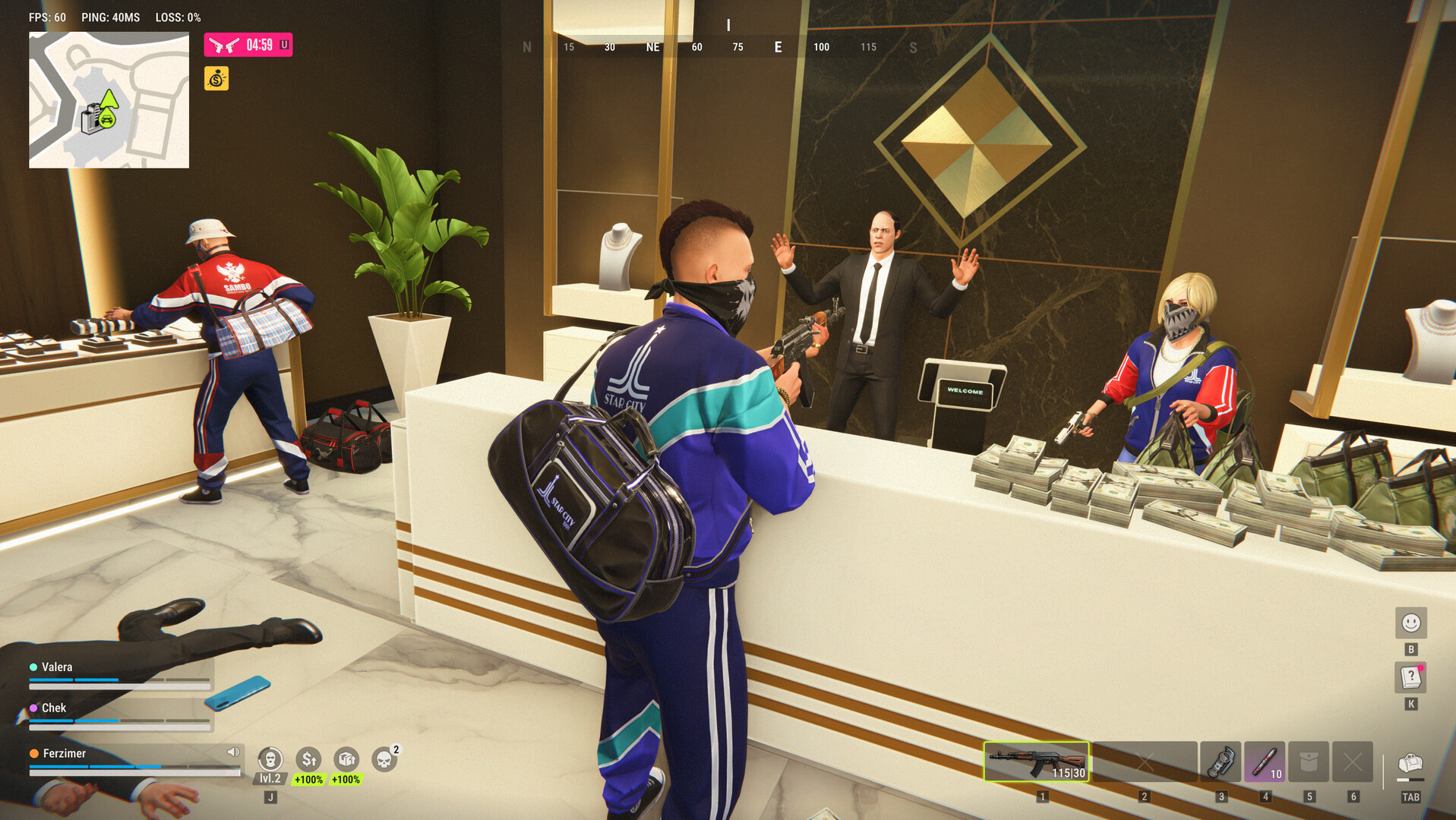
Official screenshot · Source: Steam store
Open fights also invite strangers. A rival raid is not a scripted timer. It is an improvisation, and improvisation with thousands of people nearby gets expensive. Third crews arrive for the loot you already paid for with ammo and broken cars.
That is why disciplined groups ROB RUN negotiate truces even when they think they could win the next block. A pause protects the workbench, the safe, and the vehicles that turn a heist into profit. Rides are not just transport. Players use them to move cargo, including safes they cut open at base, or to sell contraband in the city. Lose the fleet and the truce you refused starts looking cheap.
| Response | Use it when | What it costs | What you are trying to save |
|---|---|---|---|
| Open raid | A rival is already on your hideout | Gear, vehicles, heat, a possible feud | Whatever is still inside |
| Short truce | Both sides can afford to lose a fight | Time and a slice of turf or loot | Safes, benches, weekly momentum |
| Shared blacklist | A third crew is farming both of you | Intel and a no-third-party promise | Clean heist windows |
| One-shift bribe | A player officer already has you | Cash paid to that officer | Time, not a season-long alliance |
| Surrender to police | The bag is the only hot item | Confiscated bag contents | Equipped gear, per the overview |
The last two rows are not clan treaties. Mixing them with a crew deal is how groups get taxed twice for the same score.
Read the block before the mask goes on
You are not flagged as a Criminal until the mask goes on. Before that, you can walk the city, study a target, and map exits. Use the same window for diplomacy. A masked walk up to a rival garage reads as a raid. An unmasked ask in a neutral block reads as someone who still has something to lose.
Notoriety changes the offer. The longer a spree runs in Looty Bay, the higher that level climbs. Higher notoriety improves loot and payouts while the risk climbs with it. A clan at peak heat is a bad partner and an obvious payday. Do not open talks by listing your best vault route.
Check four things before you speak:
- Active fights near the block you want. Peace with one side paints you for the other.
- Who may hold build leverage. Loot can include structure blueprints and land deeds, so turf talk may be about real rights, not a street nickname.
- Vehicle quality. A crew still on cheap rentals has less to protect and more reason to break a deal for one safe.
- Police players on the exit. A freeze that ignores patrol routes is a scheduled arrest.
Coverage of the clan layer is direct: surviving alone is possible, but shaping the server is easier inside a guild, clan, or crime family. Assign a talker who is not also your only good driver. The person making the offer should not be holding the only escape car.
Steps for a Deal That Survives the Next Raid
No published overview describes a truce button, a treaty timer, or a hard non-aggression zone. Until something like that exists, crews ROB RUN negotiate truces as social agreements. Write them so the whole roster can repeat them. Vague peace is how a lookout "just checks" a garage and starts a war.
| Step | What to do | Walk away if |
|---|---|---|
| 1. Name the parties | List clan tags, not only the two people in voice | The speaker cannot bind the raiders |
| 2. Set the clock | Hours, or until the wipe, on a shared clock | They want "until things calm down" |
| 3. Draw the map | Blocks, shops, vaults, and hideout approach paths | They will not name a base radius |
| 4. Split targets | Who may hit banks, jewelers, armories, or ATMs | They claim every high-value site |
| 5. Define outsiders | Whether either side may join someone else's raid | They demand you ignore allies under fire |
| 6. Price a breach | What counts as a break, and the response | Any scratch means total war, with no middle step |
| 7. Confirm in text | A short recap both sides can scroll back to | They insist on voice-only so details can drift |
This sequence is planning advice drawn from how the sandbox is described, not a documented menu. After voice, paste the recap in text. Have a second member from each clan repeat the map line. If that person remembers a different vault, you do not have a deal. You have two stories.
Keep the first agreement small. A two-hour freeze on hideout raids is easier to verify than a promise to share the city. Reliable allies matter more than a full magazine, because anyone can turn. Small deals create a record. A record is the only enforcement you have.
A chat script you can actually enforce
Copy this, then edit the names and the clock:
"Clan A and Clan B: no raids on each other's hideouts until 22:00 server. Jewelry on 4th is A's today. The bank vault stays unclaimed. Either side may still flee police. Shooting a member inside the frozen radius ends the deal. Third crews are fair game and not our problem."
That script does not need friendship. It needs a boundary a lookout can see without a speech.
Chips That Are Worth More Than a Promise
Progression is built around money. Loot can be almost anything — weapon mods, room keys, vehicle keys, blueprints, even land deeds — but cash and sellable valuables are the prize that matters. If you ROB RUN negotiate truces without moving value, the next vault will beat the handshake.
| Chip | Why clans care | Danger of offering it |
|---|---|---|
| Hideout radius | Bases store loot, cars, benches, and safes | A rich base is already a beacon; a floor plan confirms the pin |
| Heist windows | The same site pays pocket change or a huge take based on keys and prep | Sharing your key timing tells them when you are loaded |
| Vehicle access | Cargo theft and getaways depend on the car | Lending a strong ride turns peace into theft |
| Deeds or blueprints | They shape what you can build after a score | Handing the deed over is a transfer, not a pause |
| Restock and stash intel | ATMs refill and arms locations leak on a living city clock | Stale intel used as bait is a setup |
| A cop contact | Officers are players and can take bribes | You do not control that officer's next shift |
Do not trade your only safe method, your only arms rumor, or the pin of a base you cannot move. Hideouts are refuge and target at once. The more comfortable the shelter, the brighter it looks to intruders, and guarding it is a running cost. A truce should lower that cost, not publish the layout.
Strength still matters. Bold plans carried out cleanly are what the sandbox rewards. Diplomacy is how you choose which wars you can feed. If you cannot pay the breach price you wrote in step 6, do not agree to step 6.
Use this test: if the other clan vanished for the rest of the week, would your route still profit? If the answer is no, you did not buy peace. You outsourced your income, and they can tax it whenever they want.
Territory, Betrayal, and the Player Cop Problem
Territory is not a decorative banner. Control opens resources and influence, and it invites conflict. Negotiation, truce, and betrayal sit in the same meta because breaking faith sometimes pays for a garage full of someone else's cars. Crews either ROB RUN negotiate truces here or feed the revenge cycle those write-ups describe.
| What you see | Read it as | Sensible next move |
|---|---|---|
| They recap the map unprompted | They want the deal enforceable | Keep the scope and the clock |
| Only one member talks; raiders stay silent | The clan may not be bound | Shrink the clock or refuse |
| They ask for your bench layout "to avoid accidents" | Scouting | Offer a radius, not a blueprint |
| A third clan hits you and your "partner" arrives to help | Possible takeover | Treat arrivals as hostile until they leave |
| They push a cop friend into the block "for safety" | Pressure or a shakedown | End talks; bribes are separate |
| They honor one short window, then ask for longer | A real track record | Expand time or map, not both |
Treat betrayal as a tactic, not a plot twist. A lucky ambush can lift a small crew overnight. Your partner may be that crew, and your safe may be the ambush. This is planning caution based on the described meta, not a logged player report of a specific exploit.
Police players sit outside clan logic. The overview paints Looty Bay's department as understaffed, hiring widely, and issuing basic gear. Officers can trade Police Badges for stronger kits. They earn from confiscations, arrests, and bribes. Unlike criminals, they do not risk personal equipment on shift, and their ceiling is lower because the paycheck comes out of what they seize.
A clan freeze does not bind them. Use the tools that actually exist:
- Surrender when the bag is the liability. The described result is a confiscated bag and equipped gear left on you.
- Bribe as a one-shift purchase. The officer is a player, not a faction perk.
- Never promise a rival that "the cops are handled" unless that officer is in your channel right now.
If a rival demands immunity from player police, they are asking you to sell something you do not own.
Let the Weekly Wipe Set the Length of the Promise
Early coverage hangs the mode on a fast season. In about a week, a crew can climb from nobody to the top of the server's largest outfit. Then the server wipes and progress resets. That clock punishes grudges that outlive the loot. A blood feud that eats three days of heists is a bad trade when the season is seven days long.
You should ROB RUN negotiate truces with the wipe in the first sentence. "Until reset" means something. "Forever" does not, because the season ends on a schedule. Each wipe is also a fresh start: new alliances, the same ambition, a tighter plan. Neighbors who burned you last week may be useful on day one, when everyone is back on rental cars.
| Wipe phase | Diplomatic posture | Goal |
|---|---|---|
| Day 1, empty garages | Short, specific freezes | Get a bench and a second car online |
| Midweek, notoriety up | Trade windows, not loyalty | Bank cash before a feud |
| Rival base looks rich | Freeze only if you cannot crack it cleanly | Avoid a raid that deletes your own safe |
| After a betrayal | Public, narrow response | Punish the breach you defined, then stop |
| Last day before reset | Cash out and shrink the map | Do not die holding a vault you cannot spend |
Adaptation is the point of the reset. Crews that learn who honors a two-hour freeze will outpace crews that relitigate every insult. Reading the block, moving with your team, and spending violence only when the payoff clears the risk beats raw reflex.
If talks fail, leave. Solo play is described as viable chaos with a weaker grip on the server. That is a legal way to play. It is just a different scoreboard. Do not pretend a refused offer is still binding because you would have agreed.
The crews that last ROB RUN negotiate truces while they still have a car and a safe to protect. Before the next session, write three lines your roster can see: who you will talk to, which block is frozen, and what ends it. Then go make money. ATMs restock and stash locations leak whether or not your argument is finished.
FAQ
Can you ROB RUN negotiate truces inside the game client?
Nothing in the Steam gameplay overview describes a formal treaty menu. Treat truces as player agreements with a named clock, a named map, and a text recap. If a later patch adds a hard system, use that. Until then, enforcement is social.
Do truces stop player police?
No. Clan peace does not bind officers. They are separate players who confiscate goods, make arrests, and sometimes take bribes. Surrender is its own track: it is described as costing the bag, not your equipped gear.
Should a new clan offer territory on day one?
Offer time, not your only hideout. Bases get more dangerous as they get nicer, and everyone starts poor. A short freeze while you craft and store the first real take is worth more than gifting a land deed to look friendly.
What if the other crew breaks the deal mid-heist?
Use the breach price you already wrote. A response you cannot afford is how a failed score becomes a week-long feud. Hit the defined target, tell your roster the truce is over, and get the remaining cash out of Looty Bay before notoriety and third parties pile on.
Related Guides
ROB RUN assign roles: How Clans Take Control
Learn how ROB RUN assign roles builds clans that hold territory, run raids, and last through each weekly server wipe.
ROB RUN Clan Guide: Roles, Raids, and Territory
Plan a ROB RUN clan with roles, raids, territory, and wipe-week habits before the November 2026 Steam Early Access.
ROB RUN crime family guide to clans and power
See how a ROB RUN crime family handles roles, raids, territory, hideouts, and weekly wipes ahead of the November 2026 Early Access.
ROB RUN first look: Gameplay, Release and PC Guide
Our ROB RUN first look covers its crime sandbox, clans, server wipes, November 2026 release plans, PC requirements, and playtest access.
ROB RUN closed alpha: playtest, date, and what we know
ROB RUN is still unreleased. See the Steam playtest, November 2026 Early Access plans, PC specs, and what closed alpha clips leave unconfirmed.