ROB RUN Clan Guide: Roles, Raids, and Territory
Plan a ROB RUN clan with roles, raids, territory, and wipe-week habits before the November 2026 Steam Early Access.
Five thousand other humans can ruin a perfect plan in seconds. A ROB RUN clan is the difference between a lucky heist and a week of actual power on a server where every cop and every criminal is a real player. If you want a ROB RUN clan that still exists after the first betrayal, you need roles, a hideout plan, and a wipe calendar before you ever queue.
The store pitch is simple and harsh. Solo play can keep you alive. Working with other people is how you hold ground, run raids, and bargain when a fight would get everyone killed. That is the whole point of clans in this game, and it is also why sloppy groups collapse faster than lone players.
Why a ROB RUN Clan Beats Solo Play
ROB RUN is built as a large online crime sandbox. Cops are players, not scripted patrols. Criminals have their own agendas. With a crowd that size, an open street fight is often the worst option on the board. The listing says you can look for another way when a shootout is too dangerous. A group that only knows how to rush will bleed gear every night.
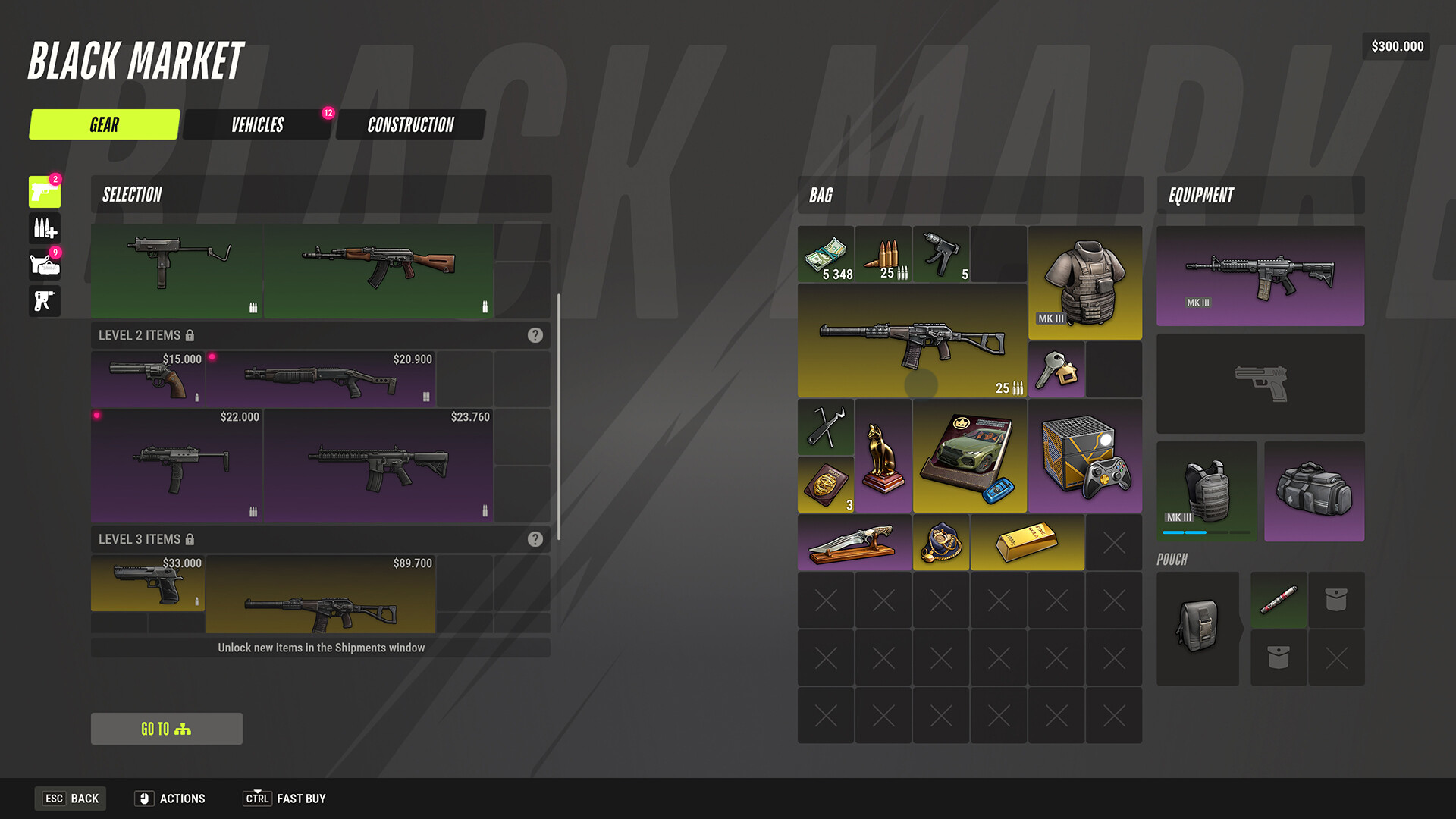
Official screenshot · Source: Steam store
Treat a ROB RUN clan as a small organization, not a friends list with a tag. The features called out for groups are concrete: create a crime family or join one, assign roles, organize raids, take territory, fight gang wars, and negotiate truces. Allies are described as the most valuable asset in a world where anyone can turn on you. That last line is the design warning. Trust is a resource you spend on purpose.
Solo players still matter. A single scout can spot a convoy, a loose cop patrol, or a rival base that is louder than it is defended. The mistake is expecting one person to store loot, hold a district, and win a war in the same hour. Power in this setting comes from splitting those jobs.
| Approach | What you can realistically do | Main weakness | Best use |
|---|---|---|---|
| Solo | Scout, steal, slip past fights, stash small hauls | No backup when a plan fails | First hours, info runs, quiet profit |
| Loose duo | Watch each other's back on a job | No territory presence after logout | Heists and escapes |
| Small crew | Run a raid, staff a hideout, rotate drivers | Brittle if one role quits | Learning the meta in Early Access |
| Full clan | Hold ground, schedule wars, offer truces | Politics, leaks, and overbuilding | Week-long pushes for server influence |
The one-week arc on the store page is the clock you should respect. A regular thug can become the boss of the biggest outfit on the server, then the server wipes and everyone starts again with sharper habits. Clans that treat each week as a season will outpace clans that treat it as a permanent empire.
What the Store Page Confirms About Clans
As of the November 2026 listing, ROB RUN is not a finished live-service game with a public clan handbook. It is slated for Early Access, with a planned release window in November 2026, and the page still tells players the game is not yet available to buy. A playtest exists as a request-access signup. Wishlisting the ROB RUN page on Steam is the official way to get a launch notice.
Read that status before you memorize any third-party "best clan build." The developers say the online game is meant to be fully playable, with core loops in place, while balance, netcode, and content are still moving. They expect roughly 6 to 12 months of Early Access. Price is not planned to jump when 1.0 arrives. Feedback channels they name are the Steam Community hub, Discord, patch notes, and possible polls or community tests.
The store page never publishes a ROB RUN clan member cap, a tax rate, or a button-by-button create-clan tutorial. Those blanks are useful. If a guide quotes exact costs or hidden menus, it is guessing. What you can plan around is the feature list itself.
| Confirmed theme | What the listing actually says | What it does not say |
|---|---|---|
| Scale | About 5,000 players around you | How many share one clan instance |
| Group play | Found or join a clan, assign roles | Official role names or rank trees |
| Conflict | Raids, territory, gang wars, truces | Win conditions or war timers |
| Economy of risk | You can lose everything, any minute | Exact loot-loss rules |
| Time | A week can take you from nobody to boss, then reset | Exact wipe hour or partial wipes |
| Home | Build a hideout, store loot and vehicles, add benches and safes | Base piece limits or raid windows |
Language support is broader than voice acting. English and Russian are listed with full audio. French, German, and Spanish (Spain) are listed for interface and subtitles. A mixed-language crew should agree on one callout language before the first raid, or roles will talk past each other when cops close in.
Anti-cheat is part of the practical setup, not a footnote. The store page says the game uses kernel-level Easy Anti-Cheat and requires a third-party EULA. Plan on a normal gaming PC, a clean install, and no "optimization" tools that inject into games. If a member cannot pass that check, they are not in the roster. That is an admin problem, not a strategy debate.
Steam's community view can also surface a mature-content gate for people who filter partial nudity or sexual content. The English store blurb itself sells violence: robberies, chases, and bloody shootouts. Set that expectation in your recruitment post so nobody joins a crime sim looking for a cozy builder.
Developers also disclose that AI is used for some graphic elements. That does not change how you run a crew. It does mean visual style may shift during Early Access as art is replaced or polished.
A Role Plan You Can Use on Day One
"Assign roles" is an official promise without an official org chart. Until patch notes name the ranks, use a planning roster you can map onto whatever menu ships. A practical ROB RUN clan roster covers information, movement, money, and diplomacy. Four jobs, staffed by whoever is online, beat a twelve-title hierarchy nobody remembers.
Keep the roster small at the start of a wipe. Early Access is when bugs, balance swings, and netcode hiccups are expected. A ten-person group with two leaders will learn faster than a forty-person pile that cannot decide who drives.
| Role | Job during a session | Failure mode to avoid |
|---|---|---|
| Shot caller | Picks the job, the exit, and the abort | Debating in the middle of a chase |
| Scout | Watches cops, rival tags, and routes | Scouting so far ahead they cannot warn in time |
| Driver | Owns the vehicle plan and the fallback car | Parking the only escape on a main road |
| Hauler | Moves loot to a safe, not to a flashy lobby | Carrying the whole week's profit on one body |
| Builder | Upgrades benches, storage, and defenses | Making the base a beacon before it can be defended |
| Diplomat | Tracks truces, grudges, and who leaked a plan | Promising peace the crew cannot honor |
Write three house rules and pin them. Everything else can wait for the first patch.
- One shot caller per job. Advice is welcome before the job starts, not during the escape.
- Loot has a home. If it is not in the agreed safe, it is not clan property.
- Truces are public. A member who starts a war during a truce is done for that week.
- Recruitment is slow. A stranger who asks for base access on night one is a risk, not a gift.
- After a wipe, ranks reset with the server. Last week's boss does not automatically own this week's stash.
Betrayal is a designed pressure, not a personal insult you can patch out. The listing is explicit that anyone can turn. Do not give every member the same keys. Split storage. Let builders upgrade the base without letting every recruit open the main safe. That is basic operations for a game that tells you allies matter because enemies wear the same tag sometimes.
Recruiting from people you have already finished a job with is slower and safer than spamming invites. Ask what they want for the week: fights, money, or building. Mismatched goals cause more wipes than bad aim. A combat-only player will ignore the hideout. A builder who hates shooting should not be your entry fragger. Say that out loud before they join.
Territory, Raids, Truces, and Hideouts
Inside a ROB RUN clan, territory is not a trophy screenshot. It is a claim you have to staff. The underworld loop described on the store page is a daily fight over resources and influence: bank robberies, raids on rival hideouts, police chases, and shootouts. Strength and cunning are both listed as the way forward. A crew that only does one of those will lose the week to a crew that does both.
Use the activity list as a menu with different clan loads. Not every job needs the full roster. Over-committing is how you lose the hideout while you are across the map looking tough.
| Job from the game pitch | Crew size that fits | What "cunning" looks like | What goes wrong |
|---|---|---|---|
| Bank robbery | Small, with a driver off-site | Time the exit before the cop response stacks | Staying to loot one more bag |
| Raid on a rival hideout | Enough to enter and to watch the road | Hit storage, not the decoration | Starting a war you cannot finish |
| Police chase | Whoever is already in the car | Break contact instead of winning a duel | Leading cops back to the base |
| Open shootout | Only when you chose the ground | Leave if the crowd turns | Treating every street like a arena |
| Truce talk | Diplomat plus one witness | Write the terms where the clan can see them | A side deal nobody else knows |
Territory control should follow the same logic. Take a spot you can actually revisit. A claim you cannot resupply is just a pin on a map for someone else. Gang wars make sense when you want a rival's stockpile or a route they are taxing. They do not make sense because chat was rude. In a 5,000-player crowd, you will always find a louder fight than the one you need.
Negotiated truces are a feature, so use them like one. A truce is a pause you buy with credibility. Offer something checkable: we stay out of your block until the next wipe, you stay out of our drop road. Do not offer "we are friendly" with no border. When the truce ends, say so before the next raid. Surprise is a tactic against enemies, not against people you just asked to trust you.
The hideout section is the clearest design hint in the whole listing. You can build and upgrade a base, store loot and vehicles, and place workbenches and safes. Then comes the warning: a lavish refuge attracts intruders. Pretty bases are content for other players. If your exterior advertises a rich week, you have volunteered for a raid.
Practical base habits, based on that warning:
- Upgrade storage and safes before you upgrade looks.
- Keep a boring outer layer and put value deeper in.
- Do not park every good vehicle in a public lineup.
- Assume the base will be visited the night after a big score.
- Log off with loot in storage, not on a character standing in the lobby.
- If the server is about to wipe, stop pouring materials into cosmetics.
Workbenches matter if crafting or repair is how you stay armed between jobs. Safes matter because the game tells you someone can take what is yours. Vehicles matter because chases are a named part of the fantasy. A clan night that only upgrades the front door and ignores cars is half a base.
There is no room-for-error slogan on the store page by accident. You can lose everything any minute, and you can take everything from someone else the same way. Plans should include an abort. If the scout says the block is full of cops, the correct call is another route, not a speech. Quick decisions are part of the stated survival kit, right next to pulling the trigger at the right moment.
Wipe Week, Early Access, and Gear Check
Reset day is when a ROB RUN clan either looks organized or looks like a pickup group. The fantasy sold to players is a full climb in about seven days, followed by a fresh start with better allies and a bolder plan. Build your week backward from that reset.
| Phase | Focus | Clan habit |
|---|---|---|
| Hours 1–12 | Contacts, a starter stash, one shared ride | No wars, no lavish base |
| Days 2–3 | Repeat one profitable job until roles are smooth | Promote people who show up, not people who talk |
| Days 4–5 | One territory push or one rival raid | Diplomat tracks who you can still talk to |
| Days 6–7 | Defend what you can move, spend what you cannot | Stop hoarding goods a wipe will delete |
| After wipe | Same name, new plan, stricter invites | Review who leaked, who drove, who froze |
Do not carry last week's grudges into a blank server unless the other group is still the same people and still a problem. A wipe is the cleanest truce in the game. Use it.
Early Access changes how hard you should commit to any one tactic. The full version is planned to add maps, modes, characters, customization, items, progression, rankings or achievements, better matchmaking, and stability work. Visuals, audio, UI, and balance are all on the polish list. A clan rule that depends on one overpowered item will age badly. A clan rule about who calls the shot will survive every patch.
Developers say they want live players in the loop while they test balance and netcode. That is an invitation and a risk. Expect bugs. Report them where they asked: Steam discussions and Discord, with patch notes as the paper trail. If your group finds a base trick or a matchmaking quirk that clearly breaks the game, treat it as a bug report, not as a secret tech you build the brand on. Exploits get removed. Reputation does not.
Community reports worth trusting will show up only after people are actually in the playtest and Early Access. Until then, label hotspot maps, "must-craft" guns, and secret clan perks as unverified. Player experience will matter later. Right now the authoritative text is the store listing, and it is still a pre-release description.
Hardware is the other gate. Broadband is required. The client wants 64-bit Windows 10 or later, DirectX 11, and about 20 GB of disk. Minimum and recommended specs are far enough apart that a mixed clan should know who will stutter in a 5,000-player mess.
| Spec | Minimum listed | Recommended listed |
|---|---|---|
| CPU | Intel Core i5-6600K or AMD Ryzen 5 1600 | Intel Core i5-9600K or AMD Ryzen 5 3600 |
| Memory | 12 GB RAM | 16 GB RAM |
| GPU | GTX 1050 Ti, RX 580, or Arc A380 | RTX 2070, RX 5700 XT, or Arc B570 |
| Network | Broadband | Broadband |
| Storage | 20 GB | 20 GB |
If half your roster is on the minimum GPU, do not plan fights in the densest part of the map and then blame "netcode" for every death. Put scouts on the stronger PCs when you can. Give the minimum-spec players routes with fewer bodies on screen. That is unglamorous and it wins weeks.
A simple pre-session checklist keeps the politics out of the first ten minutes:
- Who is shot caller tonight, by name.
- Which safe is active, and who can open it.
- One primary job and one abort job.
- Whether any truce is still in force.
- Who is on a PC that drops frames in crowds.
- What gets spent before the next wipe, if the wipe is close.
Run that list even when the same five friends are online. Familiar groups skip it, then lose the car because nobody agreed who was driving.
FAQ
Should you found a ROB RUN clan on day one?
Found one if you already have three or four people who will log in for the same hours. Join one if you do not. The game supports both, and a tiny new family with clear roles will beat a famous tag that cannot fill a car. Wait a day if you are still learning how cops actually respond. Recruiting during your first crash is how you hand a stranger your starter stash.
How big should the group be during Early Access?
Start smaller than your ambition. The listing promises large servers, not a required army. A compact crew can raid, store vehicles, and talk truces without a management layer the UI may not even have yet. Grow when you can staff a hideout and a job at the same time. If you cannot name the shot caller, you are already too big.
Do lavish hideouts help or hurt?
They do both, and the store page picks a side on the risk. Upgrades, loot storage, vehicles, workbenches, and safes are the useful parts. Showpiece building invites intruders. Spend the early week on defense and storage. Add the look once you can afford to be raided and still play tomorrow.
Will clan progress survive the weekly reset and Early Access patches?
Plan as if the week wipes your stuff and the patches wipe your assumptions. The pitch is a climb measured in days, then a restart with better experience and allies. Rankings and more progression are planned for the full version, not guaranteed on day one of Early Access. Keep your people, your callouts, and your rules. Those are the only assets the wipe cannot delete.
Related Guides
ROB RUN assign roles: How Clans Take Control
Learn how ROB RUN assign roles builds clans that hold territory, run raids, and last through each weekly server wipe.
ROB RUN crime family guide to clans and power
See how a ROB RUN crime family handles roles, raids, territory, hideouts, and weekly wipes ahead of the November 2026 Early Access.
ROB RUN gang wars: How Clans Take Control
See how ROB RUN gang wars work through clans, territory, raids, truces, hideouts, and the weekly server reset.
ROB RUN first look: Gameplay, Release and PC Guide
Our ROB RUN first look covers its crime sandbox, clans, server wipes, November 2026 release plans, PC requirements, and playtest access.
ROB RUN closed alpha: playtest, date, and what we know
ROB RUN is still unreleased. See the Steam playtest, November 2026 Early Access plans, PC specs, and what closed alpha clips leave unconfirmed.