ROB RUN crime family guide to clans and power
See how a ROB RUN crime family handles roles, raids, territory, hideouts, and weekly wipes ahead of the November 2026 Early Access.
A crowded server does not care about your solo highlight reel. The pitch for this online crime sandbox is simple: you can scrape by alone, but power sits with people who organize. A ROB RUN crime family is that organization—roles, raids, territory, and a base that other players will try to crack. If you are watching the November 2026 Early Access window, learning how a ROB RUN crime family is supposed to work now will save you a wipe spent arguing in chat.
The store page frames every cop and every criminal as a real person with a private agenda. Add a crowd on the order of 5,000 players and a quiet plan can collapse in a minute. Open fights are often the expensive option. The useful skill is knowing when to shoot, when to slip past, and when your crew should not be online at all.
Why crews outlast lone operators
Going solo is a valid way to learn the map, the police pressure, and how fast loot disappears. It is a poor way to hold anything that matters. The clan pitch is explicit: create your own crime family or join one that already exists, then assign roles, run raids, take territory, fight other groups, and cut truces. Allies are described as the most valuable asset precisely because betrayal is assumed.
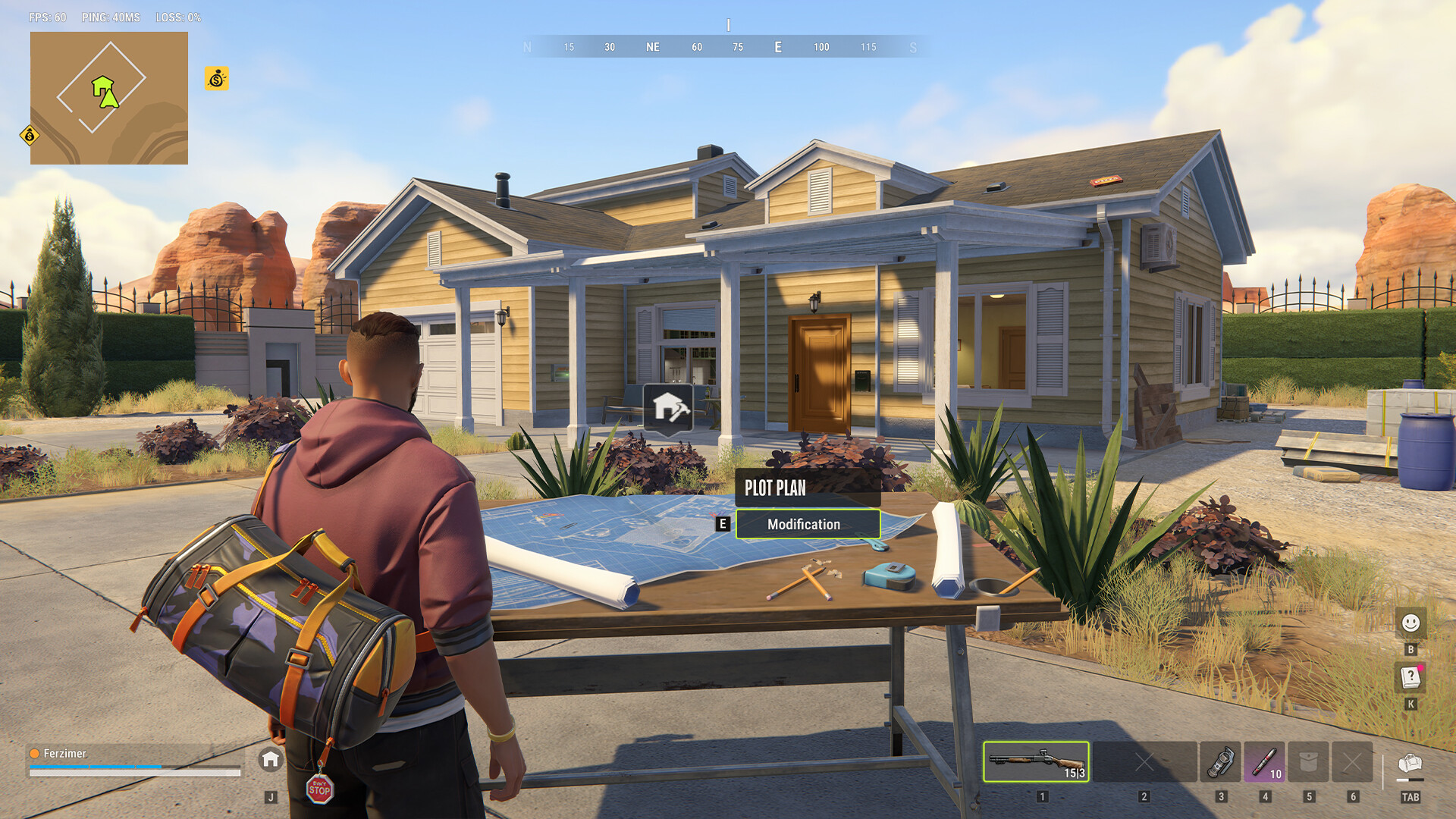
Official screenshot · Source: Steam store
That is the design tension. A family gives you numbers for a bank job, a rival hideout, or a chase that would wipe a solo player. The same family is a leak. One member who talks, one officer who is actually another player, or one “ally” who wants your safe, and the week’s progress is gone. Treat trust as a resource you spend on purpose.
| Approach | What you can realistically do | Main risk | Best use |
|---|---|---|---|
| Solo | Scout, small scores, learn spawns and police response | You lose everything with no backup | First hours on a fresh server |
| Loose duo or trio | Quick hits, getaways, shared lookout | No chain of command when it goes loud | Filling gaps before a full roster |
| Full clan | Raids, territory, wars, truces, base defense | Betrayal, drama, slow decisions | Holding power across a wipe |
| Joining an existing family | Instant numbers and a base to learn from | You may be expendable muscle | Skipping the recruitment grind |
Use the solo column as training, not as an identity. The developers’ “only real players” angle means the police are not a scripted patrol you can cheese the same way twice. If a fight is too hot, the smarter play is another route to the same score. A crew that only knows how to push is a crew that donates gear.
How to shape a ROB RUN crime family
A ROB RUN crime family starts as a roster problem, not a logo problem. The official description does not publish a member cap, a skill tree, or a formal rank list. What it does promise is role assignment, organized raids, territory control, gang wars, and negotiated truces. Build around those verbs.
Name the group something people can say over voice chat in one breath. Write three rules before you invite anyone: who can open the safe, who can start a war, and what happens if someone is caught stealing from the family. Post them where recruits can read them. Vague “we’re chill” groups collapse the first time loot is missing.
Recruit for coverage, not for clout. You want people who will show up for defense, not only for the highlight raid. A practical early roster is eight to twelve active players if your server’s social scene can support it—small enough to know everyone’s voice, large enough that two people being offline does not cancel the night. That headcount is a planning target, not an official limit.
Onboarding should be boring on purpose:
- One supervised score before anyone sees the main stash.
- A shared map note for police routes you have actually watched.
- A rule that new members do not lead negotiations.
- A backup plan if the shot-caller drops mid-raid.
The store copy also stresses cunning over constant violence. Bank robberies, rival-hideout raids, chases, and shootouts are the content, but “another way” is part of the fantasy. Families that only advertise wars will spend the wipe replacing bodies. Families that can sit out a bad fight keep their vehicles and their safe.
Roles, raids, and who calls the shot
Do not copy a military chart you saw in another game and hope it fits. Map roles to the actions this game actually describes: planning, fast calls, shooting at the right moment, moving loot, and talking to other crews. One person should own each decision so a firefight does not become a committee.
| Role | Job during a score | Job between scores | Do not let them also do |
|---|---|---|---|
| Shot-caller | Picks the target and the abort | Sets the night’s priorities | Hold the only safe code alone with no backup |
| Entry | First through the door or first on the breach | Drills timing with a partner | Negotiate truces |
| Driver / extractor | Route out, vehicle ready | Maintains cars and escape notes | Lead the assault |
| Stash keeper | Receives loot after the job | Logs what went in and out | Recruit strangers |
| Diplomat | Talks truce or sets war terms | Tracks which crews are hostile | Freelance side deals |
| Lookout | Calls police and third parties | Updates danger spots | Carry the week’s whole bankroll |
Rotate the stash keeper if your group is new. Concentration of access is how a single betrayal ends a ROB RUN crime family before the wipe does. A second person should know the code, and everyone else should know that withdrawals are logged. You are not running a real ledger for the law. You are removing the “I thought it was fine” excuse.
Raids on rival hideouts are where sloppy roles get expensive. The page warns that you can lose everything in a minute, and that the same is true in reverse. Before you hit a base, answer four questions out loud: Who is online from their side? Where do we leave if police arrive? What is worth taking versus what is bait? Who is allowed to call the retreat? If you cannot answer those, you are not raiding. You are donating gear.
Territory is the long game between those spikes. “Take control of territories” is listed beside gang wars and truces, which implies land is something you can win, lose, and bargain over—not a permanent flag. Claim what you can actually watch. A corner you never patrol is a rumor. A block your night shift can reach in a few minutes is a territory.
Truces are tools, not friendships. Negotiate them when a war is costing more vehicles and time than the ground is worth. Put the terms in writing in your clan channel: duration, which spots are hands-off, and what counts as a break. In a game where anyone can betray you, a truce is a pause you can measure, not a personality test.
Hideouts, loot, and the weekly reset
Your base is both the prize and the target. The hideout pitch is direct: build and upgrade a refuge, store loot and vehicles, and place workbenches and safes. The warning sits in the next sentence. A lavish base attracts intruders. Upgrades should follow security, not screenshots.
Spend the first upgrade cycle on things that survive a bad night: a safe with limited access, a workbench you actually use, and parking that is not a public advertisement. Flashy rooms can wait until you have people who will log in when an alarm would have mattered. If the game’s base building lets you layer doors or sightlines, use them. If a feature is still rough in Early Access, do not store the week’s best vehicles behind a door everyone has tested and found buggy.
| Wipe day mindset | Priority | What “done” looks like |
|---|---|---|
| Hours 1–12 | People and a starter stash | Roster online, basic hideout, one shared vehicle plan |
| Days 2–3 | Repeatable income | One score your crew can run without a speech |
| Days 4–5 | Territory and diplomacy | A spot you can defend, plus one truce or one clear enemy |
| Days 6–7 | Push or consolidate | Either a raid you can afford to lose, or a locked-down safe |
The reset is the real boss. Official wording says that in a single week you can go from ordinary thug to boss of the server’s largest organization—and then start over, carrying experience, allies, and a sharper plan. That is not a promise that your name will be on a throne. It is a statement that progress is seasonal. A ROB RUN crime family that treats the wipe as a personal insult will burn out. A family that writes down what worked will be dangerous on day one of the next cycle.
Practical habits that match a weekly wipe:
- End each night with a three-line note: what paid, what got you killed, who was reliable.
- Do not hoard so much that a single raid deletes the whole week. Move value into things you can use before reset.
- Recruit replacements before you need them. Allies are part of what you are allowed to keep in your head after the server wipes.
- Plan one ambitious push and one quiet backup score. Ambition without a fallback is how crews go broke on day six.
Community reports and long-term meta are thin while the game is still pre-release. Treat any “best base spot” rumor as player experience once people are actually in the playtest, and check it against the current patch. Until then, the only solid source is the feature list on the store page: cooperation, territory, raids, truces, hideouts, and a clock that restarts the ladder.
Early Access, the playtest, and getting ready
The official ROB RUN Steam page lists a planned release of November 2026 and, as of the latest store copy, still shows the game as not yet available. You can wishlist it and request playtest access so you are notified when the developer wants more people. Early Access is expected to last about 6–12 months, depending on feedback and how fast the game moves. The price is not planned to change when Early Access ends. No public price figure is listed in the material this article is based on, so do not budget from a number you saw in a comment.
The developers say the online game is meant to be playable, with balance, netcode, and content still being shaped by a live community. Expect bugs. The full version is planned to add maps, modes, characters, customization, items, progression, rankings or achievements, better matchmaking, and stability, plus polish driven by feedback. Clans may get sharper tools later. Do not build your whole identity on a menu that is not in the current build.
They also say they will use the Steam Community hub, Discord, and similar channels for bug reports, feature ideas, and balance talk, with patch notes and possible polls. That is the right place to argue about clan rules—not a random clip title. If you are in the playtest, report base-raiding exploits and matchmaking pain with steps, not insults. Families that help the build get better will understand the systems before everyone else does.
| Topic | What the store page supports | What you should not assume |
|---|---|---|
| Release | Planned November 2026, Early Access | That it is already installable today |
| Early Access length | About 6–12 months | A fixed calendar date for 1.0 |
| Price after EA | Not planned to change | Any specific dollar amount |
| Scale | About 5,000 players in the pitch | That every server is always full |
| Anti-cheat | Easy Anti-Cheat, kernel-level, third-party EULA | Anything about bypassing it |
| AI | Used for some graphic elements | That missions or clans are AI opponents |
| Languages | English and Russian full; French, German, and Spanish (Spain) interface and subtitles | Full voice for every listed language |
PC expectations are modest but not laptop-casual. Minimum specs call for 64-bit Windows 10 or later, a Core i5-6600K or Ryzen 5 1600 class CPU, 12 GB of RAM, and a GTX 1050 Ti, RX 580, or Arc A380 class GPU, with DirectX 11, broadband, and 20 GB free. Recommended bumps that to an i5-9600K or Ryzen 5 3600, 16 GB of RAM, and an RTX 2070, RX 5700 XT, or Arc B570 class card, still around 20 GB. If your crew’s shot-caller is on the minimum box, put them on callouts, not on driving through a 5,000-player mess.
| Spec | Minimum | Recommended |
|---|---|---|
| OS | Windows 10 or later, 64-bit | Windows 10 or later, 64-bit |
| CPU | Intel Core i5-6600K or AMD Ryzen 5 1600 | Intel Core i5-9600K or AMD Ryzen 5 3600 |
| Memory | 12 GB RAM | 16 GB RAM |
| GPU | GTX 1050 Ti, RX 580, or Arc A380 | RTX 2070, RX 5700 XT, or Arc B570 |
| Other | DirectX 11, broadband, 20 GB storage | DirectX 11, broadband, 20 GB storage |
A few prep steps are worth doing before the client even unlocks. Agree on a voice channel. Decide the shot-caller and the stash rule in writing. List who can play the first weekend of a wipe and who is only around midweek—that schedule is your real territory. Read the third-party EULA before you click through it, because kernel-level anti-cheat is part of the deal, not a surprise tooltip. And keep one eye on patch notes once Early Access starts. Matchmaking, network stability, and balance are explicitly unfinished targets.
Strength and cunning are the only currencies the marketing promises. A ROB RUN crime family that practices both—tight roles, small trusted access, raids you can abort, and a plan for the next wipe—will get more out of a rough Early Access build than a pile of strangers who only squad up when the shooting starts.
FAQ
What is a ROB RUN crime family?
It is the game’s clan option: you found a crime family or join one, then assign roles, run raids, hold territory, fight other groups, and negotiate truces. The store page treats reliable allies as the way you thrive, not just survive, inside a server full of real players.
Can you succeed without joining a clan?
Yes, for learning and small scores. The design still says open fights are often too dangerous and that you can lose everything quickly. Most long-term power—bases worth raiding, wars, and territory—is described as group work.
How long does progress last?
The pitch is a one-week rise from nobody to the top of a server’s largest outfit, followed by a wipe. You keep what you learned and who you trust. You should not expect stashes and territory to roll forward unchanged.
When can you play, and will Early Access cost more later?
The planned Steam release is November 2026, with a playtest signup and wishlist while the game is still listed as unavailable. Early Access is estimated at 6–12 months. The developers say they do not plan to change the price when that period ends.
Related Guides
ROB RUN assign roles: How Clans Take Control
Learn how ROB RUN assign roles builds clans that hold territory, run raids, and last through each weekly server wipe.
ROB RUN Clan Guide: Roles, Raids, and Territory
Plan a ROB RUN clan with roles, raids, territory, and wipe-week habits before the November 2026 Steam Early Access.
ROB RUN gang wars: How Clans Take Control
See how ROB RUN gang wars work through clans, territory, raids, truces, hideouts, and the weekly server reset.
ROB RUN first look: Gameplay, Release and PC Guide
Our ROB RUN first look covers its crime sandbox, clans, server wipes, November 2026 release plans, PC requirements, and playtest access.
ROB RUN closed alpha: playtest, date, and what we know
ROB RUN is still unreleased. See the Steam playtest, November 2026 Early Access plans, PC specs, and what closed alpha clips leave unconfirmed.