ROB RUN gang wars: How Clans Take Control
See how ROB RUN gang wars work through clans, territory, raids, truces, hideouts, and the weekly server reset.
ROB RUN gang wars are the difference between surviving a crowded criminal city and actually running it. In a world where every cop and every crook is a real person, and up to 5,000 players share the same streets, solo play only gets you so far. ROB RUN gang wars turn alliances, territory, and timing into the real progression system, because one bad fight can wipe out a week of loot.
That scale is why clans matter before the first shot. The game, listed on the ROB RUN page on Steam, is built as a living online underworld: bank jobs, rival raids, police pressure, player-built hideouts, and a reset that can erase a boss in seven days. If you want influence, you need people who show up when the plan breaks.
Why clans decide who lasts
Open combat is often the worst option. Developers describe a city where police are a genuine threat and any scene can spiral once hundreds of nearby players notice it. Strength still matters, but cunning is the other half of the design. A crew that only knows how to shoot will bleed members, vehicles, and stored loot faster than it can replace them.
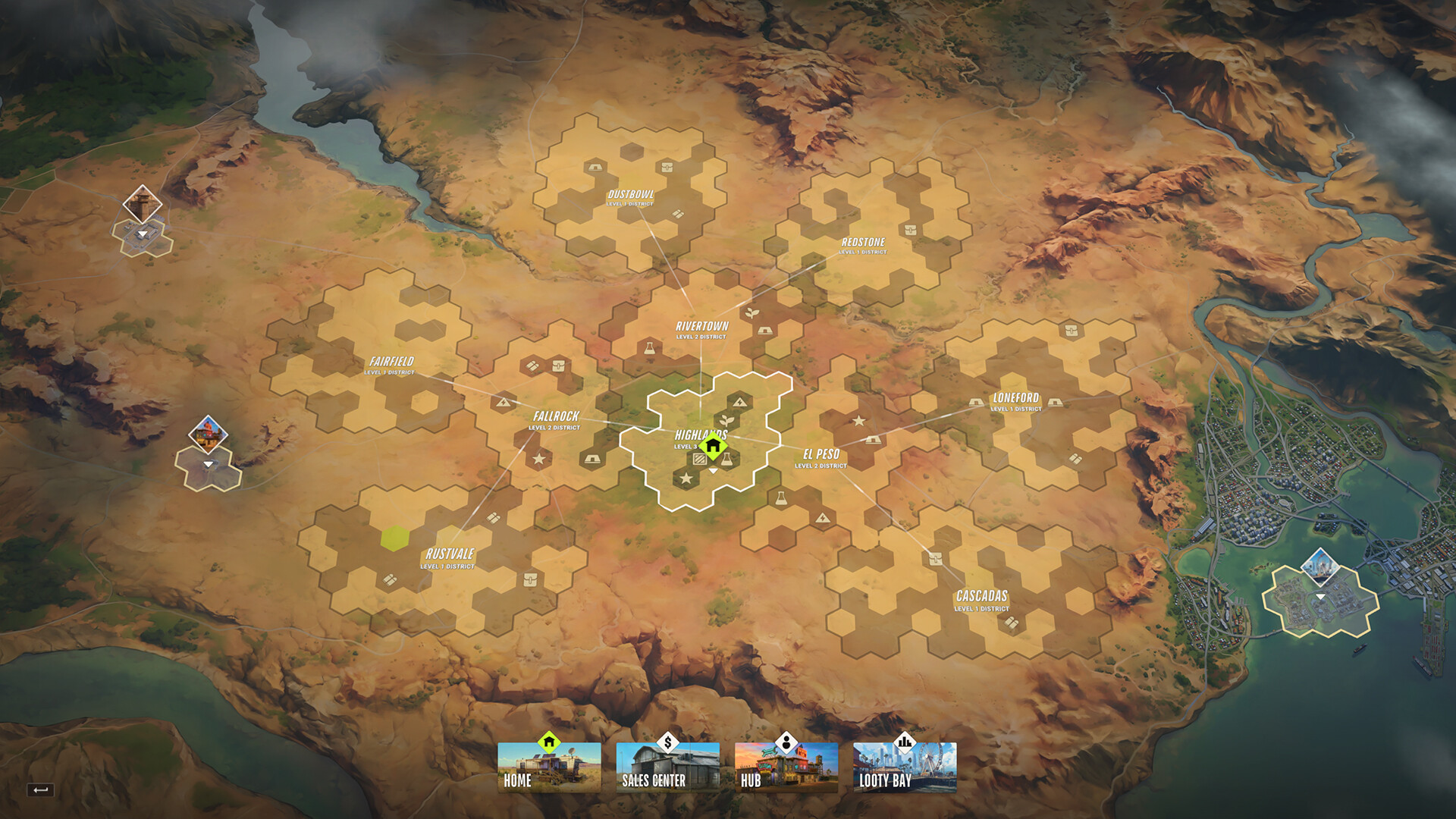
Official screenshot · Source: Steam store
ROB RUN gang wars sit on top of that pressure. You can found a crime family or join one that already holds ground. Inside the group you assign roles, set up raids, claim territory, and, when the math stops working, negotiate a truce. Allies are framed as the most valuable asset precisely because betrayal is always on the table. A title does not make someone loyal. Shared schedules, shared stashes, and a clear chain of command do.
The server population changes the tactics. With thousands of humans online, a “quiet” robbery is only quiet until a patrol, a rival scout, or a random third party walks in. Clans that treat every job as a public event will spend the week reacting. Clans that pick smaller windows, fewer routes, and a fallback hideout will still be online when the wipe clock gets loud.
| Survival lever | Solo player | Organized clan | Why it matters |
|---|---|---|---|
| Information | What you personally see | Scouts, radios, lookouts | Fewer ambushes on the way home |
| Firepower | One gun, one reload | Roles and overlapping cover | You can break contact instead of dying in place |
| Economy | One stash, easy to lose | Split safes and vehicles | One raid does not end the week |
| Diplomacy | None | Truces and territory deals | You skip fights you cannot afford |
| Recovery | Start over alone | Recruits and shared kits | A wipe or a loss is a setback, not a quit screen |
Use that table as a planning filter, not as a list of confirmed UI buttons. The store page promises roles, raids, territory, gang wars, and truces. It does not publish a full rulebook yet. Treat any extra detail as a way to organize people, then adjust when Early Access shows the real systems.
Building a crew before the first raid
A crime family in this setting is a schedule with guns, not a friends list. Before you recruit, decide what the week is for: holding one district, farming cash for a base upgrade, or knocking a rival off a route. Mixed goals create mixed callouts, and mixed callouts get people killed in front of the police.
Keep the first roster small enough to actually talk. Five to eight regulars beat twenty names who log in once. Assign jobs that match the fantasy the game already sells: someone plans, someone drives, someone watches the door, someone handles the stash after the job. Overlap the critical seats. If only one person knows the safe code or the vehicle spawn, that person is your single point of failure.
Recruit for reliability before aim. A player who is online for the same two-hour block every night is worth more than a star shooter who vanishes after the first score. Write the rules in plain language: who can start a fight, who can spend clan funds, and what happens if someone loots a teammate. In a game that tells you anyone can betray you, unclear rules are an invitation.
ROB RUN gang wars also punish leaders who vanish. If you create the family, you are the person who has to show up for the boring parts: restocking, settling arguments, and calling off a raid when the street is already hot. Boss status in the marketing copy is a one-week climb, not a permanent crown. Act like the seat can be empty tomorrow.
| Suggested seat | Main job during a job | Main job at the hideout | Replace them if… |
|---|---|---|---|
| Shot caller | Picks go, abort, or truce | Sets the week's target | They freelance mid-fight |
| Driver | Extraction and decoy routes | Fuel, repairs, spare cars | They park the only escape on the street |
| Lookout | Police and third parties | Map notes and timers | They stay silent until it is too late |
| Breacher | Entry and close fighting | Kit checks before rollout | They start fights the caller did not order |
| Quartermaster | No hero plays; guards the haul | Safes, benches, split loot | The stash only exists on their character |
| Recruiter | Not required on every raid | Replaces no-shows the same day | The roster shrinks and nobody notices |
Those seats are a practical roster you can impose on voice chat. They are not official classes. When more characters, items, and progression land, remap the names to whatever the game actually gives you.
A simple operating rhythm keeps the roster honest:
- Post the target and the abort condition before anyone leaves the base.
- Cap the crew on site. Extra bodies create extra witnesses.
- Split the haul the same night so nobody “holds it until tomorrow.”
- Ban surprise PvP against allied tags. Save grudges for a vote, not a doorway.
- After every loss, name one cause: route, timing, gear, or ego. Fix that before the next rollout.
Running territory without losing the week
Territory is only useful if you can reach it twice. A block you cannot resupply, scout, or leave is a decoration. Pick ground that connects to your hideout and to at least one fallback route. Then decide what “control” means for your group: taxing a route, denying a rival’s garage, or simply having eyes on a police-heavy avenue so you do not drive into it blind.
Raids on rival hideouts are part of the pitch, right next to bank robberies, chases, and shootouts. They are also how you donate your best gear to someone else. Scout first. If the target base looks richer than yours, assume they can replace losses faster than you can. Hit storage and vehicles when the owners are out, not when their full roster is stacked on the roof waiting for content.
ROB RUN gang wars should have an exit written down before the entry. Agree on three states: push, peel, or talk. Push only when you outnumber the people actually present, not the people who might log in. Peel when sirens stack or a third clan arrives to third-party the noise. Talk when the other side can hurt your stash worse than you can hurt theirs. The game explicitly allows another path when an open fight is too dangerous, and it lists truces beside territory wars for that reason.
| Situation | Better move | Worse move | What you are protecting |
|---|---|---|---|
| Even numbers, no police yet | Short raid, then leave | A siege with no timer | Ammo and the extraction car |
| You are outnumbered on their block | Truce, bribe, or skip | Pride fight at their spawn | The people you need tomorrow |
| Sirens already close | Drop the haul and scatter | One more safe, one more minute | Your ability to log back in geared |
| Rival wants the same route | Split hours or split streets | Permanent war with no objective | The week's cash flow |
| Insider drama in your own clan | Pause external fights | Raid while your roster is split | The hideout you already paid for |
Negotiate like you expect the deal to be broken. A truce that says “no shooting” but ignores scouting, stash raids, and vehicle theft is not a truce. Spell out the block, the hours, and the penalty. Then still keep a second safe. The design promise is that someone can take what is yours at any minute, and that you can do the same. Trust the lock more than the handshake.
Third parties are the hidden boss of a 5,000-player server. Two clans fighting in the open are an advertisement. If your war cannot be finished in one clean hit, move it. Change the hour, change the street, or stop feeding the lobby free content. Influence comes from resources you still hold after the shooting stops, not from the clip that got shared in Discord.
Hideouts, heat, and the weekly reset
Your base is both the prize and the problem. You can build it up, park vehicles, store loot, and place workbenches and safes. The same description warns that a lavish refuge attracts intruders. Upgrade what keeps the group alive first: a place to spawn gear, a way to leave quickly, and storage that is not one explosion away from zero. Cosmetic flex can wait until you can afford to be seen.
Spread value around. One masterpiece safe in the front room is a tour guide for raiders. Several smaller stashes, plus vehicles that are not all parked in a neat row, make a raid expensive. The quartermaster should know what is where. Everyone else should know the minimum: how to grab a kit and how to get out if the walls are already compromised.
The clock is the real antagonist. Promotional copy says a regular thug can become the boss of the server’s largest organization in a single week, then start over with new experience, allies, and a bigger plan. Read that as a season, not a slogan. If wipes land on a weekly cadence, late-week hoarding is how you donate your progress to whoever raids you on the last night. Spend power on position earlier, and spend reputation on people you want to see again after the reset.
| Day focus | Clan goal | Personal goal | Common mistake |
|---|---|---|---|
| Day 1 | Recruit core six and set rules | Gun, car, first safe | Picking a war before you have a base |
| Day 2 | One profitable, low-noise job | Learn police routes | Fighting every witness |
| Day 3 | Upgrade storage and a spare vehicle | Cache a backup kit off-site | Putting everything in one room |
| Day 4 | Scout one rival, do not swipe yet | Map doors, timers, escape | Starting ROB RUN gang wars for clips |
| Day 5 | Strike or sign a narrow truce | Be online for the actual op | Raiding with half the roster |
| Day 6 | Defend, restock, stop expanding | Cash out into useful upgrades | Flexing a base you cannot guard |
| Day 7 | Hold what matters, prep the next allies | Note who showed up | Hoarding until the wipe takes it |
That calendar is a planning aid based on the one-week power fantasy, not a published event schedule. If the live game wipes on a different timer, slide the days. Do not slide the idea: convert loot into capacity and relationships before the server takes the toys back.
Heat management is a clan skill. Bloody shootouts and chases are part of the fantasy, and they also paint a target on your garage. After a loud job, change clothes, change cars, and do not drive the same line home. If your hideout is the obvious next stop, wait. A clever group lets the street cool down while a lookout confirms the block is empty.
Early Access, specs, and getting in
As of the current Steam listing, ROB RUN is not purchasable yet. The planned release window is November 2026, aimed at Early Access, with a playtest you can request so you are notified when more slots open. Wishlisting is the practical move if you want a ping when the build actually goes live. Do not treat datamined or third-party database pages as a storefront; the developer’s Steam page is the source that matters.
Early Access is expected to last about 6 to 12 months, depending on feedback and how fast the game moves. The price is not planned to jump when 1.0 ships. The current build is described as fully playable online, with core loops in place and with bugs, balance issues, and missing features still expected. That is normal for this stage, and it is also why clan rules you write in month one may need a rewrite in month three.
The roadmap the developers have sketched is broader than launch warfare. They want more maps, levels, and modes; more characters, customization, and items; progression, rankings, or achievements; better matchmaking, performance, and network stability; and polish on visuals, audio, UI, and balance. Community contact is planned through the Steam hub, Discord, patch notes, and possible polls. If a war rule feels bad in live play, that feedback channel is part of the design process, not an afterthought.
| Topic | Early Access expectation | What full release is aiming to add |
|---|---|---|
| Playability | Online core loop, bugs still likely | More polish and stability |
| Content | City crime, clans, bases, conflict | Extra maps, modes, characters, items |
| Progression | Climb inside a short server cycle | Rankings, achievements, or similar systems |
| Netcode | Being tested with real players | Better matchmaking and performance |
| Price | Set at Early Access | Not planned to change at launch |
| Your input | Discord, Steam hub, patch notes | Polls and community tests |
Anti-cheat is part of the package: the listing calls out kernel-level protection via Easy Anti-Cheat and a third-party EULA. Read that before you opt in. Voice chat and overlays that hook the game can cause false problems; sort those out on a clean machine before you blame the server.
Language support at listing time is English and Russian for interface, full audio, and subtitles. French, German, and Spanish (Spain) are marked for interface and subtitles without full audio. Plan your shot-calling language around who is actually in the clan, not around the menu.
The developers also disclose that AI is used for certain graphic elements. That is a content note, not a gameplay system. It does not change how you should run a crew.
| Spec tier | OS | CPU | RAM | GPU | Notes |
|---|---|---|---|---|---|
| Minimum | Windows 10 or later, 64-bit | Intel Core i5-6600K or Ryzen 5 1600 | 12 GB | GTX 1050 Ti, RX 580, or Arc A380 | DirectX 11, broadband, 20 GB |
| Recommended | Windows 10 or later, 64-bit | Intel Core i5-9600K or Ryzen 5 3600 | 16 GB | RTX 2070, RX 5700 XT, or Arc B570 | Same network and storage bar |
A 20 GB install and a broadband connection are the easy parts. The hard part is latency when your extractor is already rolling. If your PC sits on the minimum GPU with 12 GB of RAM, drop background apps before a clan op. A stutter on the escape is a lost vehicle.
Practical prep before the city opens:
- Wishlist the Steam app and request playtest access if you want an earlier look.
- Agree on a clan tag, a timezone, and a no-loot-theft rule in writing.
- Set a weekly reset ritual now: who leads, where you rally, what you rebuild first.
- Test voice, push-to-talk, and a backup channel. In-game chaos will eat a bad Discord setup.
- Decide your first-week win condition in one sentence. “Own a garage and a truce on the north road” beats “become the server boss” as an actual plan.
ROB RUN gang wars reward the group that can stop. Stopping is harder than shooting when the server is loud and the wipe is close. The clans that last will be the ones that pick fewer fights, store loot like they expect a raid, and keep the same people after the board clears.
FAQ
What are ROB RUN gang wars?
They are the clan layer of the game: forming a crime family, assigning roles, raiding, holding territory, and making truces inside a city full of real players. They are not a separate single-player mode. You opt into them by playing with a group that can coordinate.
Can you ignore clans and play alone?
You can survive alone. The pitch is that you only thrive with other people, because police, rivals, and random players can all take what you are carrying. Solo is a valid way to learn routes. It is a weak way to defend a base.
How long will Early Access last, and will the price change?
The developers expect roughly 6 to 12 months, and they say they do not plan to raise the price when the game leaves Early Access. The planned store date is November 2026, and the game was not available to buy at the time of the listing used here.
What should a new clan do in the first week?
Recruit a small reliable roster, build a hideout you can actually leave, run one quiet score, then choose a single conflict or a single truce. Do not spend the week starting wars you cannot finish before the server resets your progress and asks you to climb again with the allies you kept.
Related Guides
ROB RUN assign roles: How Clans Take Control
Learn how ROB RUN assign roles builds clans that hold territory, run raids, and last through each weekly server wipe.
ROB RUN Clan Guide: Roles, Raids, and Territory
Plan a ROB RUN clan with roles, raids, territory, and wipe-week habits before the November 2026 Steam Early Access.
ROB RUN crime family guide to clans and power
See how a ROB RUN crime family handles roles, raids, territory, hideouts, and weekly wipes ahead of the November 2026 Early Access.
ROB RUN first look: Gameplay, Release and PC Guide
Our ROB RUN first look covers its crime sandbox, clans, server wipes, November 2026 release plans, PC requirements, and playtest access.
ROB RUN closed alpha: playtest, date, and what we know
ROB RUN is still unreleased. See the Steam playtest, November 2026 Early Access plans, PC specs, and what closed alpha clips leave unconfirmed.