ROB RUN quick decisions for Weekly Wipe Survival
Learn ROB RUN quick decisions for clans, raids, hideouts, and weekly wipes so you keep loot when 5,000 players can take it.
In a city packed with about 5,000 other people, the plan you loved ten seconds ago can already be on fire. ROB RUN quick decisions are what separate a clean score from losing the gear, vehicles, and hideout you spent the week building. This guide treats ROB RUN quick decisions as a skill you can train: when to shoot, when to talk, when to leave, and how a one-week server reset changes the math.
Every cop and every criminal is another person with a private agenda. There is no scripted patrol you can memorize and no timed event that resets on a clock you control. Open combat is often the expensive option. Strength gets you into a room. Cunning is what gets you back out with something worth keeping.
Why speed and judgment share the same second
The sandbox is built so that standing still has a cost. Gear, cars, and bases can be taken. The same rule cuts both ways: the crew that freezes also hands the next move to whoever is already moving. Planning still matters. A fast call with no exit is just a faster loss.
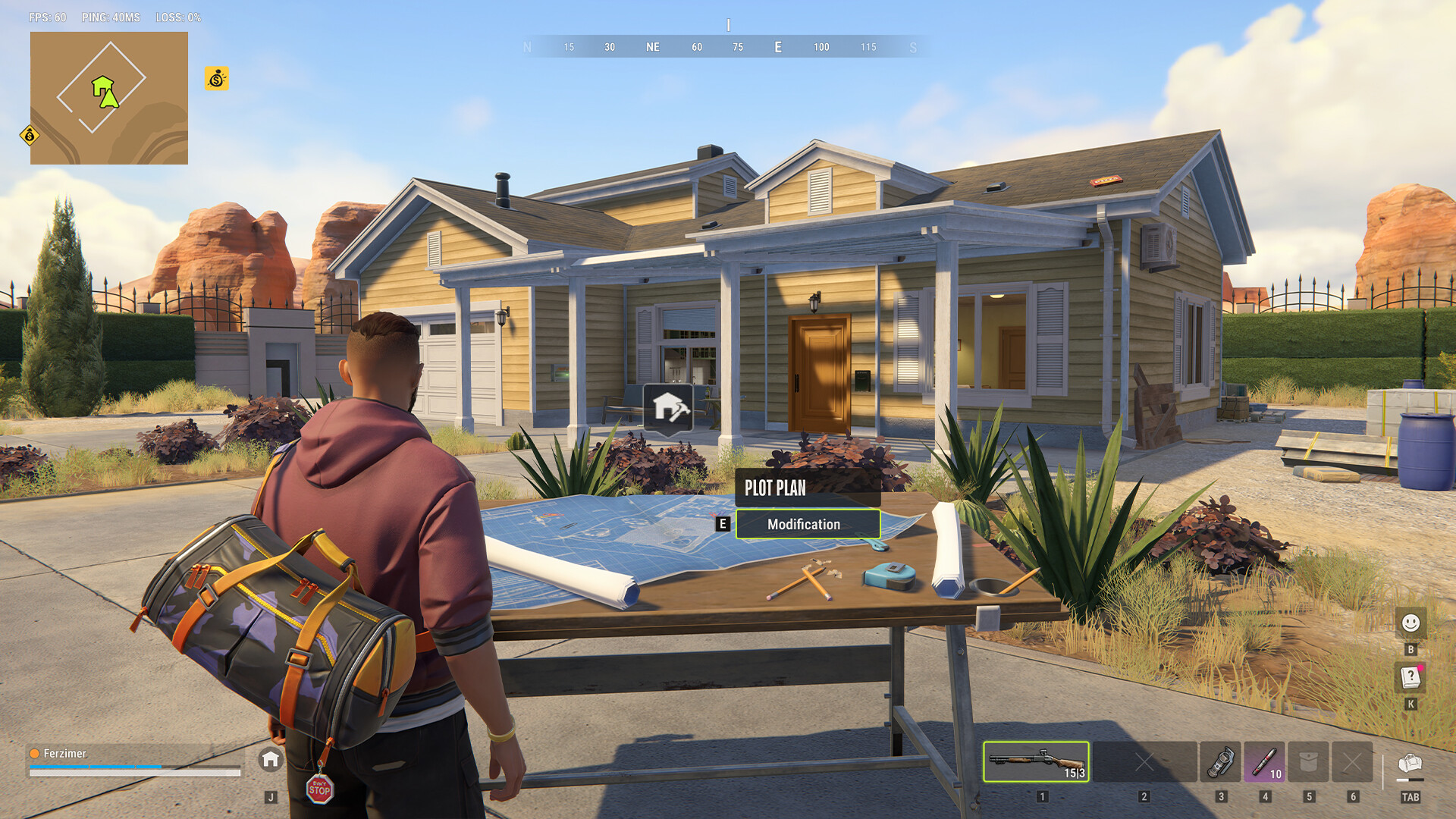
Official screenshot · Source: Steam store
Use a three-question filter before you commit anyone’s kit:
- Can we lose this fight and still play tonight?
- Does the exit depend on winning, or does it exist even if we lose?
- Who else gets richer if we fail in public?
If you cannot answer the second question, you do not have a plan. You have a wish. That is the core of good ROB RUN quick decisions: the abort is chosen before the first shot, not invented while you are already pinned.
| Situation | Default call | Why it holds | Abort when |
|---|---|---|---|
| Quiet score, few witnesses | Take it, stay small | Exposure is the real tax | A third party arrives with vehicles |
| Even gunfight in the open | Decline or relocate | Open fights burn kits and time | You lack a driver and a second route |
| Rival base looks empty | Scout, do not dump the whole crew | Empty can mean bait | Lights, cameras, or a tail on the way in |
| Player police already on you | Break contact first | A chase is not a pattern to memorize | The city starts stacking more pursuers |
| Clan vote is split | Delay one minute, then pick a caller | Split crews die in two places | Nobody will own the retreat |
Coverage of the game describes the loop in plain terms: you weigh the payoff of a bold raid against the cost of being seen. Reflexes help at the doorway. Reading the street is what decides whether you should be at that doorway at all.
Read the fight before you start it
Player-driven law enforcement keeps danger honest. A chase is an improvisation. A rival raid is not a dungeon timer. With thousands of people nearby, a private argument can become a crowd in under a minute. Clever players look for a third path when bullets or cuffs are the worse deal.
Treat every contact as one of three approaches. Pick one out loud so the crew is not running three plans at once.
| Approach | Best use | What you spend | What you keep if it fails |
|---|---|---|---|
| Open fight | You already own the angle, the cars, and the numbers | Ammo, healing, heat, time | Often nothing but a story |
| Talk, bribe, or trade | The other side wants something you can spare | Reputation and a promise | The option to walk |
| Leave and re-enter later | You are outnumbered, late, or lost | A few minutes of pride | Kits, vehicles, and the week |
A practical example: your group is two blocks from a bank job when a player officer rolls past with backup you did not count. The fast ego call is to go loud and hope the street stays empty. The better call is to shelf the job, peel off in pairs, and stash what you already earned. The score can be attempted again. A full kit wipe in the first half of the week cannot be undone by enthusiasm.
Another example sits on the social side. A rival offers a truce while your raid is mid-stairwell. Do not workshop it over a five-minute argument in a fatal funnel. One person answers. Everyone else holds angles or leaves. Negotiation is part of the meta, and so is betrayal. A truce you cannot enforce is a pause button the other side gets to unpause.
Community write-ups of the sandbox stress the same point without publishing a magic rotation: success is reading the room, coordinating, and firing only when the moment is actually yours. One sloppy commit can end a character’s week. That awareness should sharpen the choice, not freeze it.
Clans, roles, and who gets the last word
You can survive alone. Shaping the server is a group job. Crime families, clans, and informal crews are how territory, raids, and truces get organized. Territory is not a badge. Holding it feeds influence and paints a target on the same block.
Solo play is a valid appetite for chaos. Accept the scoreboard. Nobody is coming to pull you off a bad corner, and nobody is splitting your loot either. If you want the server boss path inside a single week, you will need people, and people need a decision rule before the shooting starts.
| Role | Call they own | Slow failure | Fast failure |
|---|---|---|---|
| Shot caller | Go, hold, or abort | Debate after contact | Changing the plan mid-cross |
| Driver | Routes and the extract clock | Parking in the obvious lot | Leaving before the crew is actually out |
| Treasurer | What is insured in the safe versus carried | Hoarding the raid kit at home | Bringing the whole stash to a maybe |
| Diplomat | Truces, buys, and who is allowed inside | Trusting a first meeting with keys | Promising backup the clan does not have |
| Scout | The last green or red light | Reporting vibes instead of counts | Streaming the plan in public chat |
Name the shot caller before you leave the hideout. If two people can abort, nobody will. If nobody can abort, the loudest person will do it after the kits are already on the pavement. Reliable allies are the rare asset, because anyone can flip. Trust is spent slower than ammo: share raid timing with the people on the raid, not with the full friends list.
Gang wars and negotiated peace both need the same habit. Write the terms in one sentence the whole crew can repeat. “We do not shoot east of the river until midnight” is a decision. “Let’s see how it feels” is how friendly fire and broken truces start. When a member breaks terms, punish the process in the clan, not with a revenge spiral that hands the map to a third group.
ROB RUN quick decisions inside a clan are mostly about latency. The right idea, delivered after the push, is a postmortem. The decent idea, delivered before the door, is how crews stay on the board.
Hideouts, loot, and the exit call
A base is both a castle and a billboard. You can upgrade it, park vehicles, run workbenches, and drop safes. The nicer it looks, the more visitors you should expect. Guarding a lavish shelter is an ongoing cost, not a one-time craft.
Balance hoarding against mobility:
- Keep a working kit and a burner vehicle away from the showcase base.
- Put craft and repair on a bench you can reach after a loss, not only inside the prettiest room.
- Assume safes buy time, not immunity. A safe that requires the whole clan to be online is a safe that fails at dinner time.
- Upgrade defense before you upgrade the look that advertises wealth.
- If the block gets hot, move the cars before you move the furniture. Vehicles are how you stay in the week after a raid.
The exit call is the decision most players skip. Set a personal loss cap for the session: one kit, one car, or one failed entry. When you hit it, you are done, even if the rival who just stuffed you is still on the street. Chasing a refund in the same hour is how a bad raid becomes a lost hideout.
A second cap belongs to the crew. If the scout count jumps, or if player police stack faster than you can leave, the default is out. Pride is not a resource that survives the wipe. Crafted gear might not either.
Use the base as a hub, not a personality. Workbenches matter because they put you back in action after a mistake. If your whole identity is the furniture, you will defend drywall while someone else takes the map. The players who climb are usually the ones who can abandon a room without abandoning the week.
That is another face of ROB RUN quick decisions: leaving a valuable place on purpose, while you still choose the time.
The weekly wipe clock
The sharp hook is the cycle. In about seven days a regular operator can become the head of the largest outfit on the server, and then the server wipes. Progress resets. What you carry into the next round is experience, the allies who still answer, and a sharper plan.
A weekly wipe punishes two opposite mistakes. Playing too scared means you never touch territory, so you learn nothing the reset can use. Playing like loot is permanent means you donate kits to every insult. The clock should make you ambitious and selective, not reckless.
The day split below is a planning frame, not an official schedule. The game has not published a mandated calendar. Use it to stop treating every hour like the final hour.
| Phase of the week | Main decision | Good bias | Bad habit |
|---|---|---|---|
| Opening | Low-profile cash, one vehicle, one safe contact | Survive long enough to learn the server’s temperament | Picking a flag war before you own a spare kit |
| Early middle | Join or found a crew and assign roles | Borrow trust before you borrow guns | Sharing stash access to recruit faster |
| Middle | One real territory or heist push | Commit with an abort and a driver | Splitting into three “easy” jobs |
| Late middle | Defend, treaty, or relocate | Spend influence to reduce random fights | Renovating a base everyone has already scoped |
| Final stretch | Either the boss push or a clean bank of lessons | Big swings only with numbers and an exit | Revenge wars that teach nobody anything |
Sunk cost is the silent killer near reset. A failed heist can start a revenge war, and a lucky ambush can turn a small crew into a feared one overnight. Those stories are the point of a player-made underworld. They are not a reason to empty the safe on a grudge when the ladder is about to clear. Ask what still matters after the wipe: the route you finally understand, the diplomat who did not sell you out, the rival who always overextends. Gear will not answer that question for you.
If you want the top of the server, stack the decisive push when your clan can actually be online together. A brilliant call with half the roster logged out is a feed. If you would rather play chaos solo, take the fights, but cache enough to log back in. The scoreboard will show the difference either way.
Players who treat each week as a short season make cleaner ROB RUN quick decisions because the deadline is visible. There is no imaginary month ahead in which a sloppy habit becomes free.
Early Access, specs, and calls you should not trust yet
ROB RUN is planned for a November 2026 release window and is aimed at Early Access first. The developers have said the online game is meant to be playable while balance, netcode, and content are still moving, with an Early Access stretch of roughly six to twelve months. They also say they do not plan to change the price when that period ends. More maps, characters, items, progression, and matchmaking polish are on the roadmap, not all in the first build. Occasional bugs are part of the current pitch, so a “perfect” tactical read can still die to a hitch.
Confirm details on the ROB RUN page on Steam before you buy or join a playtest. The store listing is also where wishlist status, the third-party EULA, and Easy Anti-Cheat notices live. Feedback is expected through the Steam community hub, Discord, and patch notes. Balance you master in month one may be wrong in month two. Rebuild your defaults after major patches instead of defending them.
The developers have also disclosed that AI is used for certain graphic elements. That is an art-pipeline note, not a hint that opponents are bots. Do not look for an AI routine to game. The threat on the street is described as human.
| Spec | Minimum | Recommended |
|---|---|---|
| OS | Windows 10 or later, 64-bit | Windows 10 or later, 64-bit |
| CPU | Intel Core i5-6600K or Ryzen 5 1600 | Intel Core i5-9600K or Ryzen 5 3600 |
| Memory | 12 GB RAM | 16 GB RAM |
| GPU | GTX 1050 Ti, RX 580, or Arc A380 | RTX 2070, RX 5700 XT, or Arc B570 |
| DirectX | Version 11 | Version 11 |
| Network | Broadband | Broadband |
| Storage | 20 GB | 20 GB |
Language support on the listing covers full English and Russian audio, with French, German, and Spanish (Spain) on the interface and subtitles. If your shot caller and your driver are not sharing a language, decide the call words before the raid: short, boring, and impossible to mishear.
A stuttering PC is a decision handicap. If you are on the minimum GPU with a crowded fight, you will make late calls. Drop settings until the street is readable. Broadband is not optional flavor text in a 5,000-player city. A freeze in a doorway is a lost kit you cannot blame on tactics.
Until the Early Access build is in your hands, treat every damage number, price, and timer you see in random clips as unverified. This guide sticks to the structure the developers and early coverage actually describe: real players on both sides of the law, clans and territory, brutal risk, player-built hideouts, and a weekly reset. Patch notes will matter more than any freeze-frame “meta” posted before launch.
A simple drill you can run every session
You do not need a spreadsheet. You need a loop you can remember while someone is yelling.
- Before you leave: name the caller, the driver, the loss cap, and the rally point if voice dies.
- On contact: label the approach in one word — fight, talk, or leave.
- If the count changes: the scout speaks, the caller answers, everyone else stays quiet.
- After the first casualty or the first blown tire: re-check the loss cap. Do not “see what happens” by default.
- Back at the base: move surplus off your body before you celebrate.
- End of night: one sentence on what the wipe will still care about tomorrow.
Run that drill on small jobs first. Bank robberies, rival raids, and chases are the daily grind described for the game, and they all punish a crew that invents the plan at the threshold. Bold and precise beats bold and loud. If the precise version is not available, the quick decision is often to stay rich enough to try again.
FAQ
What do ROB RUN quick decisions look like in a real fight?
They look like a pre-agreed abort, a single shot caller, and a choice among fighting, talking, or leaving before the street fills up. The fast part is the execution. The smart part was decided when you still had time to park the car facing the exit.
Is solo play viable, or do you need a clan?
Solo is viable if you accept smaller goals and higher variance. Surviving alone is expected. Holding territory, running reliable raids, and reaching the top of a server in a week are group problems. Join a crew when you want influence. Stay solo when you want fewer people who can betray you.
Does the weekly wipe make aggressive plays better?
It makes timed aggression better and pointless grudges worse. You can rise from ordinary thug to the head of the biggest outfit inside one week, then you start over. Push when your people are online and your exit exists. Do not empty the stash on revenge that the reset will delete anyway.
When can you play, and will Early Access cost more later?
The planned Steam release timing is November 2026, with Early Access expected to run about six to twelve months. The developers have said they do not intend to raise the price when the game leaves Early Access. Features, balance, and netcode are still meant to move during that window, so revisit your habits after major updates.
Related Guides
ROB RUN first look: Gameplay, Release and PC Guide
Our ROB RUN first look covers its crime sandbox, clans, server wipes, November 2026 release plans, PC requirements, and playtest access.
ROB RUN how to get started: A Beginner’s Guide
Learn how to start ROB RUN, request playtest access, earn your first cash, buy useful gear, and avoid costly beginner mistakes.
ROB RUN plan: A Beginner’s Guide to Surviving Wipes
Build a practical ROB RUN plan for launch: choose allies, manage risk, develop your hideout, and prepare for server wipes.
ROB RUN closed alpha: playtest, date, and what we know
ROB RUN is still unreleased. See the Steam playtest, November 2026 Early Access plans, PC specs, and what closed alpha clips leave unconfirmed.
ROB RUN loot: Stash, Heists, and Wipe Survival
Where ROB RUN loot goes after a heist: Looty Bay masks, Lenny's cash, raidable bases, and how wipes reset the climb.