ROB RUN plan: A Beginner’s Guide to Surviving Wipes
Build a practical ROB RUN plan for launch: choose allies, manage risk, develop your hideout, and prepare for server wipes.
Start With Survival, Not Server Domination
Your ROB RUN plan should answer one question before anything else: what happens if your next job goes wrong? In a multiplayer crime sandbox built around rival crews, player-controlled police, and potentially devastating losses, staying able to recover matters more than winning every confrontation. A flexible ROB RUN plan gives you a way to build resources, choose allies, and take calculated risks without betting your entire run on one encounter.
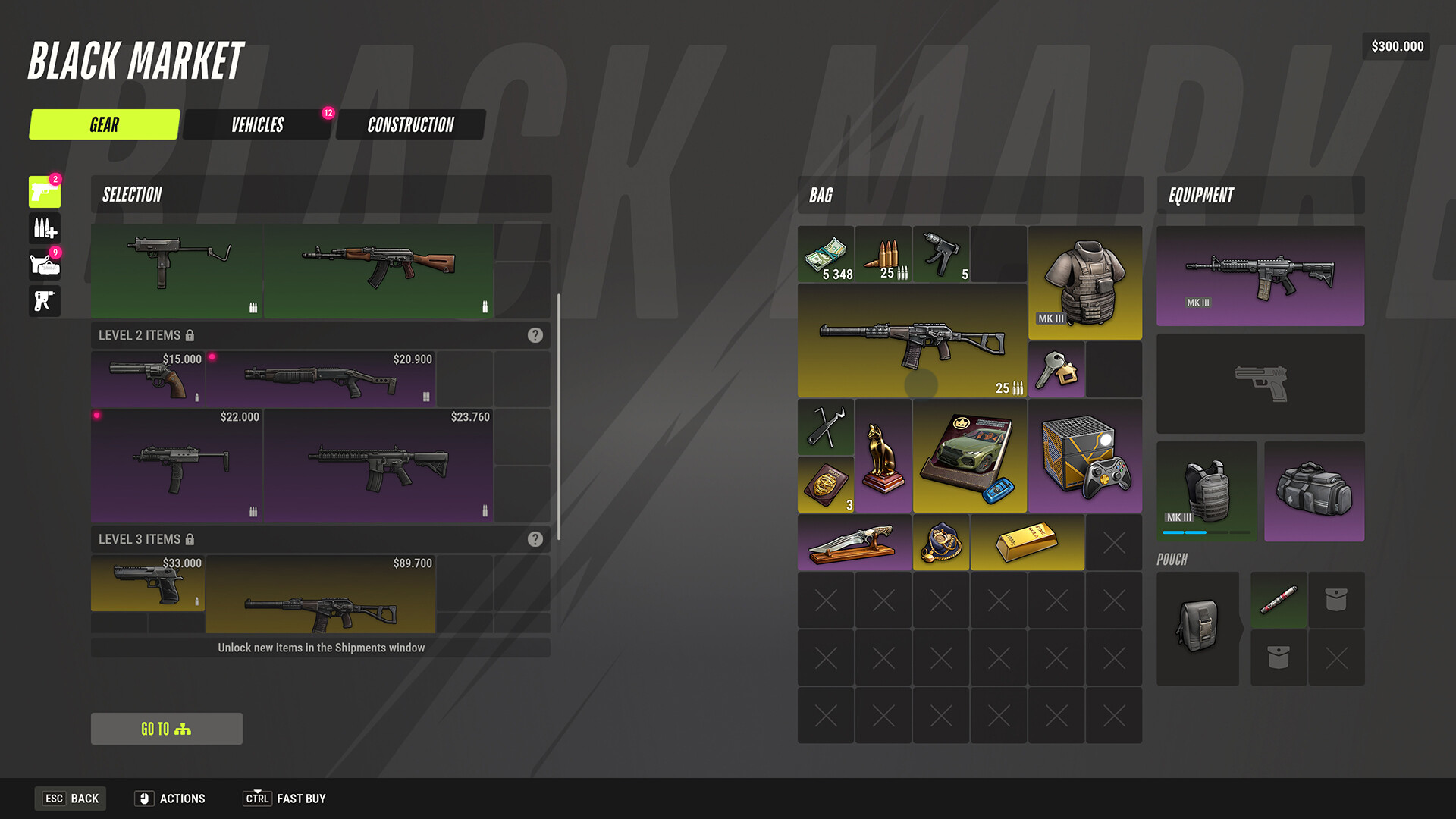
Official screenshot · Source: Steam store
As of November 1, 2026, ROB RUN’s Steam listing says the game is not yet available and gives November 2026 as its planned release window. Playtest access can be requested, but admission is not guaranteed.
This is therefore a prelaunch planning guide, not a tested leveling route or an established competitive strategy. Recommendations below apply the announced game design to practical decisions; they do not assume unverified loot locations, weapon statistics, or progression mechanics.
What is announced—and what still needs checking?
The official ROB RUN Steam listing describes a player-driven world featuring clans, territorial conflict, hideouts, robberies, and server resets. It advertises a setting with 5,000 players, but that should not be treated as independently verified launch performance.
| Topic | What the official listing describes | What to verify before committing |
|---|---|---|
| Other players | Police and criminals are human-controlled | Actual server population and available roles |
| Clans | Organizations, assigned roles, raids, and truces | Membership tools and permission settings |
| Hideouts | Building, upgrades, loot and vehicle storage, workbenches, and safes | Costs, protection rules, and access controls |
| Resets | A week-long rise followed by starting over | Exact wipe timing and what gets reset |
| Early Access | Approximately 6–12 months of development | Current roadmap and patch-specific changes |
The important distinction is between an announced feature and a reliable strategy. Knowing that safes exist, for example, does not establish that they make stored valuables impossible to steal.
Build Your ROB RUN Plan Around Recoverable Losses
The strongest starting objective is not “become the richest player.” It is finish each session with enough knowledge and resources to make the next session productive.
ROB RUN’s official description emphasizes the possibility of losing everything. Until the detailed rules are clear, assume that possessions are exposed to meaningful risk rather than treating any asset as permanently secure.
Use three simple phases
A useful ROB RUN plan separates learning, stability, and expansion. Move forward when you meet a condition—not merely because a certain number of minutes has passed.
| Phase | Main objective | Recommended behavior | Move on when… |
|---|---|---|---|
| Learn | Understand basic controls and consequences | Test movement, interaction, navigation, and available activities with minimal exposure | You understand how common failures affect you |
| Stabilize | Establish a repeatable starting routine | Favor manageable objectives and retain recovery resources where possible | One failed outing would not end your progress |
| Expand | Pursue larger rewards or influence | Coordinate group activities and assess territory opportunities | Your crew can handle setbacks without falling apart |
This approach avoids a common planning mistake: scaling up before understanding what failure actually costs.
For your first session, write down three questions:
- What do I lose when defeated, detained, or raided?
- Which resources are hardest to replace?
- What can I realistically accomplish during my usual playtime?
Those answers should shape your strategy more than promotional footage or another group’s ambitions.
Set a loss limit before leaving
Choose what you can afford to risk before starting an activity. That might mean reserving resources for a replacement setup, avoiding an unnecessary vehicle commitment, or postponing a group operation until everyone understands the objective.
Example: If losing your current equipment would leave you unable to continue your preferred activity, your immediate priority should be recovery capacity—not a more dangerous target.
This is a decision rule, not a claim about a particular inventory, banking, or insurance system. Check which recovery options actually exist once you gain access.
Choose Allies Before You Chase Territory
ROB RUN presents organized groups as a major source of power. Its announced clan features include assigning roles, coordinating raids, contesting territory, and negotiating truces.
That makes social judgment part of your ROB RUN plan. A large roster is not automatically a useful team: availability, communication, and compatible goals matter just as much.
Solo play versus joining a clan
| Approach | Main advantage | Main limitation | Practical starting priority |
|---|---|---|---|
| Solo | Full control over your decisions | Limited support when trouble escalates | Learn independently and keep commitments manageable |
| Small crew | Easier coordination and accountability | Fewer people available for simultaneous tasks | Establish clear responsibilities |
| Established clan | Potential access to organized group activity | Internal rules and obligations may restrict your choices | Understand expectations before contributing valuables |
Solo play is described as possible, but that does not establish equal access to every ambition. If your goal is learning the world, independence may suit you. If your goal is sustained territorial influence, dependable teammates are more relevant.
Give people responsibilities, not just invitations
For an initial group, agree on operational responsibilities such as:
- Coordinator: Keeps the objective clear and calls for withdrawal.
- Observer: Tracks changing circumstances and communicates warnings.
- Transport lead: Handles travel arrangements when vehicles are involved.
- Resource organizer: Tracks what the group can afford to commit.
These are suggested team responsibilities, not confirmed character classes or special abilities. A small crew can combine them.
Before pooling resources, discuss how rewards will be divided, how losses will be handled, and what happens when someone cannot attend. Where the game offers permission controls, inspect them before granting access.
Start trust with limited commitments. Completing a modest objective together tells you more about a prospective teammate than an ambitious promise about controlling the server.
Develop Your Hideout Without Overcommitting
A hideout can support your plans, but it can also concentrate your losses. The official description confirms base construction and upgrades, storage for loot and vehicles, plus placeable workbenches and safes. It also warns that a more impressive refuge can attract unwanted attention.
Your ROB RUN plan should therefore connect each upgrade to a practical need.
Prioritize function over appearance
Before spending on your base, ask whether the upgrade improves something you actually do. An impressive headquarters is a poor investment if maintaining it prevents your crew from replacing essential equipment.
| Proposed investment | Question to ask first | Sensible reason to proceed |
|---|---|---|
| More storage | Are current storage limits interrupting useful activities? | It resolves a recurring bottleneck |
| Workbench placement | What functions are available in the current build? | Those functions support your regular routine |
| Safe placement | What protection does it actually provide? | Its verified protection justifies the cost |
| Vehicle storage | Can you replace and maintain the vehicles involved? | It supports repeatable group activity |
| General expansion | Can your crew manage a larger investment? | Expansion solves a clear operational problem |
Do not assume that a safe guarantees immunity from theft, that a base is protected while you are offline, or that workbenches support every expected crafting function. The supplied official overview does not establish those details.
Run a short review after each session
A five-minute debrief can make the next session substantially better:
- Identify the resource shortage that caused the most trouble.
- Note whether an upgrade would actually solve it.
- Review who needs access to shared assets.
- Separate useful spending from purchases made for status.
- Set one achievable objective for the next session.
For example, if your crew repeatedly abandons activities because transportation is unavailable, addressing that problem may be more valuable than expanding the hideout. Invest in the obstacle you can identify, not the one you merely expect.
Plan Operations and Wipes as One Strategy
Robberies, rival-hideout raids, police chases, and armed confrontations are part of ROB RUN’s advertised activities. However, the available material does not establish exact payouts, mission triggers, police response timers, or optimal routes.
That means a responsible ROB RUN plan needs decision criteria rather than a fictional “best heist” walkthrough.
Use a go-or-no-go checklist
| Check | Proceed when… | Delay or withdraw when… |
|---|---|---|
| Objective | Everyone can explain the intended outcome | The group disagrees about what success means |
| Resources | The potential loss is manageable | Failure would exhaust essential reserves |
| Communication | Someone can make a clear final call | Conflicting instructions are already a problem |
| Conditions | Current observations support the plan | Important circumstances have changed |
| Exit decision | The team knows when to stop | Everyone expects to improvise indefinitely |
A useful rule is: changed conditions deserve a fresh decision. If additional opponents appear or teammates become unavailable, the original commitment is not a reason to keep going.
In a human-controlled world, another player can behave unpredictably. Treat observations as temporary information, not guarantees.
Adapt to the reset cycle
The official store page describes rising through the criminal hierarchy within a week and then starting over. Secondary coverage interprets this as a weekly wipe cycle. Confirm the actual server schedule and reset scope in-game or through official announcements.
Until then, use this as a planning framework rather than a verified calendar:
- Early cycle: Learn current conditions, reconnect with allies, and build recovery capacity.
- Middle cycle: Invest in activities your group can execute consistently.
- Late cycle: Reconsider projects whose benefits may arrive after the reset.
- After a wipe: Review mistakes and adjust instead of automatically repeating the same opening.
Avoid assuming that rankings, unlocks, or achievements survive resets. The developer lists progression systems among planned additions, so their availability and persistence need checking.
Your ROB RUN plan should preserve something a wipe cannot directly erase: better coordination, clearer decisions, and a more realistic understanding of risk.
FAQ: ROB RUN Planning and Launch Preparation
What is the best ROB RUN plan for beginners?
Start by learning the consequences of failure, then establish a routine you can repeat without risking all your resources. Add trustworthy teammates and larger commitments gradually. Because the game is still listed as unreleased on November 1, 2026, no specific beginner route should be presented as a proven optimal strategy.
Can you play ROB RUN solo?
The official description says solo survival is possible while emphasizing cooperation for greater influence. Solo players can plan around independence and manageable objectives. Joining a dependable crew is worth considering if your ambitions involve coordinated raids or territorial conflict.
Does ROB RUN wipe every week?
The official listing describes a one-week rise followed by starting over, and secondary reporting characterizes the cycle as weekly. However, the supplied information does not specify exact reset times, server variations, or which systems persist. Verify those details before making time-sensitive investments.
How can you prepare before release?
Wishlist the game, request Steam playtest access if interested, and check the current system requirements. The listing specifies 12 GB RAM and 20 GB of storage as minimum requirements, alongside supported hardware and broadband internet. Also review its kernel-level Easy Anti-Cheat requirement. If playing with friends, agree on schedules and expectations before launch—those decisions will be more useful than committing to an untested strategy.
Related Guides
ROB RUN first look: Gameplay, Release and PC Guide
Our ROB RUN first look covers its crime sandbox, clans, server wipes, November 2026 release plans, PC requirements, and playtest access.
ROB RUN how to get started: A Beginner’s Guide
Learn how to start ROB RUN, request playtest access, earn your first cash, buy useful gear, and avoid costly beginner mistakes.
ROB RUN quick decisions for Weekly Wipe Survival
Learn ROB RUN quick decisions for clans, raids, hideouts, and weekly wipes so you keep loot when 5,000 players can take it.
ROB RUN closed alpha: playtest, date, and what we know
ROB RUN is still unreleased. See the Steam playtest, November 2026 Early Access plans, PC specs, and what closed alpha clips leave unconfirmed.
ROB RUN bank robberies: Heist and Loot Guide
Learn how ROB RUN bank robberies work, from masks and crew roles to selling loot, storing cash, and managing Notoriety in Looty Bay.