ROB RUN store loot and vehicles strategy
Set up ROB RUN bases that keep loot and vehicles safe: land, key lockers, safes, modules, and raid-smart layouts before each wipe.
Losing a week of gear because someone walked into an open garage is the fastest way to quit a crime sandbox. In a city full of real players, ROB RUN store loot and vehicles choices decide whether a raid pays you or erases you. Treat ROB RUN store loot and vehicles as an afterthought and rival crews will treat the hideout like a public market.
Published coverage frames the game as a player-driven city with no scripted crowds filling the gaps. Cops, rivals, and neighbors are people with their own plans. That is why a base is not a trophy. It is a bank, a workshop, and a target at the same time.
Why the stash is the real scoreboard
You can win a shootout and still finish the night poorer. Gear, cars, and hideouts can disappear in one bad minute, so the score that matters is what you can still use tomorrow. Strength gets you through a door. Storage decides whether that door was worth kicking.
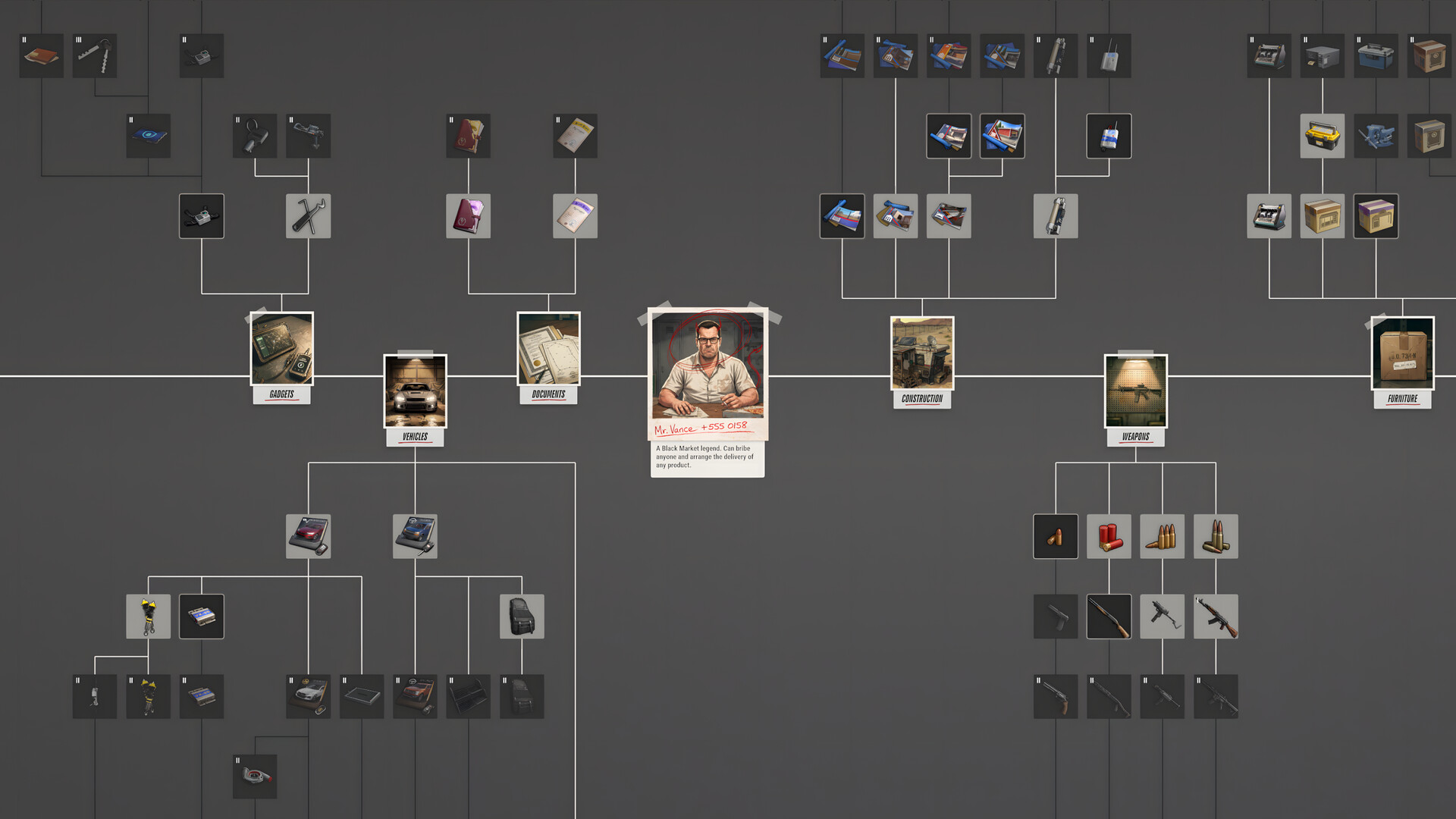
Official screenshot · Source: Steam store
Coverage of the game puts thousands of people in the same city, with a figure of about 5,000 players often cited in previews. You do not need that headcount to feel the pressure. One motivated neighbor is enough if your valuables sit in one room and your only car key is on the same shelf as your ammo.
Clans change the math. Solo play can survive a bad hour. It rarely shapes a territory. Crews assign roles, hold ground, and hit rival hideouts on purpose. Trust matters more than a full magazine, because a leaky member is a map of your safes. Player experience from similar sandboxes is consistent: the crew that inventories nightly keeps more than the crew that only shoots.
Resources stay scarce on purpose. Bank jobs, hideout raids, chases, and messy fights are the daily loop. Every extra crate is a reason for someone else to visit. A comfortable base is useful. A flashy one is advertising.
| Progress marker | What it proves | What it risks | Better read of success |
|---|---|---|---|
| Full safe | You finished jobs | One raid can zero the week | Split cash from craft parts |
| Parked fleet | You bought land and keys | Garage is a known prize | Keep one runner, stash the rest |
| Upgraded compound | Crafting is online | Lavish builds draw visitors | Upgrade function before looks |
| Clan territory | You can tax a lane | Neighbors plan counters | Hold less than you can defend |
| Solo pile of guns | You farmed hard | No one watches the door | Cache extras off the main floor |
Buy land before you trust a car
You do not own a ride just because you sat in one. The official path is simple and easy to skip when a street car is sitting there. Buy a plot that already has a house or a garage. That plot is what lets you purchase your own vehicle. After you buy it, put the key in the key locker. Without that locker step, the car is a story you tell, not an asset you control.
The official ROB RUN transport FAQ spells out that sequence: land with a house or garage, then the purchase, then the key locker. Vehicle modules come after ownership. They raise performance, and each modification goes in a specific place: under the hood, in the trunk, or on the underbody.
Do the steps in order. A module on a car you cannot lock is a gift. A garage with no key habit is a garage with a rotating owner.
| Step | What you do | Why it matters | Common miss |
|---|---|---|---|
| 1. Plot | Buy land with a house or garage | Ownership starts with property | Spending on a car with nowhere to keep it |
| 2. Purchase | Buy your own vehicle | It becomes yours, not a borrowed shell | Treating a found car as permanent |
| 3. Key locker | Store the key there | Separates the key from your pockets | Leaving the key on your body during a fight |
| 4. Modules | Install only after the car is secured | Performance without a home is temporary | Buying parts before the locker habit exists |
| 5. Test | Drive a short loop and return | Confirms you can leave and come back | Parking on the street "for a minute" |
Player experience says the first night is when people skip step 3. They win a chase, park out front, and log off with the key still equipped. The next login is a walking tour of an empty driveway. Make the locker a logout ritual, the same way you close a safe.
Land choice is also a social choice. A cheap edge plot is quieter and slower to resupply. A central plot is closer to work and closer to everyone who wants your trunk. Pick the one your crew can actually watch. An unwatched premium garage is just a brighter pin on someone else's map.
Split loot so one raid is not the week
Bases are progression hubs, not just bedrooms. Workbenches craft and repair. Safes hold valuables. Vehicles are mobile assets you can move when the block gets hot. The mistake is using one of those as all three.
Published notes on hideouts are blunt: you build, you upgrade, you store loot and vehicles, and the nicer the refuge looks, the harder people try to enter it. Guarding what you own is a running cost, not a one-time door upgrade. If the defense bill is higher than the craft income, the base is a hobby, not a business.
Use three piles, even if they share one building.
- Safe pile: cash, rare parts, and anything you cannot replace before the next job.
- Bench pile: materials you will craft or repair within a day. Volume here is fine. Value should stay low.
- Mobile pile: one fueled vehicle, a travel kit, and nothing you would cry about if the car dies in a chase.
Hoarding feels safe until the doors open. Mobility feels reckless until the wipe clock, or a raid, proves you needed a way to leave. The useful habit is a ratio. Keep enough at home to craft. Keep enough on a car to restart. Keep the prize pile small enough that losing it hurts but does not end the character's week.
| Storage spot | Best contents | Poor contents | Raid result if you guessed wrong |
|---|---|---|---|
| Safe | Cash, keys you are not using, rare modules | Bulk scrap, food, cheap ammo | Thief gets the week in one container |
| Workbench zone | Repair inputs, common craft mats | Your only weapon set | Bench camp becomes the armory |
| Garage | Secured vehicle, spare fuel | Loose loot on the floor | Car and cargo leave together |
| On your body | One kit for the next trip | Backup keys and savings | A death is a full donation |
| Clan stash | Shared craft buffer | One player's entire fortune | A dispute empties the group |
Community reports in this style of sandbox repeat the same complaint: the rich-looking base had one door and one box. Split the value and a partial raid is annoying. Concentrate it and a partial raid is a reset you did not schedule.
Label boxes in a way your crew understands and strangers do not. "Scrap" should be scrap. If every crate is named after a joke, allies waste time while a raider does not care about names at all. Speed for friends beats cleverness for yourself.
Modules, keys, and cars as tools
A car in this city is not a cosmetic. It is how you arrive, leave, and sometimes survive a chase you cannot win on foot. Modules boost performance, but only the modification that matches the slot belongs there. Hood, trunk, and underbody are different jobs. Installing the wrong idea in the wrong place does not make you faster. It makes you poorer.
Think in roles before you think in parts.
| Role | What you want | Where modules tend to live | When to skip upgrades |
|---|---|---|---|
| Runner | Reliable getaway for one or two people | Hood and underbody for go and grip | If you still die with the key on you |
| Hauler | Trunk space for a job's take | Trunk modifications | If the garage is unwatched |
| Decoy | Cheap car you can abandon | Little or nothing | Never put rare parts on it |
| Crew van | Moving people to a raid | Balanced, not maxed | If the clan has no driver rota |
You do not need a maxed car to matter. You need a car you can start after a fight. That means fuel, a stored key, and a driver who is not also the only person holding the safe code. Player experience favors a boring reliable vehicle over a loud one you are afraid to scratch. Scratches are cheap. A stolen signature car tells the server who to hunt.
Keys deserve the same respect as cash. If the locker is the real ownership, then every extra copy is a liability. Hand a spare only to someone who already shares your wipe goals. A temporary ally from a single bank job does not need overnight access to the garage. Open fights are expensive, and clever players often skip the gunfight and take the logistics instead. An unlocked trunk and a borrowed key are logistics.
Before a job, pull one key, one car, and one load. After the job, reverse it: park, locker, safe, then craft. The order is dull. Dull is how fleets survive. If you tweak modules, do it at home between jobs, not on the roadside where the install is also a beacon.
Match the car to the plan. A trunk full of raid loot is a second crime scene if police players are already in the area. Law enforcement is player-driven too, so there is no pattern you can memorize for a chase. Sometimes the right module is the one that lets you break line of sight. Sometimes the right move is to ditch the car and keep the key path home clean. Walking away from a vehicle can be the upgrade.
Layouts that stay useful and look poorer
A base has to craft, sleep a defense, and not glow. Those goals fight each other. Workbenches want space and traffic. Safes want quiet and few visitors. Garages want a door that closes and a sightline you can actually watch. If every upgrade is visible from the street, you paid for a billboard.
Try a simple floor logic, even on a small plot.
- Public edge: the approach, a cheap door, nothing valuable in the first room.
- Work core: benches and repair, staffed when the clan is online, empty of prizes when you log out.
- Private core: safe and key locker, few people, short path from the garage.
- Exit: a second way out that does not parade you across the front yard with a bag.
Defense is a budget. Every minute spent camping your own roof is a minute you are not earning. If the layout needs three people to watch one box, shrink the box. Published commentary on the game makes the trade clear: comfort paints a target, and guarding that comfort never really ends. Spend on the bench that prints repairs. Delay the cosmetic shell until you can lose it and still craft.
| Signal visitors notice | What they assume | Quieter alternative |
|---|---|---|
| Many cars in the open | Keys and cargo are close | One visible car, others secured |
| Bright, fully upgraded shell | Safe is worth the ammo | Function rooms first, facade later |
| Constant foot traffic | Someone is home to loot | Stagger logins, do not crowd the door |
| Loud module tests out front | Owner is online and distracted | Test on a short loop, then locker |
| One giant storage room | Everything is together | Split safe, bench, and garage |
Clan roles keep the layout honest. One person crafts. One person runs keys and cars. One person watches the approach during a delivery, not all night. Territory helps because it gives you roads you kind of know, but control also invites a counter-raid. Negotiation and betrayal are part of the meta. Build the base so a former friend cannot empty it in the time it takes to make coffee.
Player experience: if a visitor can see the safe from the entrance, move the safe. Line of sight is a gift you should not give.
Play the week like it will end
One of the sharper hooks in coverage of ROB RUN is the short season. Previews describe climbing from nobody to a server boss inside about a week, then a wipe that clears the board. Whether your server's timer matches that pitch exactly, the lesson holds: late-week hoards are liabilities. A pile you cannot spend before reset is a pile you stored for someone else, or for nobody.
Use the calendar as a storage plan.
| Phase | Storage goal | Vehicle goal | What to stop doing |
|---|---|---|---|
| Early | Bench mats and one safe seed | Buy land, one car, key in locker | Collecting a fleet |
| Mid | Split stashes, craft buffer | One runner plus a cheap spare | Parking trophies on the street |
| Peak | Defend only what you can staff | Modules on the car you actually drive | Upgrading looks |
| Late | Spend, move, or share with the crew | Keep the car that still has a job | Filling new safes "for next time" |
| After wipe | Habits, not leftovers | Rebuy land before rebuying parts | Copying last week's flashy plot |
Ambition speeds up near the end because everyone knows the clock. That is when lazy storage gets punished. A failed job can start a revenge arc. A lucky ambush can turn a small crew into the group everyone fears. Those stories are fun. They are also how full garages change hands. If you are ahead, look poorer. If you are behind, steal time, not every shiny car you see. A car without a locker plan is a five-minute flex.
ROB RUN store loot and vehicles discipline is mostly repetition. Same logout order. Same split between safe, bench, and garage. Same rule that rare modules stay off the decoy car. The players who climb are not always the best shots. They are the ones who can lose a fight and still open a bench in the morning.
Reset weeks reward learning. The plot you pick next time can be quieter. The crew list can be shorter. The safe can be smaller because you finally trust the ratio. Bring the habit forward. Leave the trophy cars behind.
FAQ
How do I start a garage without wasting cash?
Buy a plot that includes a house or garage first, purchase the vehicle second, and store the key in the key locker before you shop for modules. That order matches the official transport guidance. Modules under the hood, in the trunk, or on the underbody can wait until the car has a home.
What should a small crew keep at the base?
Keep a craft buffer at the workbench, valuables in the safe, and one working car ready to move. Player experience says a three-person group should not stock a showroom. If you cannot staff a watch during deliveries, lower the amount you store until the defense fits the roster.
Do flashy upgrades help or hurt?
They help crafting and comfort, and they hurt secrecy. Coverage of the game notes that a lavish shelter draws intruders and that guarding it becomes a constant cost. Upgrade the bench and the locker path before you upgrade the look of the shell.
Why plan ROB RUN store loot and vehicles around a wipe?
Because a short season makes late hoards fragile. If progress can peak and then reset inside a week, as previews describe, parts you cannot use before the wipe are just stored risk. Spend, share, or move them while they still change a job.
Related Guides
ROB RUN build and upgrade your base guide
ROB RUN build and upgrade your base: stash loot, craft, and survive the weekly wipe.
ROB RUN hideout Guide: Build, Store, and Defend
How a ROB RUN hideout works: upgrades, safes, vehicles, raid risk, and a weekly wipe plan for the 5,000-player crime sandbox.
ROB RUN Intruders: Protecting Your Hideout Base
See why ROB RUN intruders target lavish hideouts, what the Steam listing confirms, and how to plan base defense before Early Access.
ROB RUN first look: Gameplay, Release and PC Guide
Our ROB RUN first look covers its crime sandbox, clans, server wipes, November 2026 release plans, PC requirements, and playtest access.
ROB RUN closed alpha: playtest, date, and what we know
ROB RUN is still unreleased. See the Steam playtest, November 2026 Early Access plans, PC specs, and what closed alpha clips leave unconfirmed.