ROB RUN build and upgrade your base guide
ROB RUN build and upgrade your base: stash loot, craft, and survive the weekly wipe.
Your base is the real scoreboard
A hideout in this crime sandbox is a workshop, a garage, and a bullseye at the same time. Anyone planning to ROB RUN build and upgrade your base has to accept that every new safe and workbench can pull rival crews toward the door. The smarter path is to ROB RUN build and upgrade your base in stages, matching storage and crafting to what you can actually defend before the weekly reset.
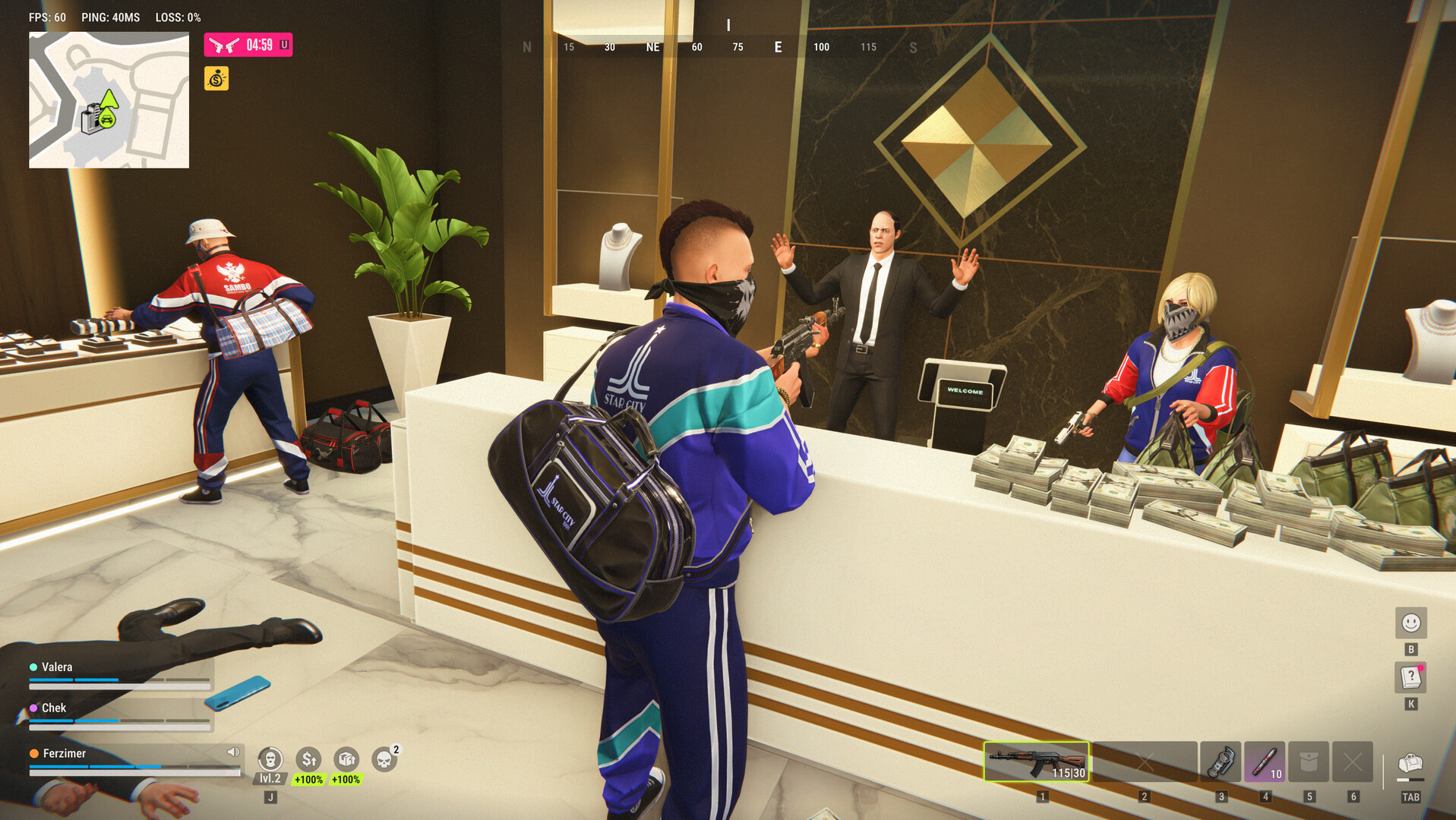
Official screenshot · Source: Steam store
That matters because progress here is rented, not owned. Developer copy says a player can climb from ordinary street muscle to the head of the server's biggest crew inside a single week, then start over. Coverage of that pitch treats the restart as a weekly server wipe. A base that takes days to furnish and one raid to empty is not a trophy. It is a timer.
The official ROB RUN Steam listing frames the fantasy clearly: create a hideout, improve it, store loot and vehicles, and place workbenches and safes. The warning sits beside the promise. A richer refuge draws more intruders. If you remember one design rule, remember that one.
What the hideout is actually for
As of early November 2026, the Steam page still showed a planned November 2026 release and an Early Access window of about 6 to 12 months. The store text calls the game a playable online experience, with balance, netcode, and extra content still being tested. It was not yet available to buy, though a playtest request and a wishlist were both listed. Treat the tips below as strategy drawn from that public feature set, not as a click-path through a finished live build.
The city is the pressure. The listing describes about 5,000 players in the same space, with both criminals and cops controlled by real people. There is no patrol route you can memorize forever. A chase, a robbery, or a hit on someone else's hideout can collapse because another human changes their mind. Community coverage makes the same point: a plan fails the moment someone else decides to burn it down.
Inside that chaos, the hideout is the only place that is supposed to be yours. It is also the first place other players will test once you look wealthy.
| Base piece | What public materials say | Why it matters this week |
|---|---|---|
| Hideout | You create and upgrade a refuge | Walls fail if nobody is home to watch them |
| Loot storage | You store stolen goods on site | A fat stockpile is a reason to raid |
| Vehicles | You keep vehicles at the hideout | A ride you can still drive beats cash stuck in one room |
| Workbenches | You place them in the base | Early coverage reads these as craft-and-repair stations |
| Safes | You place them with the benches | They are the stated home for valuables |
Early write-ups go a step past the store text. They describe benches as craft-and-repair spots, safes as protection, and vehicles as mobile assets. That reading fits the police pressure and repair moments shown in circulating gameplay footage, but it is still secondary reporting. If Early Access changes the widgets, the principle stays: separate what you must keep from what you can afford to lose.
Player experience in that coverage also treats the base as a progression hub, not a dollhouse. Repair keeps gear usable. Safes slow casual thieves. Vehicles let you leave with value instead of sitting on it. Players who ROB RUN build and upgrade your base as a warehouse, with no plan to move, are volunteering for the next raid.
How to ROB RUN build and upgrade your base without a beacon
Do not furnish the dream base on day one. The developers are clear that lavish hideouts attract intruders, and community reports describe guarding a comfortable shelter as a running cost. Luxury is a signal. In a city of bank jobs, rival raids, chases, and shootouts, signals get answered.
A practical way to ROB RUN build and upgrade your base is to buy survival first and status last.
| Priority | Upgrade focus | Spend when | Skip when |
|---|---|---|---|
| 1 | A plain shell you can watch | You finally have loot worth losing | You are still empty-handed after every job |
| 2 | Safe space for the best goods | One death would erase your seed money | You are about to log off with it all in your pockets |
| 3 | Workbench access | Gear breaks faster than you replace it | The bench would sit in an obvious, empty building |
| 4 | Vehicle storage you can leave | Jobs need a ride you cannot park on the street | The garage is the brightest room on the block |
| 5 | Extra rooms and showpiece upgrades | A clan can rotate defense | You are solo and the reset is close |
That order is a planning model, not a published tech tree. No public upgrade calculator exists yet, and Early Access is expected to move the numbers. The logic comes from the risk the developers already named.
Keep the model honest with a few habits:
- Bring home only what you can defend tonight. Extra loot in a weak building is a donation.
- Keep a run bag separate from the stash you hope to save.
- Repair and rearm before you decorate. A pretty room does not win a gunfight.
- If an open fight looks too expensive, leave. The listing itself says there is usually another way to get what you want.
- Do not lead a chase home. Dump attention in the city, then return on a quiet route.
Cops here are players, so a sloppy escape can end at your own door. Community reports stress that law enforcement is improvisation, not a pattern you solve once. Assume someone is adapting to you.
| Hideout style | Upside | Downside | Best fit |
|---|---|---|---|
| Bare stash | Cheap to lose and easy to abandon | Slow growth, little crafting comfort | Solo players right after a wipe |
| Working shop | Repair, storage, and a ride in one loop | Worth raiding once traffic is noticed | Duos and small crews with a watch |
| Lavish compound | Status and room for a full crew | Highest intruder pressure | Families that can guard in shifts |
| Mobile-first | Value sits in vehicles, not one address | Weak if cars are stolen or camped | Players who refuse a landmark |
Early coverage says the comfort-versus-target tradeoff shapes your whole approach to the server. A working shop is the sweet spot until your crew can afford the compound. Players who ROB RUN build and upgrade your base in the open, with constant deliveries and a flashy exterior, are throwing a parade for every nearby crew.
Clans, roles, and who holds the keys
You can survive alone. The developers say you thrive with other people. Clans and crime families can assign roles, set raids, hold territory, fight, and cut truces. Territory is not a badge. Coverage describes it as a path to resources that also invites war. Trust is the scarce item, because anyone can turn.
That social layer should change how you build. A clan should ROB RUN build and upgrade your base as a shared workshop, not a monument one insider can sell out.
| Role | Base job | Street job | Failure mode |
|---|---|---|---|
| Quartermaster | Tracks safes and what can be spent | Skips noisy jobs when the stash is full | Hoards until the crew stops growing |
| Mechanic | Keeps benches and vehicles usable | Recovers cars after messy escapes | Parks every asset in one garage |
| Door guard | Watches the hideout while others are out | Screens visitors and rival scouts | Leaves the door cold |
| Raider | Turns stored gear into the next score | Hits banks and rival hideouts | Leads heat back home |
| Negotiator | Uses the base as a meeting point | Cuts truces and spots betrayals | Shows a rival the layout |
Solo players should stay on the bare-stash or working-shop row. One person cannot craft, run jobs, and hold a door at once. Small groups should split those jobs on a schedule instead of stacking everyone in the same room after every heist.
Clan politics are a base problem. Reliable allies are described as the most valuable asset in a city built on betrayal. Do not leave exits, vehicle spots, and the real valuables as knowledge only one person holds. There is no published loyalty system in the current materials, so plan for a flip the same way you plan for a raid.
Holding ground can feed the stash, and it also tells every neighbor where to aim. Negotiate when a fight would cost the building. Start a war only when the crew can guard home and still hit back. Player experience in early articles is full of revenge spirals: a failed heist becomes a feud, and a lucky ambush turns a small crew into a threat overnight. Your walls should be ready for the story you just started.
Spend the week like it will be deleted
The one-week climb is the hook. Rise fast, then the server wipes the slate and you return with sharper habits and, if you are lucky, the same allies. That loop punishes anyone who builds as if the hideout were a permanent mansion.
Use the week as four beats. Exact hours will shift once wipes are measured on a live server, but the shape matches the published fantasy. There is no prize for finishing a cosmetic tree, so ROB RUN build and upgrade your base only when this week's jobs still benefit.
| Phase | Base goal | Risk worth taking | Risk to refuse |
|---|---|---|---|
| Opening hours | Hide a small seed stash and a ride | A plain room with thin defenses | A showcase build with an empty safe |
| Early jobs | Add a bench and a real safe | Light traffic from a few scores | Leading chases to the new door |
| Midweek push | Upgrade only if guards exist | A louder base tied to territory | Expanding while half the crew is offline |
| Final stretch | Spend, move, or armor what the wipe will take | Raids that can still pay off | Sinking the last hours into looks |
Before you log off, run a short closeout:
- What is in the safe that would hurt to lose tonight?
- Which vehicle still starts, and is it inside or exposed?
- Can the bench support the next repair, or is it decoration?
- Who is online if a rival tests the door?
- Is the building now nicer than the crew defending it?
If the last answer is yes, stop upgrading. Put the power into jobs, allies, or a quieter stash.
Early Access will move some of this. The developers want live feedback on balance and netcode, and they plan more maps, modes, characters, items, and rankings later. They also say they do not plan to raise the price when Early Access ends. None of that cancels the weekly restart. Extra toys will not make a careless compound safe.
Hardware still decides whether you can hold a fight at home. The published minimum is 64-bit Windows 10, a Core i5-6600K or Ryzen 5 1600 class CPU, 12 GB of RAM, and a GTX 1050 Ti, RX 580, or Arc A380 class GPU, plus 20 GB free. Recommended play steps up to 16 GB of RAM and an RTX 2070, RX 5700 XT, or Arc B570 class card. Broadband is required. If your frame rate dies when a street turns into a war, the defense plan is already late.
FAQ
How should you ROB RUN build and upgrade your base in the first week?
Start with a small hideout, a safe, and a way to repair gear or store a vehicle. Add comfort and extra rooms only after someone can watch the door. Developer materials warn that a lavish refuge pulls intruders, and the one-week rise-and-reset means a late cosmetic push often expires before it pays you back.
Can you keep a base forever?
Not in the loop described so far. The public pitch is that you can reach the top of a server in about a week and then start over. Coverage calls that cycle a weekly wipe. Build for the season you are in. Carry the lesson and the allies into the next wipe, not a stockpile the restart will delete.
Is solo base building viable?
Yes, if you stay modest. Solo play is framed as survival rather than control of the server. A bare stash or a small working shop matches one pair of eyes. A compound, a territory, and a busy garage need a clan that can post guards, raiders, and someone to watch the safes.
What is still unconfirmed about hideouts?
Exact costs, upgrade tiers, raid timers, and permission settings are not in the public Early Access description. What is confirmed is the feature list: build and upgrade a hideout, store loot and vehicles, place workbenches and safes, and expect more attention as the place looks richer. Check the Steam page once the November 2026 window opens, because the developers say player feedback will keep changing balance during Early Access.
Related Guides
ROB RUN hideout Guide: Build, Store, and Defend
How a ROB RUN hideout works: upgrades, safes, vehicles, raid risk, and a weekly wipe plan for the 5,000-player crime sandbox.
ROB RUN Intruders: Protecting Your Hideout Base
See why ROB RUN intruders target lavish hideouts, what the Steam listing confirms, and how to plan base defense before Early Access.
ROB RUN Safes: Hideout Storage and Key Loot
Learn how ROB RUN safes work in hideouts and heists, what to store before weekly wipes, and how keys and raids affect your loot.
ROB RUN first look: Gameplay, Release and PC Guide
Our ROB RUN first look covers its crime sandbox, clans, server wipes, November 2026 release plans, PC requirements, and playtest access.
ROB RUN closed alpha: playtest, date, and what we know
ROB RUN is still unreleased. See the Steam playtest, November 2026 Early Access plans, PC specs, and what closed alpha clips leave unconfirmed.