ROB RUN Intruders: Protecting Your Hideout Base
See why ROB RUN intruders target lavish hideouts, what the Steam listing confirms, and how to plan base defense before Early Access.
A stacked safe and a row of parked cars look like progress until someone else decides they are loot. ROB RUN intruders are built into that fantasy: the store page warns that a more lavish refuge attracts more people who want what is inside. That matters because ROB RUN intruders turn base building from decoration into a survival problem in a city packed with human cops and human criminals. With a planned November 2026 Early Access window and a playtest still gating access, the smartest prep is understanding the threat model before you ever place a workbench.
The game is still a store listing rather than a live server, which is exactly why the threat model is worth reading now. Once Early Access opens, balance and bugs will move faster than any guide, so the durable advice is the part the developers already printed.
Why a Fancy Hideout Paints a Target
ROB RUN is pitched as a dense online criminal city, not a quiet building sim with combat taped on. Every officer and every outlaw is supposed to be a real person with a private agenda. The listing puts about 5,000 players in that space. A quiet corner does not stay quiet when that many people can improvise. Open fights can spiral, police are a genuine threat, and the smart play is sometimes a path that is not a shootout.
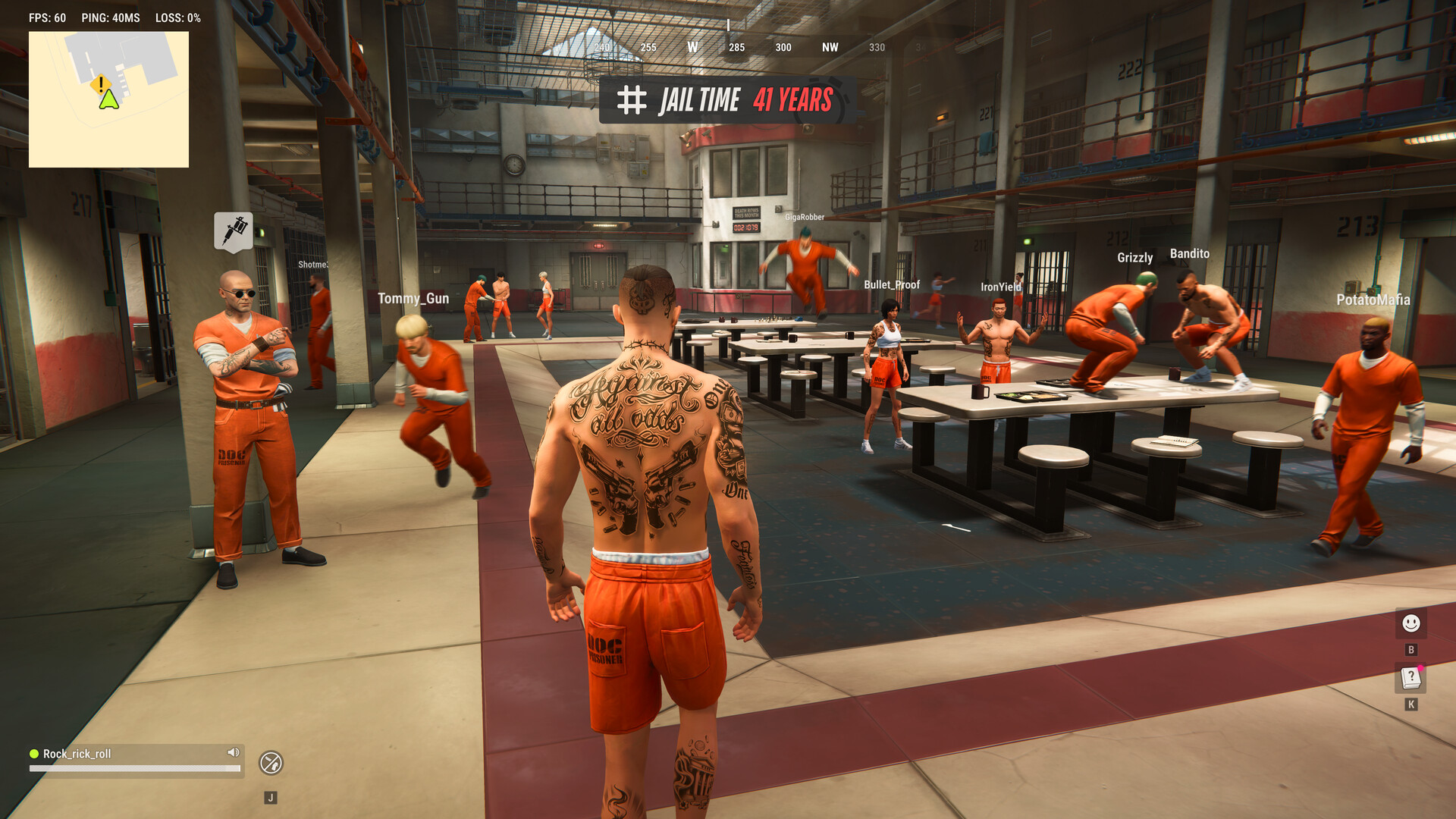
Official screenshot · Source: Steam store
Home sits inside that economy. You are invited to raise a hideout, upgrade it, store loot and vehicles, and place workbenches and safes. The warning attached to that fantasy is the entire public definition of ROB RUN intruders: a fancier refuge should draw more unwanted visitors. There is no health value for doors, no raid timer, and no line that calls them AI enemies. The supported reading is other players coming for your surplus.
Luxury is information. Vehicles out front say you own something worth driving off. A busy workbench says you are producing goods. A safe inside a decorated compound says the take from a job came home. In a game whose pitch is that anyone can seize what you hold, showing off storage is a choice.
Until notes ship, use a cautious scale. The ratings below are an editorial lens based on the published warning, not a datamined formula.
| Base signal | Likely attention | Sensible response |
|---|---|---|
| Bare starter spot | Little worth stealing | Learn the block and stash almost nothing |
| Safe plus workbench | Proof you craft and store | Split valuables; avoid public crafting |
| Vehicles out front | Obvious mobile loot | Keep only what you can move or guard |
| Lavish upgraded refuge | More visitors, per the store copy | Get allies before you buy the look |
| Clan territory base | Raids, wars, and leaks | Roles, revocable access, and truces |
Spend attention only on upgrades you can defend or replace. If losing the base would end your week, it is already too loud. The listing leaves little room for sloppy timing: plan, decide fast, and act at the right moment, or restart poorer.
What the Steam Listing Actually Confirms
Numbers for door strength or offline raid odds are ahead of the sources. This article uses the public Steam listing as reviewed on November 1, 2026. That page still showed the game as unavailable to buy. The planned date was November 2026, the format was Early Access, and players could request a playtest or wishlist the app.
Developers say they want a fully playable online build so real people can stress balance, netcode, and content. Feedback is meant to steer what gets polished. They estimate about six to twelve months in Early Access. They do not plan to change the price when the full version ships. No price figure appears in the reviewed text, so none is guessed here.
Later growth is spelled out clearly enough to matter for hideouts, even when it is not labeled as a defense patch.
| Planned growth | Why it changes home defense |
|---|---|
| More maps, levels, and modes | New routes to your door |
| More characters, items, customization | More ways to look wealthy |
| Rankings and achievements | Public success can mark a crew |
| Matchmaking, performance, netcode | Big fights need stable servers |
| Visual, audio, UI, and balance polish | Tools and costs may shift after tests |
Updates are planned through the Steam hub, Discord, patch notes, and possible polls. ROB RUN intruders, as a system, can be retuned in public. A layout that feels safe in month one can fail after a balance pass. Trust developer notes over a thumbnail that quotes exact safe stats.
The power curve is short on purpose. Beside a heading about the server wiping players out, the copy describes climbing from ordinary thug to boss of a huge organization in about a week, then starting over with sharper experience. Treat permanence as unlikely. Build for a cycle you can lose.
Confirm dates and the playtest on the ROB RUN page on Steam before you block off a weekend. Store text moves, and Early Access pages move with it.
Habits That Survive Unknown Patch Notes
You can rehearse judgment before the servers exist. These habits follow only systems the page names: stashes, vehicles, crafting, clans, raids, and constant loss. They are not secret tech.
Write a loss list. Put slow-to-replace goods at the top and easy crafts at the bottom. ROB RUN intruders, if the marketing holds, are drawn by the top of that list. Keep high-value goods dull, split, and mobile. Let the showcase hold things you can stand to lose.
Separate status from storage. With one plot, delay lavish upgrades until someone can answer a hit. With several stash points, put value in the boring one. A pretty base can still be a roleplay set. It should not be your only vault.
Assume a harsh offline case until notes say otherwise. The page says you can lose everything in any minute. The reviewed text does not promise that logging out freezes a safe. If a later update adds offline protection, you can store more. Betting on an unannounced feature is how stockpiles vanish.
Scout exits before furniture. Robberies, chases, and shootouts are all part of the pitch. One door turns those activities into a trap when they follow you home. Walk the block, find a vehicle path, and see where a fight would clog it.
Use this once the game is actually live.
| Check | Ask this | If the answer is no |
|---|---|---|
| Replaceable loot | Can I remake what is stored? | Move or spend it before going loud |
| Backup | Does someone trusted know the plan? | Skip big upgrades and raids |
| Noise | Can I defend this look? | Pause cosmetics |
| Exit | Is there a way out besides the front? | Scout one before parking cars |
| Fight location | Am I about to shoot on my porch? | Pull the fight away from the stash |
Three drills keep that list concrete.
You want three cars and a new wall, but your crew is offline. Delay the look. The store warning ties a lavish front to more visitors, and nobody is coming to help.
A recruit wants vault access before the first shared job. Refuse. Betrayal is described as normal, and an insider beats any stranger who has only seen the gate.
A fight starts at home while police players are a real faction, not scenery. Leaving the loot and the block is often wiser than winning a duel. The official tone favors another path when an open fight costs too much.
Clans, Cops, and the Insider Problem
You can survive alone. The listing says you thrive with a crime family: roles, raids, territory, gang wars, and truces. The line to put on a recruitment note is about betrayal. Anyone might turn, so the ally who does not is the real asset.
That splits ROB RUN intruders into two stacks. Outsiders show up because the base looks rich. Insiders show up because they were handed a key. Fancy design feeds the first stack. Loose permissions feed the second. Crews in games like this often lose to the second while staring at the first.
Agree on jobs even before the UI confirms them:
- A quartermaster who tracks what may leave the stash
- Watch shifts during crafting or vehicle moves
- A negotiator so you are not at war with every neighbor
- A recruiter who withholds base rights past day one
- A shot-caller who aborts when police pressure rises
Human cops make porch wars messy. A rival hit that draws law enforcement can hand the loot to a third side. Holding the wall and losing the safe on the way out is a total miss. Pull fights off your storage when you can.
| Style | Help against intruders | Main risk |
|---|---|---|
| Solo, small stash | Few people know the layout | No backup if a crew hits |
| Solo, lavish base | Strong personal fantasy | Luxury is said to draw visitors |
| Clan, one shared vault | More guns on site | One betrayal empties everyone |
| Clan, split stashes | A leak is only partial | Needs time and real trust |
| Truces and diplomacy | Fewer rival raids | A deal can break without warning |
Territory makes you easy to find. If your family name is on a district, people who want that district know where to knock. Truces are listed next to wars because endless fighting is bad business. Sign them when you are ahead. Do not treat a late-cycle promise as permanent when the pitch is that the server eventually clears the board.
Hardware, Languages, and the Launch Watchlist
Early Access, in the developers' framing, is playable online play that still needs polish, balance, and features. Bugs are expected. Waiting is reasonable if you want a settled base meta. Testing is reasonable if you want to shape it. The playtest request and community channels are the path they describe.
Both PC tiers ask for 64-bit Windows 10 or later, DirectX 11, broadband, and 20 GB of disk space.
| Spec | Minimum | Recommended |
|---|---|---|
| CPU | Intel Core i5-6600K or AMD Ryzen 5 1600 | Intel Core i5-9600K or AMD Ryzen 5 3600 |
| Memory | 12 GB RAM | 16 GB RAM |
| Graphics | GTX 1050 Ti, RX 580, or Arc A380 | RTX 2070, RX 5700 XT, or Arc B570 |
| Platform | Windows 10 or later, DirectX 11 | Windows 10 or later, DirectX 11 |
| Network and storage | Broadband, 20 GB | Broadband, 20 GB |
A crowded fight against ROB RUN intruders will stress a minimum GPU and a shaky connection harder than quiet crafting will. If you are buying parts for this game, lean toward the recommended memory and a stronger card, then recheck the official page before you spend.
Full audio on the listing is marked for English and Russian. French, German, and Spanish (Spain) show interface and subtitles. Mixed-language crews should plan on text callouts during a raid, not voice alone.
Easy Anti-Cheat is listed, with a kernel-level note and a third-party EULA. The link to hideout play is narrow: the fantasy needs human players in those thousands of slots, and anti-cheat is how the developers signal they want cheaters kept out. Read the EULA before you accept it.
The page also says AI is used for some graphic elements. That is an art disclosure, not a combat or storage system.
Read these items in the first notes before you commit a stockpile:
- Whether visitors can open stashes while you are offline
- Whether upgrades are cosmetic, mechanical, or both
- How fast clan access can be revoked
- Whether shootouts near homes alert police players
- Whether the restart is a full wipe or a partial reset
- What community tests change about raid pacing
Keep the Palace Smaller Than Your Backup
ROB RUN intruders are not a side activity. They are the bill for looking successful where loss is constant and other humans supply the danger. Offense and defense use the same skills: planning, allies you can remove, and the nerve to leave a fight that only protects your pride.
Do not raise a refuge you cannot guard, and do not guard it with people you cannot cut off. Wishlist the game or request the playtest if that loop sounds fun. Ignore precise meta spreadsheets until the developers publish the systems those numbers would require.
FAQ
What are ROB RUN intruders?
They are the visitors the store page attaches to a lavish hideout. A richer refuge is supposed to draw more of them. The listing does not define a separate monster type, so the grounded reading is other players coming for loot, vehicles, and whatever the safes hold.
Can I make a base impossible to raid?
No public feature promises that. The tone is constant risk. Lower visibility, split stashes, and careful permissions are sensible prep. A perfect lock is not something the current description offers.
Is the game playable right now?
The November 1, 2026 listing still said the game was not yet on Steam, with November 2026 planned for Early Access and a playtest you can request. Developers expect about six to twelve months of Early Access, with bugs and balance changes. Confirm the live date on the official store page before you clear a weekend.
Will joining a clan keep visitors out?
A clan can add defenders, roles, and territory, which helps against outside hits. It also creates insider risk, and the developers say anyone can betray you. A group makes the base safer only when access lags behind trust and the hideout is not louder than the people who can show up.
Related Guides
ROB RUN build and upgrade your base guide
ROB RUN build and upgrade your base: stash loot, craft, and survive the weekly wipe.
ROB RUN hideout Guide: Build, Store, and Defend
How a ROB RUN hideout works: upgrades, safes, vehicles, raid risk, and a weekly wipe plan for the 5,000-player crime sandbox.
ROB RUN Safes: Hideout Storage and Key Loot
Learn how ROB RUN safes work in hideouts and heists, what to store before weekly wipes, and how keys and raids affect your loot.
ROB RUN first look: Gameplay, Release and PC Guide
Our ROB RUN first look covers its crime sandbox, clans, server wipes, November 2026 release plans, PC requirements, and playtest access.
ROB RUN closed alpha: playtest, date, and what we know
ROB RUN is still unreleased. See the Steam playtest, November 2026 Early Access plans, PC specs, and what closed alpha clips leave unconfirmed.