ROB RUN Safes: Hideout Storage and Key Loot
Learn how ROB RUN safes work in hideouts and heists, what to store before weekly wipes, and how keys and raids affect your loot.
Why a safe matters more than another gun
Losing a gold drop on the road back to a fence hurts more than the firefight that created it. In ROB RUN, a player-driven crime sandbox headed for Early Access, ROB RUN safes are the only quiet part of a city built to take things away from you. Learning how ROB RUN safes fit hideouts, key runs, and the weekly reset is the difference between a one-week crime family and a character who rents the same cheap car forever.
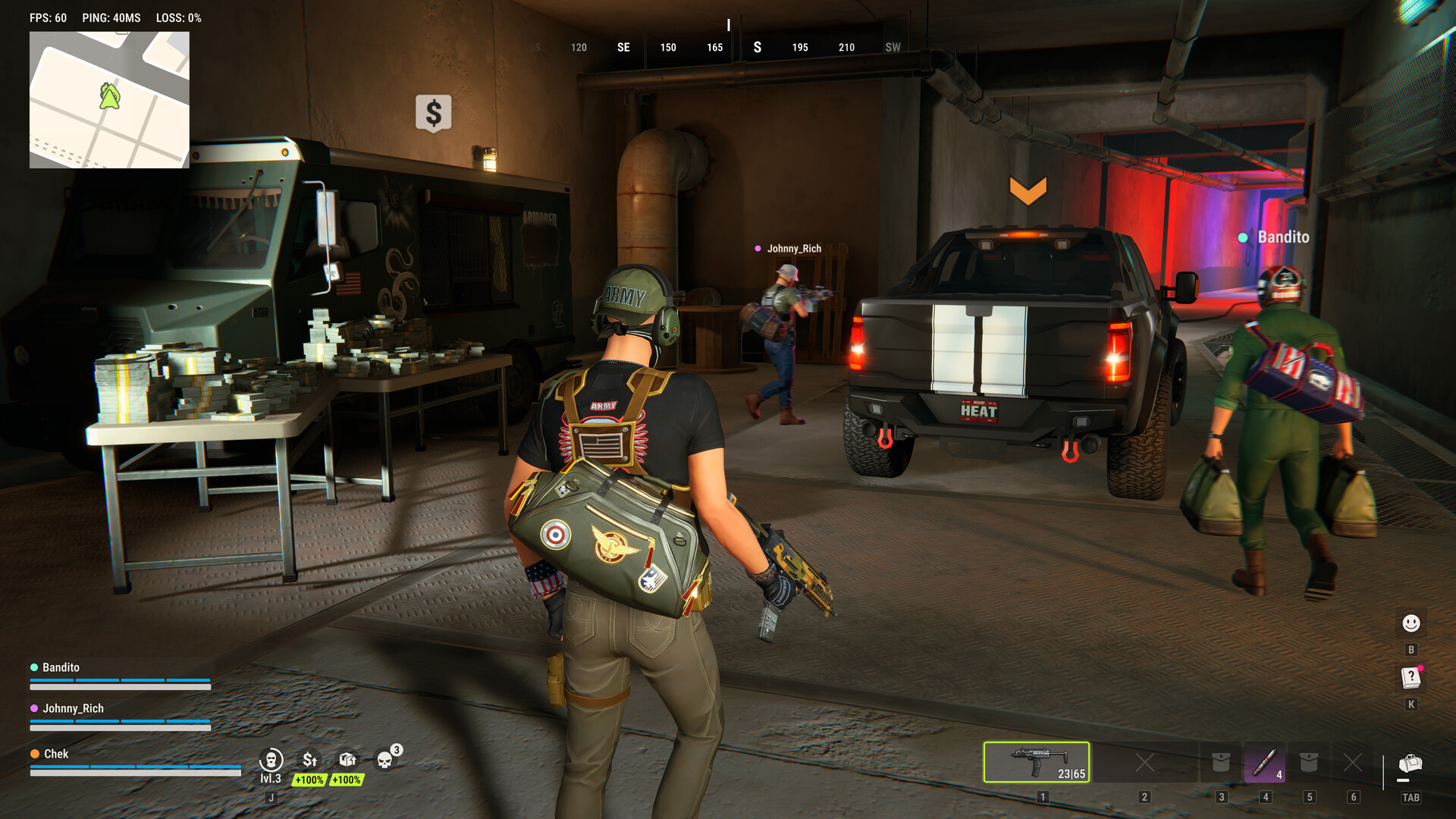
Official screenshot · Source: Steam store
Official materials on the ROB RUN Steam page describe a city of roughly 5,000 people, and every officer and outlaw in that pitch is another human. You can climb from street-level thug to the top organization inside a single week, then watch a server wipe clear the board. Anything you fail to convert or defend is just a gift for the next crew.
That tempo is why ROB RUN safes are a progression system, not a decorative prop. Early cash has to pay debts, buy a plot, and fund a base. Later cash has to survive raids. The store page is explicit that a hideout can hold loot, vehicles, workbenches, and safes, and equally explicit that a lavish refuge attracts intruders. Protection and attention rise together.
The game is planned for Early Access in November 2026, with the team estimating about 6 to 12 months of live development. Store copy still frames the build as a playable core loop that needs polish, balance, and more content. Treat every container size, key drop, and price below as something that can move in a patch. Where a detail comes from people already in the playtest, this guide labels it as player experience or community reports.
| Storage question | What the public materials support | What is still unconfirmed |
|---|---|---|
| Can you place a safe in a base? | Yes. Hideouts are meant to store loot and include safes and workbenches. | Capacity, upgrade tiers, and crack times are not published. |
| Do world sites have keyed containers? | Player experience describes keys that name a specific safe or locked room. | A full key table and whether lockpicks exist are unknown. |
| Is stored wealth permanent? | A weekly climb-and-wipe loop is part of the design. | Exact wipe rules for safes versus cosmetics are not spelled out. |
| Are you safe once loot is home? | No. Official copy warns that richer bases draw more intruders. | Raid rules, offline protection, and safe HP are not documented. |
World containers, keys, and the run back
World ROB RUN safes are a different problem from the box in your basement. They are objectives. Community reports from the playtest describe keys whose text names both a district and a target: one example pointed at a pharmacy safe on Sunny Beach, and another opened a locked room in a Sunny Beach convenience store. Players said they only noticed the destination after reading the key, which is an easy way to waste a high-value item on the wrong side of the map.
Those runs sit inside an extraction-style loop. You start with almost nothing, rent a car, and choose a side. Player experience says holding a prompt flips you into a criminal role, while the police station is the path if you would rather enforce the law. Houses, jewelry spots, a diamond store, and an art gallery have all shown up as loot sites in playtest footage. Other players can kill you and take what you are carrying, and valuable red or gold items are described as hard to walk out with because inventory space runs out fast.
A few field habits already matter, even before a wiki exists:
- Read the key before you drive. District names such as Sunny Beach, Downtown, and Loot Bay showed up in community reports, and a wrong district burns the session.
- Do not stage on the front door. Playtesters said parking in plain sight tells nearby police exactly which shop you want.
- Take the quieter entrance, grab what fits, and leave the greed pile if your bag is already full of jewelry.
- Assume the sell point is camped. Limited fences mean officers and rivals know where loaded players must appear.
- If a chase is stuck to you, do not expect a clean exit. Some players believe an active police pursuit can block the road out. That is player experience, not a confirmed rule, but it matches the "no room for error" pitch.
Smuggling is another playtest option worth remembering when the direct road is hot. Community reports mention handing goods off to be moved for you instead of driving them through every checkpoint. That will not replace a safe, but it can turn a doomed extract into money you can later lock up.
Crates are the awkward middle case. Players who found them were not sure they could open them in the street and suspected a workbench was required. If that holds, a crate is not loot yet. It is a reason to survive the drive home.
Hideout safes and the castle problem
Hideout ROB RUN safes only exist after you can afford a home. The fantasy on the store page is a base you build and upgrade, with vehicles out back and valuables inside. Player experience lines up with that fantasy and adds the grind in front of it. One playtester described a huge debt owed for the prison break that starts the story, on the order of a million in playtest currency, and a separate gate around 500,000 before a plot of land felt realistic. Another community note put a basic construction purchase near 15,000, plus ammo. Those numbers disagree in scale because they are different purchases, and both may be outdated. Use them as a warning that early money is spoken for, not as a shopping list.
Until that plot exists, stash space looks thin. Players reported a cash stash interaction at a vendor, so you do not always need bills in your pockets to spend them, but they also said they could not freely store the physical haul without a place of their own. If that split remains, liquid cash and physical contraband follow different rules. Sell or stash the cash you need for land. Do not assume a gold watch is safe because your bank balance is.
Once the base is up, the official warning becomes the whole strategy. A nicer house, more cars, and a helicopter on the pad are goals players already talk about. They are also billboards. Territory control, clan raids, and gang wars are pitched as core systems, not endgame extras. A solo safe in an undefended shack is a piggy bank. A fortified compound with nobody online is still a piggy bank, just a louder one.
| Base choice | Upside | How it paints a target | Practical response |
|---|---|---|---|
| Bare plot and one safe | Cheap, fast, enough for a first bankroll | Low profile, but easy to crack if found | Keep only the seed money for your next run |
| Workbench plus modest storage | Lets you open crates and repair between jobs | Regular traffic to one address | Move surplus out the same day you craft |
| Luxury house, cars, aircraft | Status, mobility, clan hub | Officially draws more intruders | Split valuables and post actual guards |
| Clan compound on claimed turf | Shared defense, raid logistics, influence | Rival orgs know where you live | Assign roles: runners, sellers, base watch |
| Hoard with no crew | Feels rich for a day | One offline window loses the week | Liquidate before you log out |
Clans are the intended answer. Store text says you can survive alone but thrive together: assign roles, raid, hold territory, make truces, and expect betrayal. A safe does not replace trust. It gives trusted people a place to put the take while someone else watches the door. If your group cannot fill that watch, stop decorating.
What to lock, what to sell, what to carry
Treat ROB RUN safes as a budget decision you remake every session. The weekly wipe means "store everything" is how you donate a fortune to whoever raids you on day six. The early debt means "spend everything" leaves you naked when a fence camp goes wrong. The middle path is a short list.
| Item type | Better move in the current picture | Why |
|---|---|---|
| Cash needed for debt, land, or ammo | Keep it spendable in the vendor stash | Community reports say progression gates hit before a real home exists |
| Spare keys | Lock them until you can run that district | A key you die with is a map you handed to a stranger |
| Red or gold goods | Sell on the first clean window | Playtesters called these huge payouts and very hard to re-extract |
| Ordinary jewelry and house loot | Sell if the bag is full; store only leftovers | Inventory limits punish a second greedy stop |
| Unopened crates | Get them to a workbench, then decide | Player experience suggests they are useless in the field |
| Guns, armor, shells | Carry a fighting load; store the refill | Dying in "naked" runs was a common playtest complaint |
| Vehicles | Store at the base once you own them | They are assets, but chases and ambushes still delete them |
| Luxury clutter | Buy late in a good week, not first | Flash increases raids more than it increases power |
A simple session rule from the playtest chaos: leave with one job finished. Players described diamond shops and similar hot sites emptying because everyone piles into the best room. If you already hold a key for a pharmacy or a locked convenience room, that key is your run. Adding a second robbery on the way to the fence is how full inventories and camped sellers meet.
Defense spending belongs in the same table as the safe. Shells, a worse car upgraded to something that can break a chase, and a crew mate at the sell spot will save more value than another trophy in the hideout. Player experience also says driving already feels solid, while gunfights could use more impact. Do not budget as if aim will bail out a bad extract plan.
If you play law enforcement instead of a robber, your relationship to these containers flips. You are not filling them. You are the reason a criminal cannot stand at a fence. Camping the only sell point works in a sparse playtest and will still work whenever fences stay rare, but a city of 5,000 players will also punish officers who all stack on one door. The useful cop habit is the same as the useful robber habit: read the flow of keys, districts, and chases, then show up where the goods have to move.
Wipes, workbenches, and habits that survive patches
Late-week ROB RUN safes should hold tools for the next wipe, not a museum. The studio's own framing is that you get about seven days to go from nobody to boss, then you start over with sharper knowledge and new allies. A safe full of unsold jewelry at reset is a failed season. A safe that funded land, a workbench, ammo, and one reliable vehicle was a successful one, even if the building itself disappears.
Community reports add a few loops the brochure does not number:
- Paying off the escape debt comes before the power fantasy of buying land and building room by room, crafting-game style.
- Turf and district control may not all be switched on in early builds. Do not plan a war around a system the server has not enabled.
- The playtest city felt empty of bystanders, so crimes had no crowd to hide in. The marketing goal is a world populated by players rather than filler bots. Both versions make camps obvious; they just fill the camps with different people.
- Voice chat is already part of the friction. Arguments, betrayals, and random help all showed up in player experience. A safe combination you speak out loud is not a plan.
- Bugs and missing features are expected. The Early Access pitch asks players to test balance, netcode, and content, and it promises more maps, items, characters, and progression later.
| Wipe-week timing | Priority for your safe | What to stop doing |
|---|---|---|
| First sessions | Seed cash, one weapon refill, any key you cannot run yet | Luxury builds and extra vehicles |
| Midweek, plot secured | Workbench materials, crate backlog, spare keys, a getaway car | Stacking every trophy in one room |
| Clan is online | Shared bankroll for raids and turf supplies | Solo hoarding that your own members can steal |
| Final day before reset | Almost nothing physical | Buying decor you will not use in the remaining hours |
| After the wipe | Notes: which districts paid, which fences were camped | Assuming yesterday's prices still exist |
Five habits are worth keeping even if the UI changes:
- Name a destination, then move. Keys that spell out a pharmacy or a locked shop room are a route, not a souvenir.
- Convert heat into cash before you convert cash into walls. Debt and land gates, if they stay this steep, punish pretty bases.
- Split the stack. One pile spendable, one pile in the safe, one pile on a mobile crew. A single container is a single raid.
- Match the base to the roster. If nobody will sit in it, keep it small. Official design rewards intruders who notice luxury.
- Write down playtest prices yourself. A 15,000 construction kit and a six-figure plot are community reports from a moving build, not a contract.
Minimum hardware on the store page is a 64-bit Windows 10 PC, a Core i5-6600K or Ryzen 5 1600 class CPU, 12 GB of RAM, a GTX 1050 Ti / RX 580 / Arc A380 class GPU, and 20 GB of disk, with 16 GB and a stronger GPU recommended. That will not make your safe safer, but a crash on extract is just another way to donate loot. The page also notes Easy Anti-Cheat and a third-party EULA, which matters if your group shares accounts or tries to spoof clients. Do not. A banned account cannot open anything.
Players comparing ROB RUN safes to stashes in other extraction shooters should expect a harsher social layer and a shorter calendar. The container is not the game. The week is the game. Store what lets you take the next job, sell what you cannot defend, and assume someone on the server is already driving to your door.
FAQ
Do ROB RUN safes keep loot safe from other players?
They are supposed to protect valuables inside a hideout, but the same official description says richer refuges attract more intruders and that you can lose what you own in a moment. Treat a safe as a delay and a organization tool, not as offline immunity. No public raid math, lock timer, or safe-health figure is available yet.
Where do pharmacy and store safes show up?
Community reports, not a finished map guide, describe a key for a pharmacy safe on Sunny Beach and a key for a locked room in a Sunny Beach convenience store. Other districts, including Downtown and Loot Bay, came up in the same playtest. Always trust the key text in your build over any list, because sites will expand during Early Access.
Should I fill a safe before I buy land?
Probably not. Player experience points to a large early debt and a high cash cost for a plot, plus thin storage until you actually own a base. Keep progression cash liquid, store spare keys and anything you cannot sell safely, and build once the gates are paid. Exact costs are playtest figures and may change.
Do safes survive the weekly reset?
Plan as if they do not. The advertised loop lets you reach the top of a server in about a week and then start over. Future patches might preserve cosmetics or account unlocks, but nothing in the current pitch says a hideout safe is a permanent bank. Spend or share the value before the wipe instead of stockpiling it.
Related Guides
ROB RUN build and upgrade your base guide
ROB RUN build and upgrade your base: stash loot, craft, and survive the weekly wipe.
ROB RUN hideout Guide: Build, Store, and Defend
How a ROB RUN hideout works: upgrades, safes, vehicles, raid risk, and a weekly wipe plan for the 5,000-player crime sandbox.
ROB RUN Intruders: Protecting Your Hideout Base
See why ROB RUN intruders target lavish hideouts, what the Steam listing confirms, and how to plan base defense before Early Access.
ROB RUN first look: Gameplay, Release and PC Guide
Our ROB RUN first look covers its crime sandbox, clans, server wipes, November 2026 release plans, PC requirements, and playtest access.
ROB RUN closed alpha: playtest, date, and what we know
ROB RUN is still unreleased. See the Steam playtest, November 2026 Early Access plans, PC specs, and what closed alpha clips leave unconfirmed.