ROB RUN solo gank: How to Hunt Without a Crew
Learn ROB RUN solo gank timing, target picks, and escape plans so one player can pressure crews before the weekly server wipe.
A city full of real opponents does not pause so a lone hunter can line up the perfect shot. ROB RUN solo gank attempts are how one player stays relevant while clans lock down territory, convoys, and hideouts. In a world of about 5,000 people and no NPC fillers, a second ROB RUN solo gank can pay for the week or wipe your stash, depending entirely on the target you chose.
That matters because the game treats safety and power as different problems. You can survive alone. Shaping the server usually takes a crew. Solo play is still worth learning, because weekly resets compress every rivalry into a short season, and a clean ambush is often the only leverage a new player has.
Why solo picks still matter next to clans
ROB RUN is a player-driven crime sandbox. Every cop, driver, and lookout is another person with a plan that can fall apart the moment someone else decides to burn it. There is no scripted patrol route to memorize and no timed world boss that always spawns in the same alley. Open fights are expensive. Clever players often get what they want through timing, bluffs, and bad positioning on the other side.
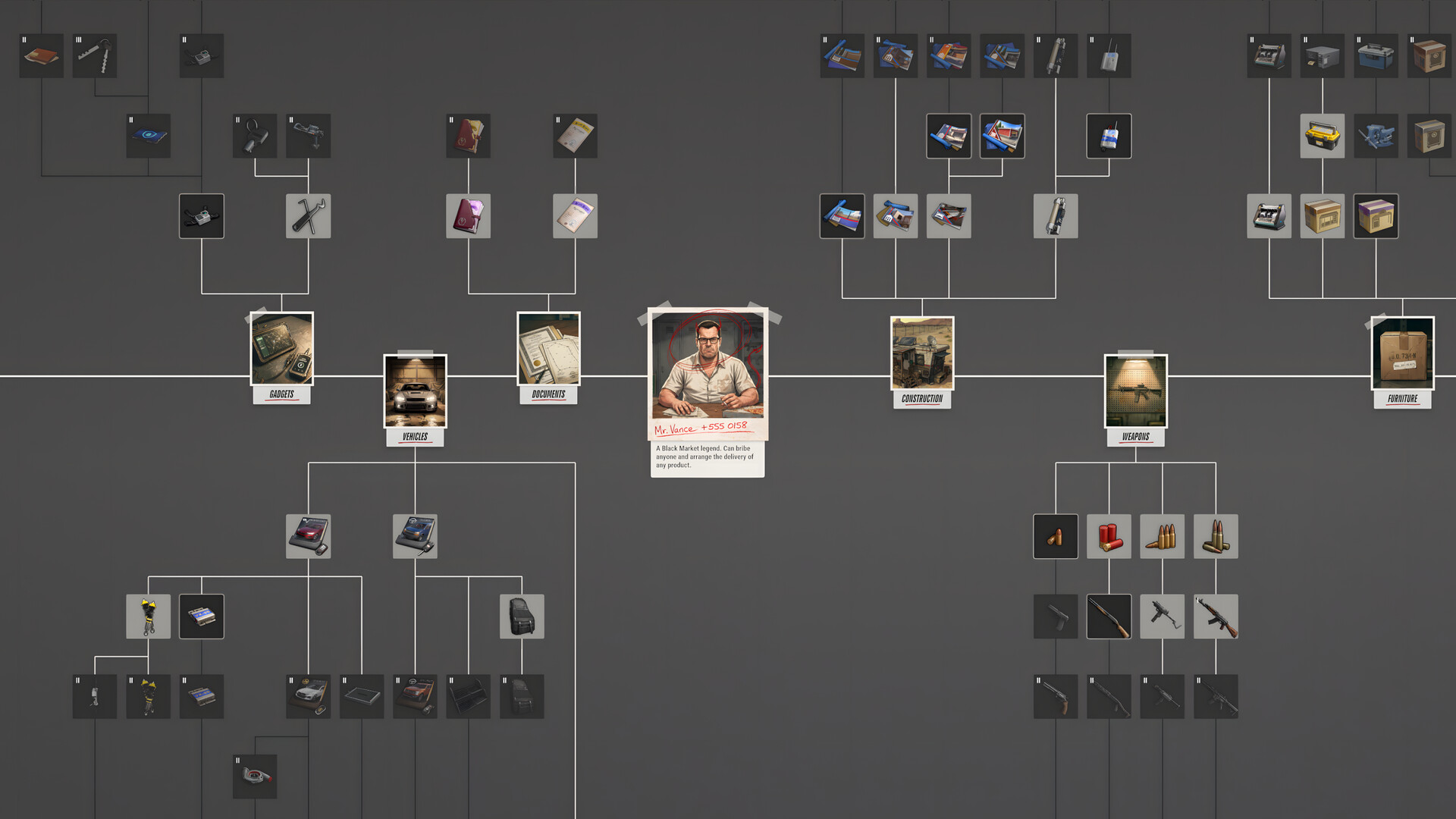
Official screenshot · Source: Steam store
Clans, guilds, and crime families are still the engines of long-term influence. Territory is not a cosmetic score. Control feeds resources and paints a target on whoever holds it. Negotiation, truces, and betrayal are part of the meta. Trust is worth more than spare ammo, which is exactly why a solo player should not try to “own” a district. The useful job is narrower: punish sloppy movement, tax unprotected loot, and leave before the response arrives.
Community reports from similar sandbox servers describe the same pattern. Isolated players die to crews. Crews die to overconfidence, split spawns, and third parties. A ROB RUN solo gank works when you accept that second pattern and ignore the fantasy of winning a fair 1v4 in the open.
| Playstyle | What you can realistically win | What you should not expect |
|---|---|---|
| Solo hunter | Isolated picks, stalled convoys, stolen vehicles, info | Lasting territory or a stable income |
| Small crew | Raids, escort breaks, shared lookout duty | Immunity from betrayal or wipes |
| Large clan | Territory, scheduled hits, political leverage | Quiet farming without rivals noticing |
| Player police | Chases, intercepts, pressure on known hotspots | Predictable AI behavior to exploit |
If you want the long shelf life of a boss, band together. If you want chaos with a scoreboard attached, stay solo and budget for losses. The ROB RUN page on Steam is the right place to confirm what the current build actually ships, because sandbox rules move faster than guide posts.
Choose targets a single player can finish
Success here is less about reflexes than about reading the room. One mistake can strip gear, vehicles, and even a hideout. Before you commit, answer three questions: Is this person alone for the next thirty seconds? Can I leave on a vehicle or through cover if a third party shows up? Does the payoff beat the exposure?
Good targets are players already busy. Someone cracking a job, loading a car, arguing in voice proximity, or sprinting between a hideout and a street is not watching every angle. Bad targets are stacked: two guns on the door, a driver in the seat, and a friend on the roof. Player experience across high-population crime servers is consistent on this point. The kill that looks free on a highlight reel was usually decided before the first shot, by who was out of position.
Do not treat bank jobs, rival-base raids, and police chases as solo content you must complete. Those are the daily grind of the server, and they attract numbers. Use them as noise. A crew hitting a bank is a terrible duel. A straggler jogging back from that bank with a full bag is a much better ROB RUN solo gank.
| Target | Solo verdict | Why |
|---|---|---|
| Lone player on foot, mid-loot | Favorable | Hands busy, escape on foot is slow |
| Parked vehicle with one driver | Favorable if you have an exit | Mobile loot, but the engine is also their escape |
| Two-player convoy | Only with hard cover and a disengage | Crossfire ends solo fights fast |
| Hideout door with multiple defenders | Avoid | You are the content, not the hunter |
| Active police chase | Vulture, do not lead | Third parties and player cops both collapse the lane |
| Fresh spawn with nothing visible | Skip | Risk is real and the bag is empty |
A practical filter used by a lot of solo players: if you cannot name your exit before you fire, you do not have a fight. You have a coin flip.
Gear, mobility, and the hideout trap
Hideouts are both a castle and a billboard. You can upgrade a base, park vehicles, drop workbenches, and fill safes. The nicer that refuge looks, the brighter the target. Guarding it is an ongoing cost. For a solo player, a lavish base is often a donation to the next crew that feels bored.
Balance hoarding and mobility. Workbenches matter because they craft and repair. Safes matter because they are the only reason a death is not a total reset. Vehicles matter more than either if your plan is to hunt, because a ROB RUN solo gank without a way to leave is just a duel you hope ends quickly. Keep the kit you are willing to lose on your person. Keep the kit you need for tomorrow in the safe, and assume the safe is not sacred.
| Asset | Carry it | Stash it | Leave it behind |
|---|---|---|---|
| Primary weapon you can replace | Yes | Spare only | — |
| Rare crafted gear | No | Yes | — |
| Fast vehicle | Yes, as the exit | One backup if you can spare it | Flashy showpieces |
| Healing and repair basics | Yes | A small reserve | — |
| Territory “trophy” loot | No | Only if the base is quiet | If the base is famous |
| Extra guns for friends you do not have | No | No | Yes |
Player experience says the solo economy breaks in one of two ways. Some players never stash, die once, and rage-quit the week. Others build a palace, stop moving, and get raided while they sort boxes. The middle path is dull and effective: one working gun, one way home, one safe that would not ruin you if it popped, and no decorations that advertise a score.
Strength and cunning both get rewarded, but cunning is the only stat you keep after a death. Spend it on routes. Learn which streets let you see a chase coming, which alleys dead-end, and which hideout districts are loud because three crews claim them. That map knowledge outlasts any weapon the wipe is about to delete.
Time the week instead of forcing every fight
The weekly wipe is the real boss. In a single week a nobody can become the head of a large organization, and then the server resets. That clock forces ambition. It also means early-week and late-week solos are different games.
Early after a wipe, almost everyone is poor and reckless. Ambushes are common, gear gaps are small, and information is bad. This is the best window for a new solo player, because a lost fight costs scraps. Midweek, crews have roles, radios, and territory. Your hit rate should drop on purpose. Late week, rich targets get lazy and revenge wars spiral out of failed jobs. A lucky ambush can turn a small group into a feared name overnight, which also means late-week third parties are nastier. People are hunting reputations, not just bags.
| Phase of the week | Solo priority | Risk level | Sensible goal |
|---|---|---|---|
| First day after wipe | Take more fights, learn spawns | Low gear, high chaos | Reps, routes, a basic vehicle |
| Midweek | Pick isolated targets only | Crews are online and armed | Stay solvent, scout territory |
| Late week | Vulture the edges of big jobs | Revenge wars and stacked raids | One high-value pick, then bank it |
| Wipe day | Do not start new projects | Everything you own is temporary | Spend knowledge, not ego |
Treat each week as a compact season. Write down what killed you. Was it a second player you never saw, a vehicle you could not catch, or greed after a clean pick? The wipe hands that lesson back as a fresh start. Players who adapt their route list climb faster than players who chase the same alley because it worked once.
Coordination is still the strongest tool on the server, even if your “team” is temporary. A one-job truce, a tip trade, or a passenger who only drives can be enough. Just remember alliances in this game are currency, not marriage. If the plan requires someone else to hold a flank you cannot see, it is no longer a solo plan.
How to run the fight and how to quit it
A repeatable ROB RUN solo gank looks boring from the outside:
- Watch longer than you shoot. Confirm a count.
- Take the first shot from cover you can leave, not cover you must defend.
- Damage the escape, not only the player. A downed driver with a live engine is still a problem.
- Loot one high-value item, not the whole body, if voices are closing in.
- Leave on a prechosen path. Do not invent a new route while suppressed.
- Stash or change district before you queue the next ego fight.
Open shootouts favor numbers. If bullets are a bad trade, the social layer is the other weapon. Player police make chases genuinely dangerous, because the pursuer is improvising too. Sometimes the right play is to start nothing, mark a route, and let two hostile groups meet. That is not passivity. It is how you stay alive in a sandbox where every confrontation is human.
| Signal | What it usually means | Solo response |
|---|---|---|
| Extra footsteps after the knock | A partner was staging nearby | Drop the loot and move |
| Vehicle engine you did not start | Exit is about to be stolen or used on you | Break line of sight immediately |
| Sudden quiet in a loud district | Someone else is also set up | Abort; you are not the only hunter |
| Player cops entering the block | The fight just gained a third side | Disappear; do not lead the chase |
| Target stops looting and holds an angle | You have been made | Reset or flee; the ambush is over |
| You are already hurt and they are not | Math is bad | Leave. A second peak is how solos donate kits |
Revenge is the tax on sloppy ganks. A failed hit, or a cruel one, can start a war you cannot staff. If you drop someone who clearly has friends, assume those friends will camp your last-known hideout. That is another reason not to live in a famous base. Change where you log out. The player who needs a rematch more than a stash is volunteering to be content.
A simple session plan
Use this loop for a two-hour session so greed does not write the route for you.
- Spawn, check the safe, and take only the replaceable kit.
- Spend the first twenty minutes moving, not shooting. Note who owns which streets today.
- Set one goal: a vehicle, a single pick, or a clean scout. Not all three.
- Take at most two committed fights. After the second, you are tired and predictable.
- Bank anything you would be angry to lose.
- End in a different district from the one where you fired.
That plan will not make you the server boss. The source material on this game is blunt about that gap: alone, you survive; together, people shape the map. What the plan does is keep a ROB RUN solo gank from becoming a donation. You stay dangerous, you stay mobile, and you still have a kit when the interesting fight shows up tomorrow.
If a crew offers a real role — driver, door, lookout — take the audition once before the wipe. You will learn their timing, their bad habits, and whether you even want their politics. Then you can go back to hunting the players who stand where their friends cannot see them.
FAQ
Is a ROB RUN solo gank worth it compared with joining a clan?
Yes, as a way to learn routes, punish isolated players, and stay funded. No, as a plan to hold territory or run the server. Clans convert trust and scheduling into power. Solo play converts patience into short wins. Most players who last the week do some of both.
What should I avoid on my first week?
Skip defended hideouts, two-car convoys, and any fight where you cannot name an exit. Also skip empty fresh spawns. The risk is real and the bag is not. Use day one for reps while everyone is poor, then get pickier midweek.
Do player cops change how solos should fight?
They do. Law enforcement is people, not a pattern you can memorize. Leading a chase through a crowded block invites a third side that does not care who started it. If sirens or a known police crew enter your lane, the ambush is over. Disappear and reset.
Will the weekly wipe delete a good solo streak?
Progress resets on the weekly cycle, including the climb from nobody to boss. Knowledge does not reset. Routes, timing, and the habit of leaving after one good pick carry into the next season. Treat gear as rented and decisions as the thing you are actually farming.
Related Guides
ROB RUN machine gun: Best Early Combat Setup
ROB RUN machine gun tips from early playtests: shells, armor, fences, and how not to lose the gun on extract.
ROB RUN outnumbered fights: How to Survive Bad Odds
Learn how to handle ROB RUN outnumbered fights in a 5,000-player crime sandbox, with clan roles, disengage rules, and wipe-week plans.
ROB RUN shootouts: Combat Tips Before Launch
ROB RUN shootouts decide loot, territory, and clan power. Learn when to fight, flee, or raid before the November 2026 Early Access launch.
ROB RUN first look: Gameplay, Release and PC Guide
Our ROB RUN first look covers its crime sandbox, clans, server wipes, November 2026 release plans, PC requirements, and playtest access.
ROB RUN closed alpha: playtest, date, and what we know
ROB RUN is still unreleased. See the Steam playtest, November 2026 Early Access plans, PC specs, and what closed alpha clips leave unconfirmed.