ROB RUN outnumbered fights: How to Survive Bad Odds
Learn how to handle ROB RUN outnumbered fights in a 5,000-player crime sandbox, with clan roles, disengage rules, and wipe-week plans.
A fair fight is a luxury this city almost never offers. ROB RUN outnumbered fights decide who keeps a stash and who logs off with nothing, because every officer and every rival is another person with a plan. Treat every gunfight like a duel and you will hand over your car, your gear, and the week you spent earning both. ROB RUN outnumbered fights favor crews that read the block, pick a job, and leave before a third group shows up.
The loop is simple and mean. Roughly 5,000 real players share one city. There are no NPC cops to memorize and no scripted rivals on a timer. A plan that looked clean in a quiet alley can die the second someone else decides your convoy is the payday. That is the combat puzzle worth studying: not how to win a staged arena, but how to stay solvent when the other side brought friends.
Why the City Defaults to Bad Odds
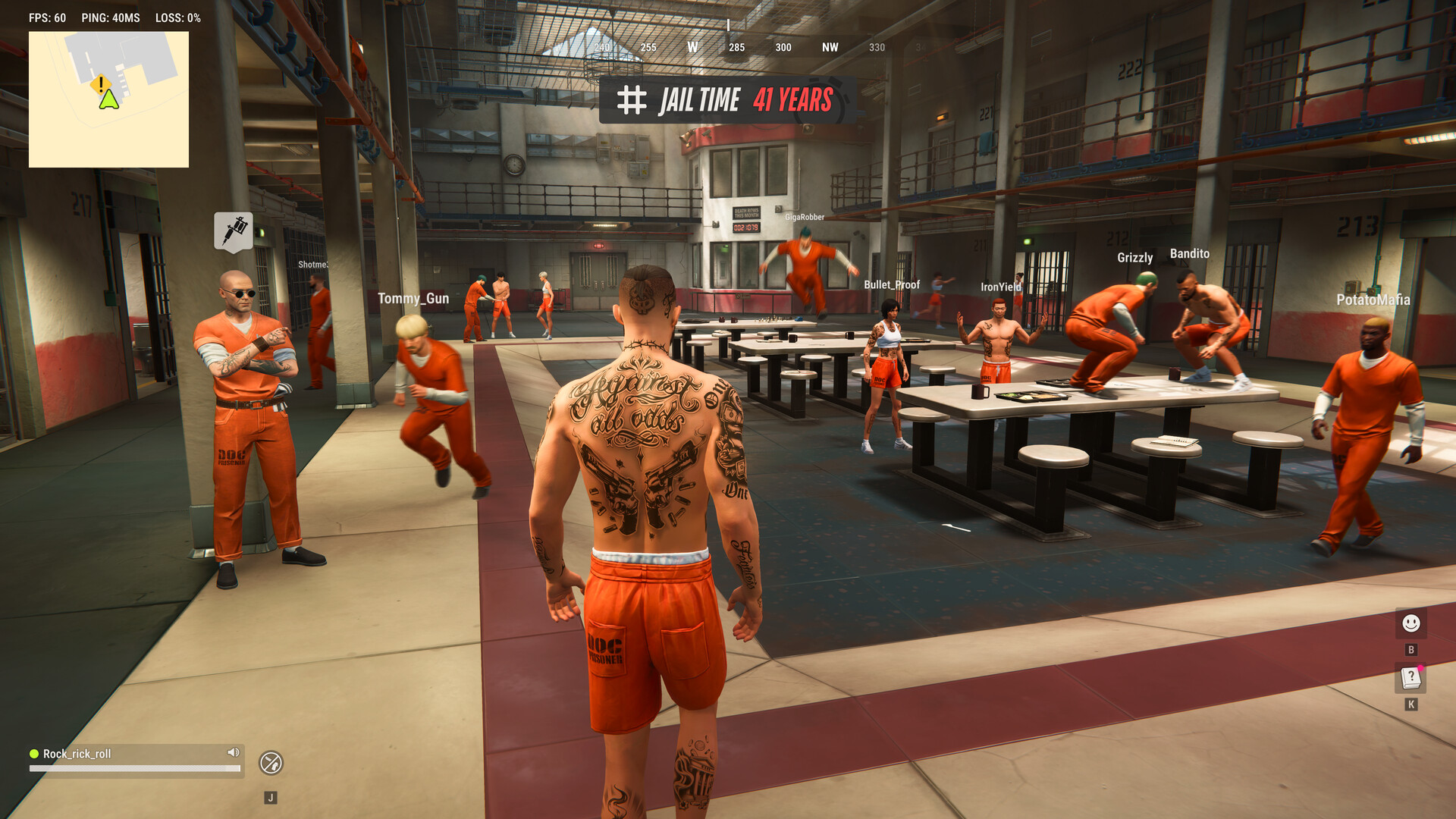
Open violence is loud, slow, and expensive. A published look at ROB RUN's 5,000-player crime sandbox makes the same point in broader terms: confrontation, chases, and deals are all human, so nothing stays on a pattern for long. That is why ROB RUN outnumbered fights feel less like boss battles and more like street math. Every extra body nearby is a vote you did not cast.
Official screenshot · Source: Steam store
Solo play is allowed. It is also a bet that nobody stronger is bored. You can survive alone for a while by staying small, moving often, and refusing glory. You will struggle to hold ground. Clans, guilds, and crime families are how influence actually sticks. Territory is not a badge. It feeds resources, and it paints a sign that says "come take this."
Numbers fail in predictable ways even when the players do not:
- A second squad arrives because your first shots were the invitation.
- Player police do not run a chase on rails. They cut you off, bait you, or ignore you if a richer target is closer.
- A truce can be real for ten minutes and worthless the moment the loot truck stops.
- Winning the gunfight can still lose the session if a third crew loots both sides.
Think of combat as a bid. You are spending gear, time, and attention for a chance at power. If the bid is larger than the prize, walking away is the high-skill play.
| Situation | Pressure level | Best first move | Leave when |
|---|---|---|---|
| Even street contact | Manageable | Talk, trade, or fight only with a clear exit | A second group closes in |
| You are on foot against a pair | Poor | Break sight and reach a vehicle | They already own your route |
| Your crew defends a raid | Poor to severe | Delay, call help, hold doors | The stash is already mobile and the base is open |
| Player-police chase | Unstable | Change streets and dump attention | The route points at your hideout |
| Three-way shootout | Worst | Disengage immediately | You are the last side still firing |
Those rows are a planning frame, not official damage tables. The game does not publish a clean "fair odds" chart, and it should not. The threat is other people.
What a Bad Fight Actually Costs
The bill for ROB RUN outnumbered fights is not just the death screen. Gear, cars, and hideouts can vanish in the time it takes to chase one kill too far. A daring raid can pay for a base upgrade. The same raid can fund the people who were waiting outside. Weigh the prize against exposure before you commit, not after the first magazine is empty.
Success here is mostly reading, not reflexes. Who is watching the road? Who still has a car facing the exit? Which ally is about to freelance and pull the whole block down on you? One late call can end a stash you spent days filling. That awareness is the real difficulty slider.
Emergent stories pile up because losses have authors. A failed bank job becomes a revenge war. A lucky ambush turns a small crew into the name people avoid after dark. Those arcs are player-made. They also mean yesterday's victim may be today's third party, already angry and already armed.
Use a simple loss budget before any job:
- Pocket load: gear you can replace tonight. Fine for a probe.
- Working load: a car, a weapon set, and crafting materials. Only risk this with an exit and a partner.
- Season load: the haul that would hurt if the week ended now. This stays in a safe or on a separate runner, not in the fight.
If you cannot name which budget you are carrying, you are carrying the expensive one.
| Load you are holding | Acceptable fight | Poor fight | Recovery if you lose |
|---|---|---|---|
| Starter kit | Short scrap or scout | Chasing a convoy across the map | Fast |
| One car and a craft set | Planned hit with a driver | Defending a loud corner alone | A few sessions |
| Full stash in the trunk | Almost never | Any open street | Can erase the week |
| Crew on standby nearby | Defense or a called raid | Ego duel away from help | Allies can retake ground |
Player experience in games built like this tends to rhyme: the crew that looks richest is often the crew that just got sloppy. A lavish hideout is a progress hub and a beacon. Workbenches, safes, and parked vehicles make the base worth owning. They also make it worth raiding. Comfort and security pull in opposite directions.
Roles That Change the Math
Role discipline is the quiet edge in ROB RUN outnumbered fights. A bigger roster does not help if everyone shoots and nobody watches the road. You can found a crew or join one, then assign jobs the way you would assign a heist: someone calls, someone drives, someone counts heads, someone stays on the door.
Trust outperforms ammo because ammo does not tell you when a partner is about to flip. Negotiation, short truces, and outright betrayal are all part of the meta. A reliable ally is the difference between climbing and vanishing. An unreliable one is a second enemy who already knows your stash route.
| Role | What they do when you are outnumbered | How the role fails |
|---|---|---|
| Caller | Picks engage, delay, or abort in one sentence | Turns the call into a debate mid-fight |
| Driver | Keeps the exit vehicle alive and pointed out | Parks in a dead end to "help shoot" |
| Spotter | Counts bodies, flanks, and incoming cars | Tunnels on the nearest target |
| Negotiator | Buys seconds with a truce or a bluff | Believes a rival who is already inside the base |
| Holder | Stays on the safe, door, or loot runner | Chases a kill and abandons the objective |
Five roles do not require five legends. Early in a week, two people can split them: one calls and spots, the other drives and holds. What matters is that the jobs exist before the shooting starts.
A practical crew drill, useful on any night you expect contact:
- Name the caller out loud before you roll.
- Park the exit car one block off the job, not in the camera shot of the door.
- Give the spotter a single job: count, do not duel.
- Set a abort word. When it is said, the fight is over even if you are "winning."
- Send one runner home with the real valuables if the job succeeds. Do not convoy the entire haul past the people you just robbed.
Strength still matters. A clean ambush can flip a numbers gap for a few seconds. Cunning is what keeps those seconds from becoming a graveyard. Bold plans work when they are short. They fail when the crew stays to admire the win.
A Filter Before You Pull the Trigger
Use this filter before ROB RUN outnumbered fights spiral into a donation. Four questions cover most disasters. If any answer is "no," you are not in a fight. You are in a withdrawal.
Do you know the headcount within one person? Unknown extras are how even fights become bad ones. If the spotter cannot see the side street, assume it is occupied.
Do you have two ways out? One road is a cage. Player pursuers will learn your habit of fleeing north. Vary it. A chase is improvisation, and improvisation with thousands of people nearby gets messy fast.
Is the prize still worth it if you lose the car? If the answer is no, the car should not be in the zip code of the job. Vehicles are mobile assets, not trophies you pose beside the loot.
Can someone reach you before the second wave? Allies who are "online" but across the city are not backup. Backup is a body that can arrive while you still hold a door.
| Check | Green light | Red light |
|---|---|---|
| Headcount | Known, and no fresh engines nearby | "I think it's just them" |
| Exit | Two routes, driver already seated | One road, car left at the door |
| Loot on you | Replaceable kit | The week's haul in one trunk |
| Backup | A named player who can move now | A clan chat that might notice later |
| Home trail | You are moving away from the hideout | The chase is aimed at your block |
Social tools belong in the same filter. Open fights are costly, so sharp players get what they want without a shootout: a toll, a temporary truce, a tip about someone richer, a deal that moves the heat onto a rival. That is not cowardice. It is how you stay in the server long enough to matter.
When you do shoot, keep the action smaller than the city. Hit, move, and stop making noise before bystanders become a faction. A revenge war is sometimes unavoidable after a botched job. It should be a choice you can reinforce, not a mood.
Bases, Chases, and Fights Worth Refusing
The bases you love become the reason ROB RUN outnumbered fights find you. A hideout is a refuge, a workshop, and a target. Upgrade it and you progress: crafting, repairs, safer storage, a place to stage vehicles. Upgrade it too loudly and every nearby crew gets a reason to visit. Guarding what you own is a repeating cost, not a one-time win.
Balance hoarding and mobility. A single palace is easy to admire and easy to schedule a raid against. A modest stash plus a car you can relocate is harder to wipe in one push. Split valuables. Do not store the car, the craft bench payoff, and the whole crew in the same room while half of you are out picking a fight you cannot finish.
Chases deserve their own rule. Because law enforcement is player-run, you cannot grind a perfect escape line and reuse it all week. People adapt. If they learn you always ditch at the river, the river is where the second car waits. Break contact, change vehicle if you can, and never finish a chase on the street where you sleep.
Refuse these fights on purpose:
- A duel that starts while you are carrying sale goods.
- A base defense you cannot reach before the doors are already open, unless the runners can still save a safe.
- Any shootout whose only prize is pride.
- A war on the last day of a cycle if you cannot reinforce it.
- A "quick" third-party steal when two larger crews are still on site.
| Week phase | Combat priority | Common mistake |
|---|---|---|
| Days 1–2 | Learn routes, take only cheap fights | Dying on repeat for a grudge |
| Days 3–4 | Lock a small crew and one modest stash | Raiding a top clan with no exit |
| Days 5–6 | Fight only where allies can rotate in | Building a flashy base with no guards |
| Final day | Protect value and expect betrayals | Opening a war the wipe will not let you finish |
The weekly reset is the other combat system. In a single week you can climb from nobody to the head of a large organization, then watch the server wipe the board. That clock forces ambition and punishes slow, pretty plans. It also hands everyone a fresh season: new alliances, the same map, and a better sense of which fights were ego.
Each wipe rewards adaptation more than a single highlight reel. The crew that learned to abort, split loot, and hold a small territory will outpace the crew that won three cinematic shootouts and lost the cars. Compact seasons make every decision louder. They do not make bad odds noble.
FAQ
Are ROB RUN outnumbered fights worth taking on wipe day?
Usually no, unless the prize changes who holds a territory before the reset and your crew can actually reinforce. Losing a hideout late in the week makes ROB RUN outnumbered fights even less attractive, because you may not have time to rebuild. Spend the last day moving value, watching allies, and declining pride matches.
Can you win while playing solo?
You can survive solo by staying mobile and skipping uneven contact. Shaping the server is a different job. Clans and crime families coordinate raids, rotate guards, and hold ground. A solo player who picks even fights and leaves early can have a strong week. A solo player who defends a famous base will eventually meet a crew.
Do player police change how chases work?
Yes. Pursuers are people, so they do not repeat a script you can memorize. They may box a road, ignore you for a richer target, or pretend to break off. Treat every chase as new. If the route starts pointing toward your hideout, abandon the cargo mindset and protect the base instead.
What should a small crew practice first?
Practice the abort. Pick a caller, keep a driver in the car, and run one scout before any raid. Count heads, confirm two exits, and decide what you are willing to lose. That habit beats a new weapon. In a city this crowded, the fight you decline is often the one that saves the stash.
Related Guides
ROB RUN machine gun: Best Early Combat Setup
ROB RUN machine gun tips from early playtests: shells, armor, fences, and how not to lose the gun on extract.
ROB RUN shootouts: Combat Tips Before Launch
ROB RUN shootouts decide loot, territory, and clan power. Learn when to fight, flee, or raid before the November 2026 Early Access launch.
ROB RUN solo gank: How to Hunt Without a Crew
Learn ROB RUN solo gank timing, target picks, and escape plans so one player can pressure crews before the weekly server wipe.
ROB RUN first look: Gameplay, Release and PC Guide
Our ROB RUN first look covers its crime sandbox, clans, server wipes, November 2026 release plans, PC requirements, and playtest access.
ROB RUN closed alpha: playtest, date, and what we know
ROB RUN is still unreleased. See the Steam playtest, November 2026 Early Access plans, PC specs, and what closed alpha clips leave unconfirmed.