ROB RUN police chases: What Alpha Footage Shows
See what ROB RUN police chases look like in closed alpha, how to read thin footage, and which pursuit habits to test first.
ROB RUN police chases are already drawing attention from players who want a pursuit game that feels fast, readable, and fair. The public record is still thin: a closed-alpha gameplay upload is online, but it does not explain systems in words. That gap matters, because ROB RUN police chases reward people who can separate confirmed footage from guesswork before they copy a clip.
If you treat a music-heavy alpha video like a finished manual, you will practice the wrong habits. This article shows how to read the available footage, which notes are worth keeping, and how to test pursuit decisions without inventing features the clip never states.
What the Public Clip Can Actually Prove
The sourced video is titled as closed-alpha gameplay. Its available text track does not walk through controls, vehicles, maps, or win conditions. Most of the track is music. There is laughter, then a short affirmative. That pattern usually means the uploader was reacting, not narrating. You can cite the clip as evidence that a closed alpha existed in public view. You cannot cite it as evidence of a heat system, a specific car list, or a named city.
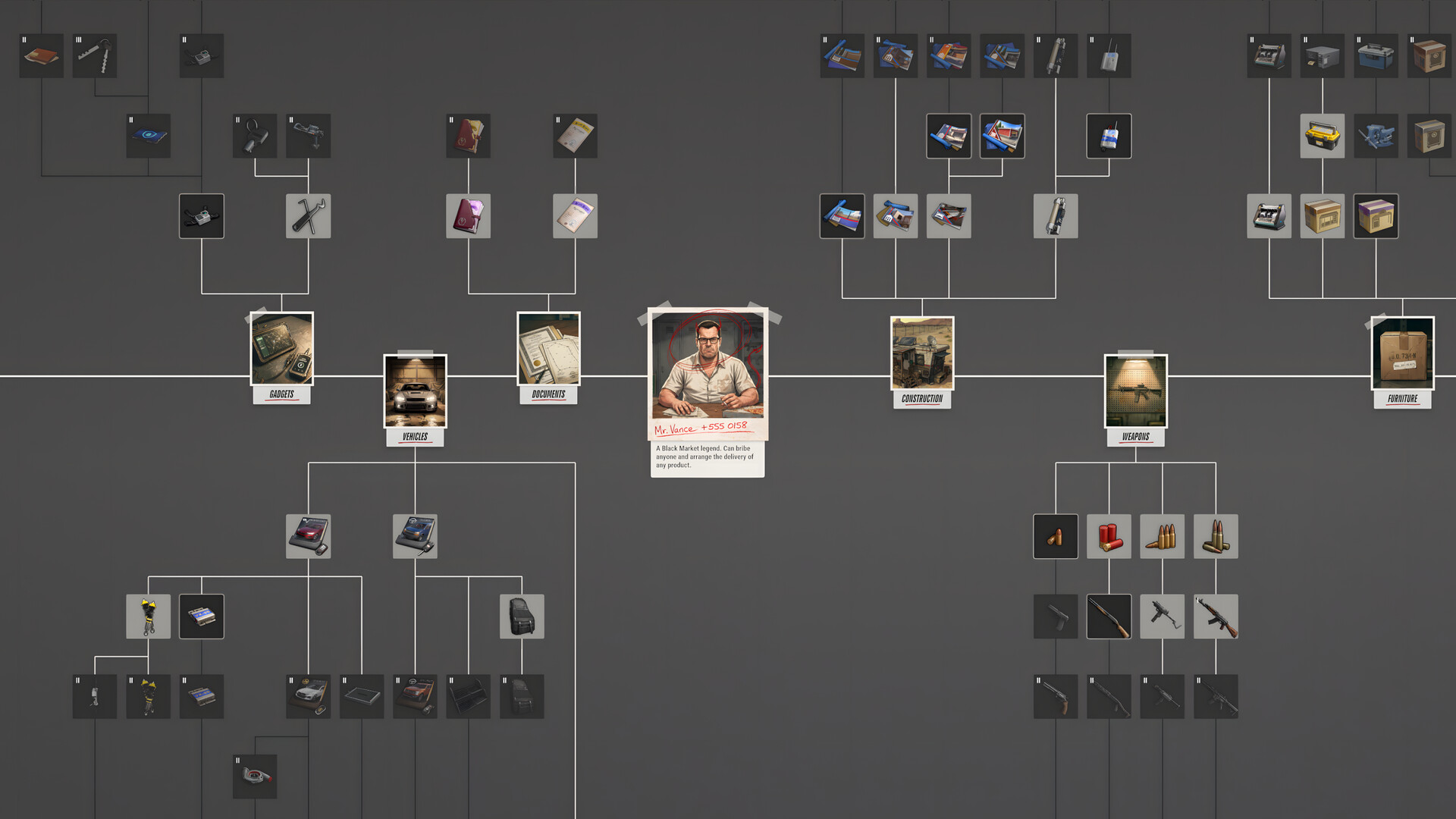
Official screenshot · Source: Steam store
Player experience in comment threads is easy to overread. The reference set collected with this topic did not include written web pages or a detailed community write-up. Label anything beyond the upload itself as unconfirmed. If a friend describes spike strips, helicopters, or a wanted ladder, ask which second of the video shows it. A confident sentence is not a source.
ROB RUN police chases, as a search topic, currently sit in that awkward alpha window. People want tips before the game explains itself. The useful response is a tighter standard of proof, not a longer list of rumors. Write down only what you can see on a replay. Put everything else in a separate column called "ask later."
Use the ROB RUN closed alpha gameplay upload as your primary source. Watch what the camera spends time on. Ignore certainty that nobody can pause and point at.
| Evidence level | Example you may record | Safe wording | Unsafe wording |
|---|---|---|---|
| Confirmed by the upload | A public video is labeled closed-alpha gameplay | "A closed alpha clip is public." | "The full game launches with these exact cars." |
| Suggested, not proven | Fast driving with a pursuit mood in the title | "The theme is a chase." | "Police always spawn at this intersection." |
| Not in the text track | Controls, damage, scoring, map names | "The narration does not say." | "The devs confirmed a five-star system." |
| Missing outside sources | No web pages in the collected set | "No article was in this source pack." | "Every site agrees on the meta." |
That table is the whole point of an early write-up. Until official notes exist, write about ROB RUN police chases as an alpha viewing problem, not as a solved meta. When a later trailer or patch note appears, update one row instead of rebuilding a myth.
Watch the Chase in Three Passes
Do not try to learn everything in one sitting. A single viewing mixes music, camera shake, and your own guesses. Three short passes produce cleaner notes than one long stare. Pause whenever the action changes direction, a vehicle enters the frame, or the camera cuts. If you cannot describe the change in one line, you did not actually see a system. You saw motion.
Pass 1: Camera and readability
On the first pass, ignore who wins. Ask whether you can tell lane position, distance to the next intersection, and which car is the focus. Pursuit games fail when the camera hides the threat. If the view sits tight on the bumper, side traffic becomes a surprise. If the view pulls back, you can plan a turn earlier. Write "readable" or "blocked" every time the camera shifts. That single label predicts whether a later tip is even usable.
Pass 2: Who is applying pressure
On the second pass, mark only roles. Who appears to be fleeing, and who appears to be closing distance? Do not name a unit type unless the model is obvious and repeated. A light bar, a siren you can actually hear, or a repeated paint scheme is stronger evidence than a hunch. General player experience in other chase games says people mislabel civilian traffic as police when the edit is fast. Give yourself a "maybe" tag instead of forcing the ID.
Pass 3: What happens after contact
The third pass is about recovery, not style. Watch bumps, near misses, and any moment a car leaves the road. Note whether the scene resets, continues with damage, or cuts away. You are not scoring the driver. You are learning whether contact looks decisive. Many alpha clips cut on impact because the impact looks good, not because impact is the rule. Say that in your notes so you do not promote a cut into a mechanic.
| Pass | Time you spend | Question to answer | Note to write | Skip for now |
|---|---|---|---|---|
| 1. Camera | One full play | Can I see the next choice? | Readable or blocked | Car names |
| 2. Roles | One full play | Who is pressuring whom? | Flee, pursue, or unclear | Damage numbers |
| 3. Contact | One full play | Does the scene continue? | Continues, cuts, or resets | "Best route" claims |
| Extra stills | Two minutes | Is a detail repeated? | Seen once / seen twice | Forum theories |
A practical target is four lines per pass, not a transcript. If your notes are longer than the video felt, you are decorating. ROB RUN police chases will be easier to discuss when two players can compare those four-line sheets instead of arguing from memory.
Practice Decisions, Not Movie Moves
A chase looks like one long stunt. In a game it is a chain of small choices: hold speed, bleed speed, change lane, or break off. You can practice that chain even while ROB RUN police chases are still poorly documented. Use the clip as a prompt, then rehearse the decision on paper. Nothing in this section is a confirmed control scheme. It is a drill for attention.
Try this five-minute drill after each pass. Pick one moment where the focused car approaches a junction. Write three options: straight, turn, or slow. For each option, write the risk you can actually see, such as a car ahead or a blocked view. Then write the fact you wish you had, such as a minimap or a siren direction. That last line becomes your question list for the next build. It also stops you from "solving" a route the footage never completes.
General player experience across pursuit games points to the same early failures. Players stare at the chaser and miss the vehicle directly in front. They treat every intersection as a movie turn. They restart after one bump and lose the chance to see recovery. A calmer rule helps: survive the next five seconds, then reassess. If you only remember one habit, remember that one.
| Decision | When it is reasonable in a game | What you must see first | Note if the clip cuts away |
|---|---|---|---|
| Hold pace | Lane ahead is clear enough to read | Enough visible road to judge the gap | Do not call it the meta |
| Bleed speed | Traffic or a turn is close | A reason to slow, not fear alone | Mark "unfinished" |
| Change lane | The side lane is visible | No hidden bumper beside you | Seen once is not a system |
| Break off | Pressure is high and vision is poor | A safe in-game exit, if one exists | Never translate this to real roads |
Real police pursuits are not a practice mode. Copying game lines on public streets is illegal and often deadly. Keep every drill inside the game, a private server, or a written note. If a tip only works by describing how to flee actual officers, it does not belong in a play guide.
Keep a Test Log You Can Share
Alpha time is usually shorter than your curiosity. A shared log beats a highlight reel. Open a blank note before you press play. Put the date, the video or build label, and the length of the session at the top. Then limit yourself to twelve rows. If you cannot fill a row with something you saw or something you attempted on purpose, leave it blank.
Use one variable at a time if you ever get hands-on access. Change only your following distance, or only your turn timing, or only whether you stay on the main road. Players who change speed, route, and camera together learn nothing, because any result has three causes. Community reports, when they show up later, are more trustworthy if they mention the single change and the result. "I braked earlier and kept the lead car in view" is a report. "This game is easy" is not.
Skip fake precision. Do not invent lap times, arrest rates, or spawn percentages the video never displays. Counts you make yourself are fair game: camera cuts you noticed, times you lost the lead car, and junctions where the view went blocked. Those are observations about your review. Label them that way. A personal count is not an official statistic about the game.
| Log field | What to enter | Example that stays honest | Leave blank if |
|---|---|---|---|
| Date | Session day | 2026-11-01 | You are mixing memories |
| Source | Clip or build name | Closed alpha gameplay upload | You only heard a retelling |
| Goal | One question | Is the next turn readable? | You have five goals |
| Action | The one change | Watched the second pass only | You did several things at once |
| Observed | What repeated | Camera shifted before a turn, once | It happened in your guess |
| Unconfirmed | What you wanted to see | Siren direction | You are tempted to fill it in |
| Next test | The follow-up | Replay and count camera cuts | You have no replay |
Share the log with one other player and ask them to mark rows they cannot verify. That review is worth more than a tier list. Until official notes exist, two careful observers will outperform a page of invented stats. When you describe ROB RUN police chases to someone else, send the log, not a speech.
Mistakes That Waste a Short Alpha
The fastest way to publish a bad guide is to upgrade a mood into a mechanic. A siren in the mix can be soundtrack. A police-looking car can be set dressing. A hard cut can be editing. Treat each of those as a question until it repeats in a context you can describe. Repetition is the difference between a moment and a rule.
The second mistake is borrowing vocabulary from older chase games and pasting it onto this one. Star levels, spike strips, roadblocks, and helicopter cams are familiar, so they feel confirmed. Familiar is not the same as visible. If you use those words, attach "not shown in the current clip" in the same sentence. Readers can handle an incomplete picture. They cannot recover from a fake one.
| Mistake | Why it spreads | What to do instead |
|---|---|---|
| Narrating the soundtrack | Music feels like proof | Separate audio mood from on-screen events |
| Naming systems you hope exist | Searchers want specifics | Keep a wish list apart from notes |
| Copying another game's terms | The words are ready-made | Define only what this clip repeats |
| Writing routes from one angle | The camera hides exits | Mark vision as blocked |
| Turning a laugh into a review | Reactions are contagious | Quote the lack of narration instead |
A small quality check helps before you share notes with a group. Circle every number. If you did not count it yourself from the footage, remove it. Underline every proper noun that is not the game name or the video title. If the clip never shows that noun, move it to the unconfirmed list. This takes about five minutes and keeps a private theory from looking like news.
Before you post, read your draft aloud and delete any sentence that would collapse if the video were removed. The sentences that survive are your actual article. That edit will do more for readers looking up ROB RUN police chases than another adjective about speed.
FAQ
Are ROB RUN police chases fully released?
Not based on the public source used here. The available upload presents itself as closed-alpha gameplay, and the collected reference pack has no patch notes, store page, or feature list. Treat release status as unconfirmed until an official page says otherwise.
What does the closed-alpha video actually explain?
Very little in words. The text track is mostly music, with laughter and a short affirmative. Use the pictures you watch yourself, and keep a clear line between what repeats on screen and what you hope the game includes.
How should I practice if my only source is one clip?
Run three viewing passes: camera, roles, then contact. Write four lines per pass. Add a five-minute junction drill with three options and the risk you can see. Do not invent times, spawn rates, or vehicle stats to make the notes look finished.
Can I use game chase tips on real roads?
No. Game footage is entertainment and a playtest aid. Driving maneuvers meant to evade real police are illegal and dangerous. Keep practice in the game or on paper.
Related Guides
ROB RUN cops: How to Join Police or Surrender
ROB RUN cops guide: enlist at Looty Bay, learn surrender rules, bag confiscation, bribes, and when the police role beats looting.
ROB RUN first look: Gameplay, Release and PC Guide
Our ROB RUN first look covers its crime sandbox, clans, server wipes, November 2026 release plans, PC requirements, and playtest access.
ROB RUN closed alpha: playtest, date, and what we know
ROB RUN is still unreleased. See the Steam playtest, November 2026 Early Access plans, PC specs, and what closed alpha clips leave unconfirmed.
ROB RUN bank robberies: Heist and Loot Guide
Learn how ROB RUN bank robberies work, from masks and crew roles to selling loot, storing cash, and managing Notoriety in Looty Bay.
ROB RUN machine gun: Best Early Combat Setup
ROB RUN machine gun tips from early playtests: shells, armor, fences, and how not to lose the gun on extract.